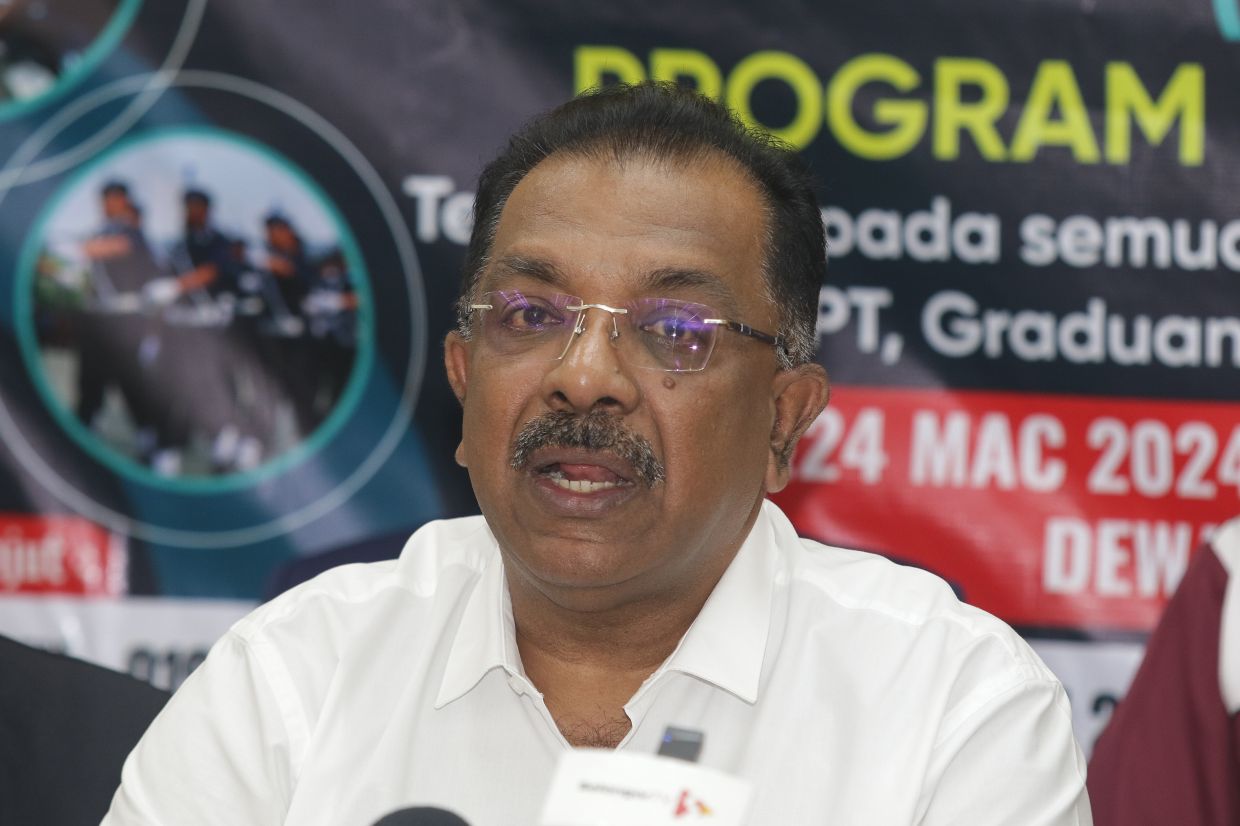
The debate over how Selangor manages religious sites during rapid urban expansion has taken a new turn, with Sentosa assemblyman Gunaraj George advocating for a comprehensive, institutionalised approach to resolve the mounting tensions between development interests and the preservation of established places of worship. Speaking during a state assembly sitting at Bangunan Dewan Negeri Selangor in Shah Alam on Wednesday, Gunaraj outlined the need for a more structured mechanism that brings together multiple stakeholders to address the complex issues confronting non-Muslim religious communities across the state.
The underlying problem, Gunaraj explained, stems from a historical disconnect that emerges when established temples and other religious structures suddenly find themselves caught in the path of modernisation. Many of these facilities have served their communities for decades, originally constructed with explicit knowledge and consent from the landowners of that era. They were built to fulfil a genuine spiritual and social function for residents and workers in their localities, providing spaces where communities could practise their faith and maintain their cultural identity. Yet as surrounding areas undergo transformation into residential townships or commercial hubs, these same structures—which once existed in harmony with their environment—are increasingly flagged as problematic or even branded as illegal, creating a jarring discontinuity between past practice and present classification.
The assemblyman's concerns highlight a broader governance challenge facing Selangor, Malaysia's most populous state outside the federal territories and a key economic engine for the nation. The state has experienced unprecedented development pressure over the past two decades, with land values soaring and developers eager to maximise returns on urban and peri-urban properties. This creates genuine conflicts between property rights, planning regulations, and the interests of communities whose religious institutions predate or exist outside the formal zoning framework. Rather than treating each case as an isolated dispute to be resolved through demolition or relocation, Gunaraj argued for a holistic framework that acknowledges the legitimate historical and social claims of religious communities.
Gunaraj's proposed solution emphasises the importance of contextual evaluation before any decision regarding relocation or demolition is made. He contended that authorities must look beyond the bare legal or regulatory status of a structure and instead examine the genuine history of how the site came into being, the community it serves, and the actual circumstances surrounding its existence. This approach reflects international best practice in heritage protection and community rights, where historical legitimacy and social function carry weight in decision-making, not merely formal compliance with current planning codes. The assemblyman urged relevant bodies to avoid hasty judgements that treat communities as obstacles to development rather than stakeholders with legitimate interests.
The framework Gunaraj envisioned would involve structured dialogue and problem-solving among multiple parties: the state government, local authorities, landowners, property developers, and the management committees of the religious institutions themselves. Such a tripartite or multipartite approach recognises that solutions rarely emerge from unilateral decisions by any single entity. Instead, collaborative engagement can often yield creative compromises—whether through phased relocation with proper compensation, designation of alternative sites of equivalent value, architectural modifications to comply with safety standards, or formal legal recognition of existing usage rights. The assemblyman stressed that when land issues arise, they should be negotiated directly; when planning complications emerge, they should be addressed through the planning system; and when structural or safety concerns exist, specialised technical agencies should be engaged to find workable remedies.
One of the most significant dimensions of Gunaraj's argument concerns the relationship between development and social harmony. He rejected the implicit premise that rapid modernisation and religious community interests necessarily operate in zero-sum opposition, arguing instead that Selangor possesses both the resources and the maturity to achieve both objectives simultaneously. This perspective carries particular relevance given Malaysia's foundational commitment to religious freedom and the constitutional protections afforded to non-Muslim religious practise. Selangor, as a state with significant non-Muslim populations and as a model for other states, has an opportunity to demonstrate that inclusive governance—where development proceeds without sacrificing cultural and religious heritage—is not merely aspirational but practically achievable.
The timing of this intervention is significant given the accumulation of individual disputes across Selangor over recent years. Rather than allowing tensions to fester through case-by-case confrontations, Gunaraj's call for systemic mechanisms seeks to prevent problems before they escalate and to provide predictable, fair processes that all stakeholders can trust. For the state government and local authorities, such a framework would reduce legal challenges, community backlash, and reputational damage. For developers, it would provide clarity on how to navigate religious heritage considerations in their planning processes. For religious communities, it would ensure their voices are heard and their historical claims acknowledged before irrevocable decisions are made.
The assemblyman's remarks also implicitly critique a reactive approach to governance, where issues are addressed only after they become controversial or litigious. A proactive mechanism—one that systematically reviews existing religious sites in areas undergoing development, engages communities early, and facilitates negotiated solutions—would be more efficient and humane. This preventative approach would require coordination between state and local levels of government, clear protocols for community engagement, and potentially the establishment of a dedicated oversight body to shepherd complex cases through to resolution.
Gunaraj's intervention reflects growing recognition within Malaysia's political landscape that religious diversity and rapid urbanisation require sophisticated governance frameworks, not crude choices between progress and preservation. His call for structured dialogue and solution-oriented engagement offers a template that could extend beyond Selangor to other states grappling with similar tensions. As Malaysia continues its development trajectory, how it manages these competing interests will shape not only the physical landscape but also the social fabric of communities and the credibility of institutions that are meant to protect the rights of all Malaysians.

