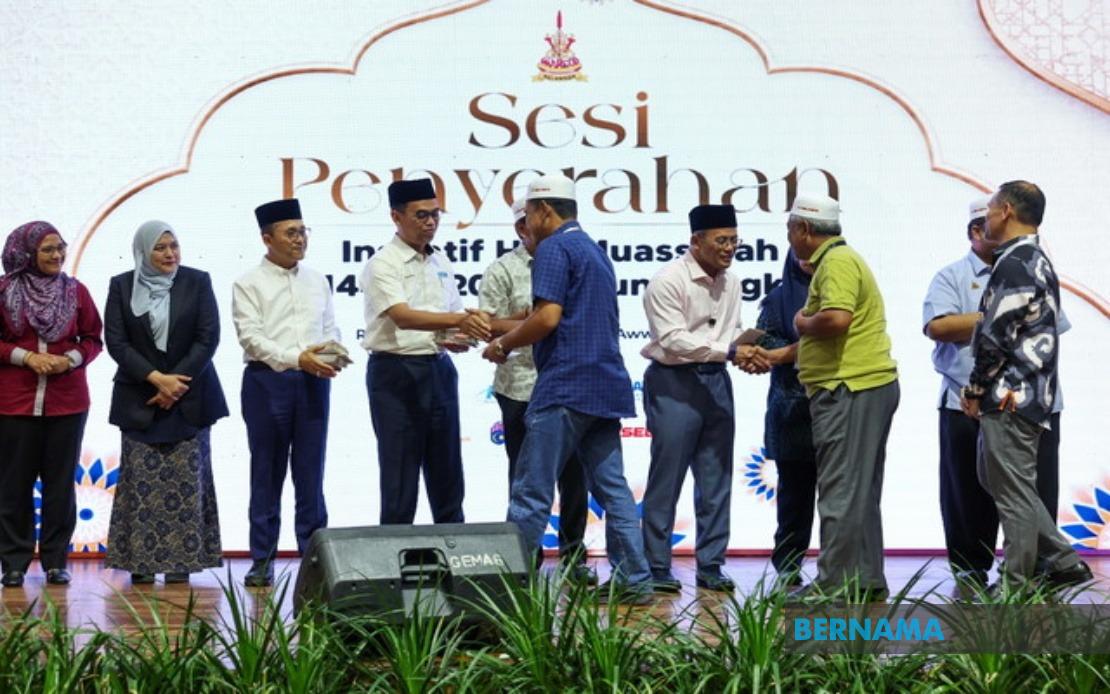
Selangor's ambitious financial support programme for hajj-bound Muslims has reached an advanced stage, with nearly 80 percent of eligible pilgrims having received their preparation grants. The state government has successfully channelled RM1,500 to 4,800 of the anticipated 6,000 recipients under its 2026 Muassasah Haj Incentive scheme, marking substantial progress towards universal coverage before the pilgrimage season. Menteri Besar Datuk Seri Amirudin Shari announced that the outstanding 1,200 recipients would be identified and contacted imminently, with full disbursement targeted for completion by month-end or early September at the latest.
The financial commitment underscores Selangor's prioritisation of religious observance support within its social welfare framework. Through the Selangor Menteri Besar Incorporated Foundation, the state government dedicated RM9 million to this programme, reflecting recognition that many pilgrims face financial barriers when acquiring essential Haj requirements. The assistance covers tangible necessities such as religious garments, prescribed medications, appropriate footwear, and other preparatory items that households might otherwise struggle to afford. For beneficiaries in middle and lower-income brackets, this targeted intervention removes a significant financial obstacle to fulfilling one of Islam's five pillars.
The distribution process itself has been choreographed as a series of ceremonial handovers across constituencies, lending both symbolic weight and administrative visibility to the initiative. The Dengkil ceremony at Putra Perdana Community Hall in Puchong, attended by Deputy Housing and Local Government Minister Datuk Aiman Athirah Sabu alongside state leadership, represented one installment in this broader rollout. The inclusion of a federal government representative signals cross-party acknowledgment of the programme's social value, even as it remains a state-level undertaking. By staging 259 individual recipient presentations in this single event, organisers ensured that participants received personal recognition rather than remaining anonymous beneficiaries of bureaucratic transfer.
Amirudin's articulation of future ambitions reveals strategic thinking beyond the current allocation. The state government has identified RM2,000 per recipient as its medium-term target, potentially realisable by 2027 or 2028 subject to fiscal performance and budgetary circumstances. This 33 percent increase would substantially enhance purchasing power for pilgrims acquiring international travel documents, comprehensive insurance coverage, and health screening examinations mandated for Haj participation. However, the Menteri Besar's candid acknowledgment that financial constraints might force recalibration reflects realism about state revenue volatility and competing fiscal priorities.
For Malaysian readers following Selangor's governance trajectory, this initiative exemplifies a policy approach that blends religious accommodation with practical welfare delivery. The state has previously positioned itself as a progressive administration willing to invest in programmes that traditional parties might marginalise. Haj support transcends mere piety politics; it addresses material barriers that prevent lower-income Muslims from fulfilling religious obligations that their wealthier counterparts access routinely. The programme thus functions as both spiritual facilitation and economic redistribution, acknowledging that religious observance intersects with class accessibility.
The Southeast Asian context adds further dimension to this analysis. Throughout the region, Muslim-majority nations have pursued varying approaches to hajj facilitation, from Indonesia's massive government-subsidised pilgrim quotas to Singapore's community-based collection systems. Selangor's comparatively modest but targeted intervention reflects Malaysia's federal structure, wherein states possess limited fiscal autonomy yet maintain capacity for culturally resonant programmes. The approach positions Selangor as responsive to constituent priorities within structural constraints that prevent wholesale replication of national-scale initiatives.
The identification of remaining beneficiaries presents a logistical challenge distinct from the straightforward fund transfer to known recipients. The state must locate individuals within its 6,000-person pool who may have relocated, changed contact details, or remained unaware of their eligibility. This administrative dimension typically consumes disproportionate time despite representing a minority of overall recipients. For Malaysian bureaucratic systems accustomed to post-application processing, the proactive location of eligible persons represents a more demanding operational mode. Successfully completing this phase within the stated September deadline would demonstrate effective coordination across state agencies tasked with maintaining updated beneficiary registries.
The programme's internal structure merits examination regarding distributional equity. The equal RM1,500 allocation implies that a retired teacher and an unemployed urban migrant receive identical assistance despite radically different baseline capacities. Alternatively, the uniform amount may reflect deliberate policy design that treats all pilgrims as equally deserving regardless of socioeconomic status, framing the incentive as acknowledgment of communal obligation rather than means-tested welfare. This philosophical orientation influences how recipients internalise the assistance—as recognition of their religious commitment rather than as poverty relief. Such framing carries political resonance within Muslim constituencies sensitive to stigmatisation associated with welfare receipt.
Looking forward, the trajectory from RM1,500 to RM2,000 depends on Selangor's revenue performance over the next two to three years. The state's fiscal health remains correlated with broader economic conditions, property tax collection efficiency, and investment returns from state-owned entities. Should Selangor experience robust economic growth and improved tax compliance, the enhanced incentive becomes feasible. Conversely, economic slowdown would render the target unrealistic regardless of political commitment. Amirudin's conditional framing appropriately manages stakeholder expectations while signalling genuine intention to expand the programme if circumstances permit.
The 2026 Muassasah Haj Incentive represents a incremental but meaningful expansion of Selangor's social expenditure portfolio. Within Malaysia's federal system, state governments compete partly through visible welfare innovations that differentiate their governance approach. For Selangor's administration, maintaining programmes that deliver tangible benefits to constituent communities reinforces electoral positioning and political legitimacy. The near-completion of this initiative, coupled with articulated plans for enhancement, projects an image of competent, responsive governance attuned to constituent needs. As the disbursement process concludes in September, the state government will likely publicise final distribution figures as validation of programmatic success, setting foundation for subsequent expansion initiatives.

