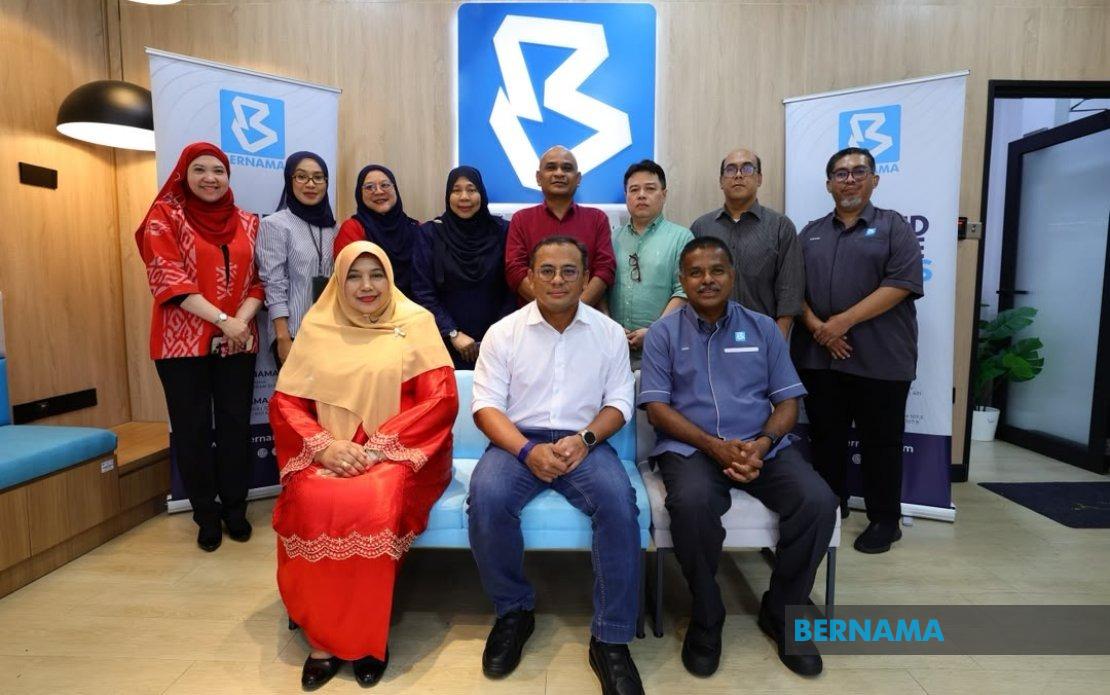
Selangor Menteri Besar Datuk Seri Amirudin Shari made a working visit to the Malaysian National News Agency's Negeri Sembilan bureau on July 20, where he examined the nerve centre coordinating the organisation's comprehensive coverage of the 16th Negeri Sembilan state election. The visit underscored the importance of media coordination during critical electoral moments, as the campaign entered its third day of intensive activity across the state.
Amirudin's arrival at the Bernama office at 2 pm was marked by a formal reception from key agency leadership, including chief executive officer Datin Paduka Nur-ul Afida Kamaludin and editor-in-chief Arul Rajoo Durar Raj. The gathering also included deputy editor-in-chief of News Services Mohd Shukri Ishak, Negeri Sembilan bureau chief Nursyabiha Sukri, and senior management representatives. The presence of such high-level officials reflected the significance attached to maintaining accurate and timely election reporting during this pivotal period for the state.
In his capacity as Pakatan Harapan's election director, Amirudin received a detailed operational briefing from Negeri Sembilan election coverage coordinating editor Mohd Hisham Abdul Rafar. The discussion covered Bernama's newsgathering strategies, resource deployment, and editorial protocols governing how the agency would track developments across constituencies and report on campaign activities as voting progressed. This interaction provided insight into the logistical coordination required to deliver real-time election information to the Malaysian public.
The Election Commission's scheduling of early voting for July 28 and polling day for August 1 meant that the campaign period was compressed, making efficient news operations particularly critical. Media organisations like Bernama must coordinate with multiple sources—candidates, political parties, election officials, and observers—to ensure comprehensive coverage. The bureau's operations room serves as the central hub where journalists, editors, and technical staff work in concert to verify information, coordinate field reporting, and disseminate stories across multiple platforms and languages.
For Malaysian readers, election coverage by national news agencies carries institutional weight. Bernama, as the country's official news agency, holds responsibility for providing factual, balanced reporting that informs voters about campaign developments, candidate positions, and electoral procedures. The visit by a major political figure—particularly one directing his coalition's campaign strategy—highlights how closely the electoral process intersects with media operations. Amirudin's inspection of the operations room was both a practical assessment of coverage capabilities and a symbolic gesture recognising the media's role in democratic processes.
The coordination between political leadership and media institutions during elections requires careful navigation. While Amirudin's visit could be seen as ensuring his coalition's positions receive adequate coverage, it also reflects broader transparency about how news organisations manage the challenge of reporting fairly during contested electoral moments. The Menteri Besar's presence at the operations centre allowed him to understand firsthand how decisions about story prioritisation, angle selection, and source attribution are made during high-stakes political events.
Negeri Sembilan's state election represents a significant test for Pakatan Harapan's political strength in the state, making the quality and extent of media coverage consequential for all participating parties. Comprehensive, accurate election reporting helps voters make informed decisions and contributes to democratic legitimacy. By engaging with Bernama's operations, Amirudin demonstrated awareness that media relations during elections require proactive engagement rather than passive hope that coverage will be favourable.
The scheduled recording of a special interview for Bernama TV following the operational briefing indicated that the visit served dual purposes. Beyond reviewing technical capabilities and editorial processes, it provided an opportunity for Amirudin to deliver direct messaging about his coalition's campaign priorities and election platform. This format—combining behind-the-scenes facility tours with media appearances—has become standard practice for political leaders seeking to maintain visibility throughout extended campaign periods.
For Southeast Asian observers, Malaysia's approach to election media management reflects regional patterns where state news agencies play central roles in electoral information flows. Unlike some democracies where media independence from government is starkly separated, Bernama's status as a national news agency creates institutional ambiguity about its relationship to political authority. During elections, this complexity becomes pronounced, as the agency must simultaneously maintain credibility as a neutral information source while operating within a political system where officials regularly interact with media leadership.
The Negeri Sembilan election campaign's progress through its third day by the time of Amirudin's visit meant that early patterns of voter engagement, campaign momentum, and emerging issues were becoming visible. The operations room visit allowed the Menteri Besar to assess how comprehensively Bernama was documenting these developments and whether editorial priorities aligned with significant events. Such strategic awareness helps political leaders anticipate how their actions and statements will be framed in subsequent coverage.
Moving forward to August 1's polling day, the infrastructure and coordination mechanisms reviewed during Amirudin's visit would remain operational, processing the final wave of campaign information and then pivoting to election-night reporting. The technical systems, editorial workflows, and personnel decisions made during these early campaign days established the foundation for continuous coverage through voting and the announcement of results. Bernama's operations room would function as a critical node in Malaysia's information ecosystem during this democratic exercise, translating the complex reality of electoral competition into daily news reports consumed across the country.

