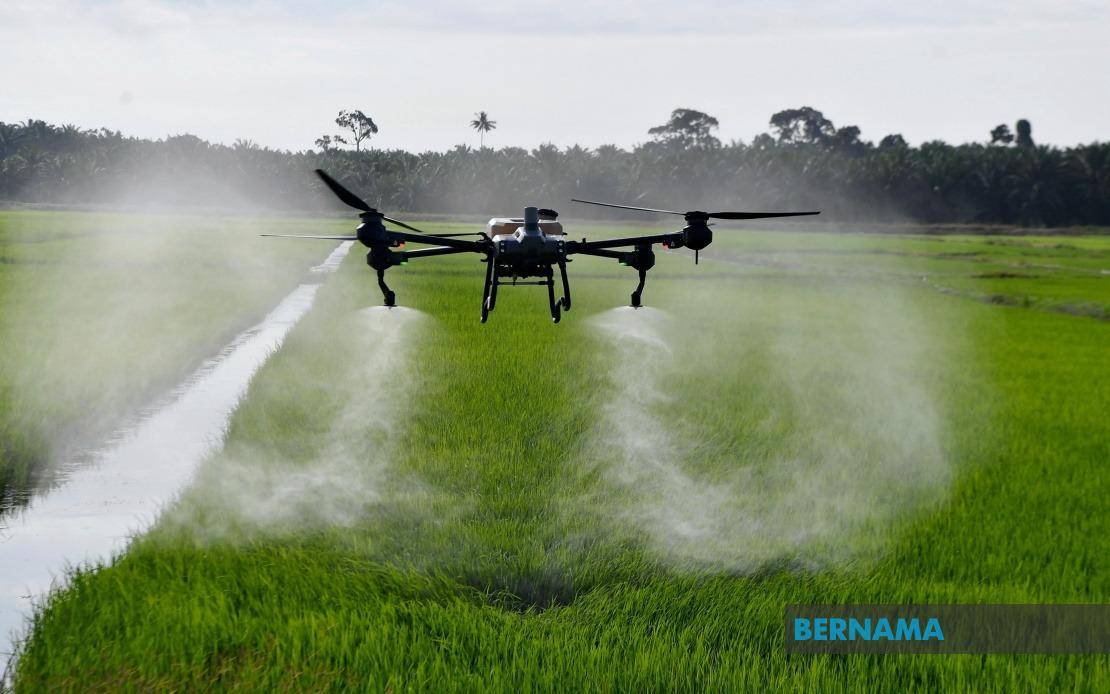
Selangor is injecting RM500,000 into its emerging drone technology sector, signalling the state government's determination to position itself at the forefront of Southeast Asia's growing unmanned systems market. The financial commitment, announced during the pre-launch ceremony of Droneport-1000 at Universiti Selangor, represents a strategic pivot toward high-value manufacturing and digital innovation as economic pillars for the state's development trajectory through 2027.
Dr Mohammad Fahmi Ngah, who chairs the State Islamic Affairs and Innovation Culture Committee, framed the investment as part of a broader modernisation effort to strengthen existing infrastructure while creating pathways for private sector engagement. The allocation significantly exceeds previous funding levels and encompasses facility upgrades at the Droneport-1000 project itself, coupled with targeted programmes designed to catalyse participation from both domestic enterprises and multinational corporations operating in the drone ecosystem. This two-pronged approach—infrastructure development paired with industry attraction initiatives—reflects a maturation in Selangor's approach to sectoral development beyond simple capital investment.
The Droneport-1000 facility itself represents an ambitious territorial claim in Malaysia's drone development landscape. Spanning 24 square kilometres with operational altitude clearance up to 1,000 metres, the designated airspace is substantially larger than comparable facilities elsewhere in Asia, giving Selangor a competitive advantage for testing and commercialising autonomous systems at scale. The facility is currently advancing through certification processes with the Civil Aviation Authority of Malaysia, a procedural milestone that will unlock regulatory certainty for companies seeking to conduct drone operations in the state. Once fully accredited, the facility could attract regional headquarters and testing operations for companies currently constrained by airspace limitations in more densely populated regions.
The state government's incentive structure, which includes matching grants to reduce private sector investment barriers, appears calibrated to overcome a common impediment to technology adoption in Malaysia: the perception that R&D investment carries excessive financial risk. By sharing upfront costs, Selangor effectively transfers some risk from individual companies to the public balance sheet, a trade-off likely justified in government calculations by expected downstream tax revenues and employment generation. This mechanism has proven effective in other jurisdictions pursuing cluster development and warrants close monitoring as a potential model for other Malaysian states attempting to build competitive advantages in emerging technology sectors.
The drone industry's scope extends well beyond the hardware manufacturing typically associated with unmanned aircraft. Dr Mohammad Fahmi's emphasis on software development, artificial intelligence, and semiconductor supply chains reflects an ecosystem-thinking approach increasingly common among regional development authorities. The inclusion of AI and chip manufacturing—already underway in Puchong—indicates that Selangor views drone technology not as an isolated sector but as an integrative platform linking multiple high-value domains. This bundled approach potentially creates stronger commercial gravity, as companies may locate to access multiple complementary capabilities within a single geographic footprint.
The collaboration between Selangor Aviation & Technology Innovation and Universiti Selangor illustrates a third dimension of the development strategy: bridging the persistent gap between academic research and market commercialisation that has historically constrained Malaysia's technology sectors. SELATI chief executive officer Zannifa Azura Ahmad's characterisation of Droneport-1000 as a connector linking knowledge with application directly addresses a bottleneck that has seen Malaysia produce credible research outputs without proportionate economic returns. The integration of university facilities with industry-standard infrastructure and mentoring frameworks creates structural conditions for converting scholarly insights into revenue-generating products and services.
The environmental monitoring applications outlined—tracking forest reserve encroachment, coastal erosion, and bund breaches across an airspace ten times larger than Singapore's territory—demonstrate the practical relevance of drone technology for Selangor's governance challenges. Large-scale aerial monitoring capabilities reduce reliance on manual patrols, compressing response times and enabling data-driven intervention in environmental crises. For Malaysia's relatively small and densely developed states, this scaling of surveillance and analytical capacity offers significant operational efficiencies. Moreover, the environmental dimension may attract international climate funding and partnerships, creating additional revenue streams beyond commercial drone applications.
The involvement of established technology companies including Aerodyne signals industry confidence in Selangor's commitment to creating a functional ecosystem rather than an aspirational concept. When incumbent players invest resources in a regional initiative, they typically do so because they perceive genuine structural advantages—regulatory clarity, complementary suppliers, skilled labour pools, or customer density—that justify presence. Aerodyne's participation thus represents a market validation of Selangor's positioning, potentially attracting secondary suppliers and service providers in turn.
From a regional competitive perspective, Selangor's drone ambitions merit comparison with similar initiatives across Southeast Asia. Singapore's regulatory sophistication in autonomous systems is unmatched, but its land constraints limit testing opportunities. Thailand has pursued drone manufacturing partnerships but lacks equivalent tertiary institution integration. Indonesia possesses larger airspace and growing demand but faces regulatory fragmentation across archipelagic territories. Selangor's combination of solid regulatory frameworks, university infrastructure, regional airspace leadership, and manufacturing heritage creates a defensible competitive position, provided execution matches ambition.
The RM500,000 allocation should be understood as a catalyst investment rather than a terminal commitment. Given the scale of facility development and the international capital requirements for drone manufacturing, this initial state funding likely aims to establish proof-of-concept and attract larger private and federal investments. The matching grant mechanism similarly operates as a crowding-in device, with each government ringgit intended to mobilise several ringgits of private capital. Success metrics should therefore focus less on direct state spending than on the multiplier effects in attracting downstream investment and employment generation.
For Malaysian businesses and policymakers monitoring technology sector developments, Selangor's drone initiative represents a replicable model for emerging sector development. The combination of designated test infrastructure, university partnerships, regulatory alignment, and risk-sharing investment mechanisms addresses several historically persistent constraints on Malaysian technology adoption. Whether other states and the federal government adopt similar frameworks to pursue complementary sectoral advantages—advanced manufacturing, maritime automation, agricultural technology—will substantially influence Malaysia's broader digital transformation trajectory and competitiveness within the rapidly evolving Indo-Pacific technology landscape.

