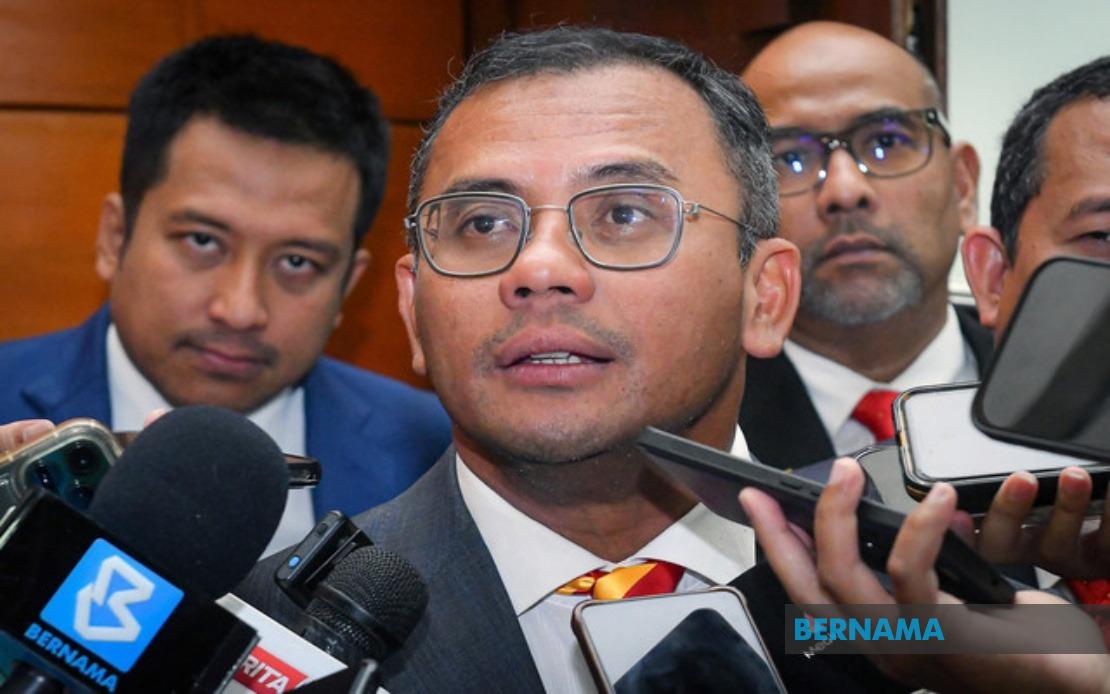
Selangor has unveiled an ambitious research funding programme aimed at strengthening the intellectual underpinning of its long-term economic strategy. The state's Standing Committee on Education and Human Capital announced a RM3.5 million allocation for SELidik 2026, a modernised grant scheme that replaces the previous Selangor Research Grant and deliberately aligns academic inquiry with the state government's policy priorities under its Second Selangor Plan (RS-2).
Menteri Besar Datuk Seri Amirudin Shari positioned the initiative as more than routine university funding, describing it as a direct link between research institutions and government decision-making. The programme represents an intentional shift towards what officials term strategic specialisation—research that feeds directly into policy development rather than academic work pursued independently of government needs. This approach mirrors increasingly common trends across Southeast Asia, where state governments seek to harness university research capacity for measurable economic and developmental outcomes.
Under the current funding cycle, the two state-owned universities—Universiti Islam Selangor (UIS) and Universiti Selangor (UNISEL)—will receive RM2.5 million to generate tangible research outputs including modules, applications, and working prototypes. An additional RM1 million supports research activities across other local universities throughout Selangor. The programme is structured in phases, with initial work concentrated at UIS and UNISEL before expanding to other public institutions in subsequent rounds. This staged approach allows administrators to evaluate methodology and impact before scaling the initiative nationally.
The research agenda must demonstrate direct relevance to six core missions outlined in the Second Selangor Plan for 2026–2030. These missions encompass economic leadership, balanced development across districts, liveable communities, productive human capital, sustainable resilience, and efficient governance. By structuring grants around these specific policy pillars, the Selangor government seeks to ensure that academic research translates into concrete programmes rather than remaining confined to academic literature. Menteri Besar Amirudin indicated that previous research in agriculture, innovation development, and related fields will be reoriented toward direct policy application.
Managing the initiative through Yayasan Selangor provides institutional oversight while maintaining a degree of independence from partisan politics. The foundation structure allows researchers to operate within defined parameters while remaining insulated from short-term political pressures. Officials anticipate that the programme will generate returns on investment measured not merely in academic publications but through economic development, strengthened institutional capacity, and human capital advancement. This mirrors international best practices where government-funded research explicitly targets measurable socioeconomic benefits.
The Second Selangor Plan itself represents an ambitious undertaking. Unveiled on August 7, the framework targets RM600 billion in economic value creation over its five-year horizon and encompasses 25 distinct development areas. The scale of the RS-2 demonstrates that Selangor's state government views strategic research funding as essential infrastructure for achieving such ambitious goals. Without institutional knowledge production and pilot testing of new policies, the prospects of realising such targets diminish considerably.
The opening of SELidik to local researchers nationwide, rather than restricting it to Selangor-based institutions, indicates a willingness to draw talent from across Malaysia. However, applicants must anchor their work to the six RS-2 missions and secure support from relevant government departments. This requirement ensures quality control and relevance but may discourage researchers whose interests fall outside designated priority areas. The tension between strategic focus and openness to diverse scholarly pursuits will likely shape the programme's evolution.
Menteri Besar Amirudin flagged the possibility of engaging international universities should surplus funds become available. This contingency reflects pragmatic recognition that certain research specialisations may exist only outside Malaysia or that collaborative international partnerships could accelerate development of specific technical capabilities. Such openness positions Selangor as a sophisticated player in regional knowledge networks rather than insular or protectionist in academic approach.
The SELidik framework also contemplates a formal feedback mechanism whereby research findings flow to relevant standing committees, ensuring policymakers receive timely access to emerging evidence. This structural feature addresses a perennial weakness in government-academia relations—the disconnect between researchers and decision-makers. By mandating direct reporting lines to standing committees, Selangor's designers hope to close the knowledge-to-policy gap that frequently leaves excellent research unused in government filing systems.
For Malaysian universities and researchers, SELidik 2026 signals expanding opportunity in state-sponsored research, though with explicitly policy-oriented parameters. Institutions beyond Selangor may eventually access similar funding streams as other state governments observe outcomes and adapt the model. The initiative underscores how subnational governments increasingly exercise agenda-setting power in research funding and policy development, particularly as state development planning frameworks mature across Malaysia.
The RM3.5 million commitment, while significant, represents only a modest fraction of what leading research universities globally expend annually. Yet for Malaysian state-level initiatives, it positions research as a deliberate tool for economic transformation. The real significance lies not merely in dollar amounts but in institutionalising the principle that evidence-based policymaking requires dedicated funding streams and structured relationships between research institutions and government departments—principles that remain unevenly applied across Malaysian public administration.

