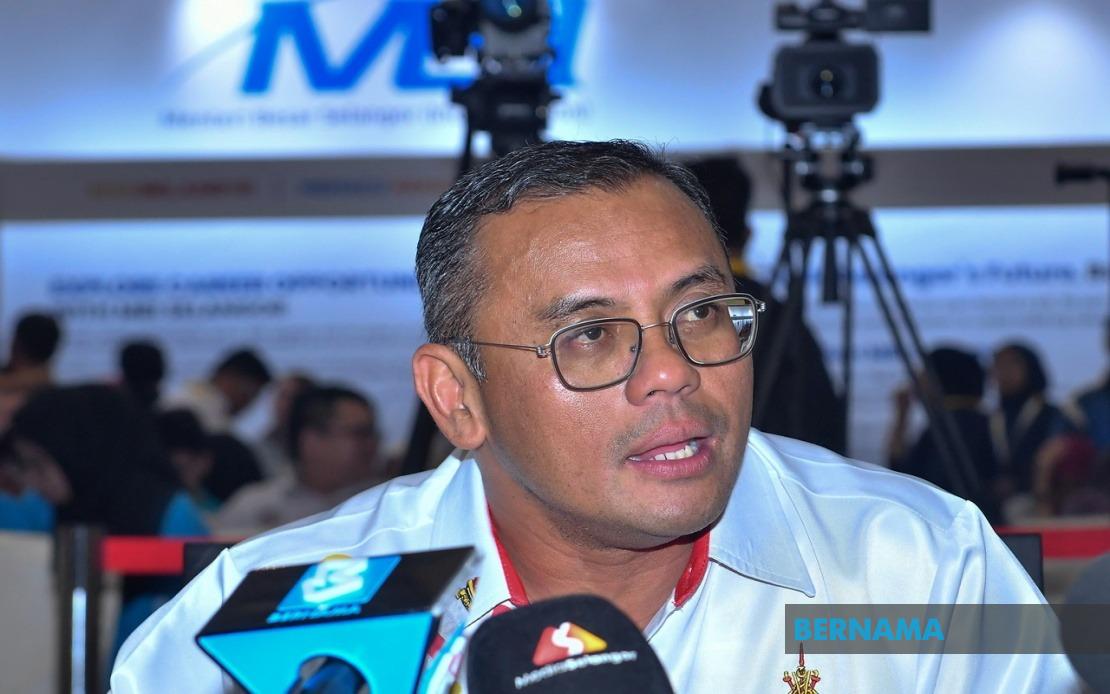
The Selangor state government is moving swiftly to cushion the impact on workers facing redundancy from Panasonic AVC Networks Kuala Lumpur Malaysia Sdn Bhd's decision to halt television manufacturing operations. Menteri Besar Datuk Seri Amirudin Shari announced that state officials will convene with affected employees next week to chart a course of immediate and longer-term support, signalling the administration's commitment to managing what could be a destabilising employment crisis in the state's manufacturing sector.
The closure will eliminate approximately 400 jobs by the end of March 2026, representing a significant blow to workers in the electronics assembly and consumer appliances industry—sectors that have traditionally provided stable, semi-skilled employment across Selangor's industrial corridors. While the timeline affords a transition period of several months, the sudden nature of such announcements typically catches workers without adequate preparation or financial buffers, making government intervention critical during the interim phase.
V. Papparaidu, chairman of the State Human Resources, Poverty Alleviation, Indigenous & Minority Affairs Committee, will lead the engagement sessions alongside representatives from the Social Security Organisation (PERKESO). The collaborative approach reflects growing recognition among state authorities that labour displacement cannot be addressed through ad-hoc measures alone. Rather, a coordinated response drawing on government social safety nets, established unemployment insurance mechanisms, and active job placement infrastructure offers the most comprehensive pathway for affected workers.
The state's immediate interventions extend beyond conventional retrenchment protocols. Food basket provision—a form of humanitarian relief commonly deployed during acute economic disruptions—will commence promptly, acknowledging that displaced workers face immediate household consumption pressures while seeking alternative employment. This tangible, rapid-response element signals empathy and ensures families do not immediately slide into subsistence difficulties as they navigate the transition.
PERKESO's employment insurance programme represents the substantive pillar of the assistance framework. Under this relatively new initiative, retrenched workers receive staged income replacement, beginning at 80 percent of their final salary in the first month following job loss, declining to 50 percent in the second month, and stabilising at 30 percent thereafter. This graduated reduction, while reflecting the expectation that re-employment timelines shorten across the initial months, provides crucial breathing room for household budgeting and sustained job-seeking effort. For Selangor residents accustomed to manufacturing wages typically ranging from RM2,000 to RM4,000 monthly, even the 30 percent floor translates into a substantial cushion against immediate poverty.
Parallel to income protection, the state government is leveraging active employment services to facilitate transitions into alternative roles. The juxtaposition of Panasonic's announcement with Selangor's concurrent Selangor Mega Jobcare 2026 programme underscores the potential for displaced workers to access expanded labour market opportunities. The career fair, unfolding at Shah Alam Convention Centre, consolidates 147 employers and represents more than 11,000 advertised positions. Notably, 62.2 percent of these vacancies offer monthly remuneration exceeding RM3,000, suggesting that contrary positions are achievable for workers willing to retrain or transition across roles.
The age-inclusive recruitment framework—accepting participants aged 18 to 60—acknowledges that Panasonic's manufacturing workforce spans multiple generational cohorts, each presenting distinct retrenchment challenges. Younger workers possess greater occupational flexibility and career runway, while older employees approaching retirement may face heightened barriers to re-employment and longer joblessness durations. A genuinely inclusive jobs fair must accommodate both cohorts, ensuring that experience and seniority represent marketable assets rather than liabilities in a youth-biased labour market.
Selangor's proactive stance carries broader ramifications for industrial relations in Malaysia's manufacturing heartland. The state houses one of the nation's densest concentrations of electronics, automotive components, and consumer appliances facilities, making workforce stability a paramount consideration for future foreign direct investment decisions. Companies contemplating manufacturing expansions in Malaysia monitor not only tax incentives and infrastructure quality but also the social climate surrounding workforce transitions. A state government that mobilises visibly to mitigate retrenchment impacts signals a business environment balancing profitability with stakeholder responsibility—a positioning that increasingly influences multinational location decisions.
The Panasonic case also highlights evolving structural pressures within Malaysia's electronics manufacturing sector. Competition from lower-cost producers in Vietnam, Thailand, and increasingly India has compressed margins for consumer electronics assembly operations in Malaysia, rendering some product lines uncompetitive at current wage and utility cost levels. Television set production—once a significant employment pillar in Selangor's industrial belt—has contracted sharply over the past decade as global supply chains consolidate and consumer purchasing patterns shift toward integrated smart television modules requiring different manufacturing skill profiles. Rather than viewing such closures as anomalies, policymakers must recognise them as symptoms of secular industry restructuring demanding strategic workforce reorientation across multiple sectors.
The coordination between state government, social insurance agencies, and job market intermediaries demonstrated in this response reflects lessons accumulated from previous manufacturing downturns in Malaysia's economic history. During the 2008-2009 global financial crisis and subsequent sector-specific disruptions, uncoordinated retrenchment processes exacerbated worker hardship and delayed re-employment. Contemporary approaches emphasizing early notification, multi-stakeholder engagement, and simultaneous income support plus job placement represent policy maturation addressing these historical shortcomings.
For Panasonic workers and their families, the coming months will test whether these institutional mechanisms translate into lived experience of economic security and dignified transitions. Success would manifest as rapid re-employment into comparable or upgraded roles, minimal income loss across the transition window, and preservation of household stability and morale. Selangor's commitment to active engagement and coordinated support suggests the state government recognises both the humanitarian imperative and the economic logic of cushioning manufacturing sector disruptions through systematised, generous, and timely interventions.

