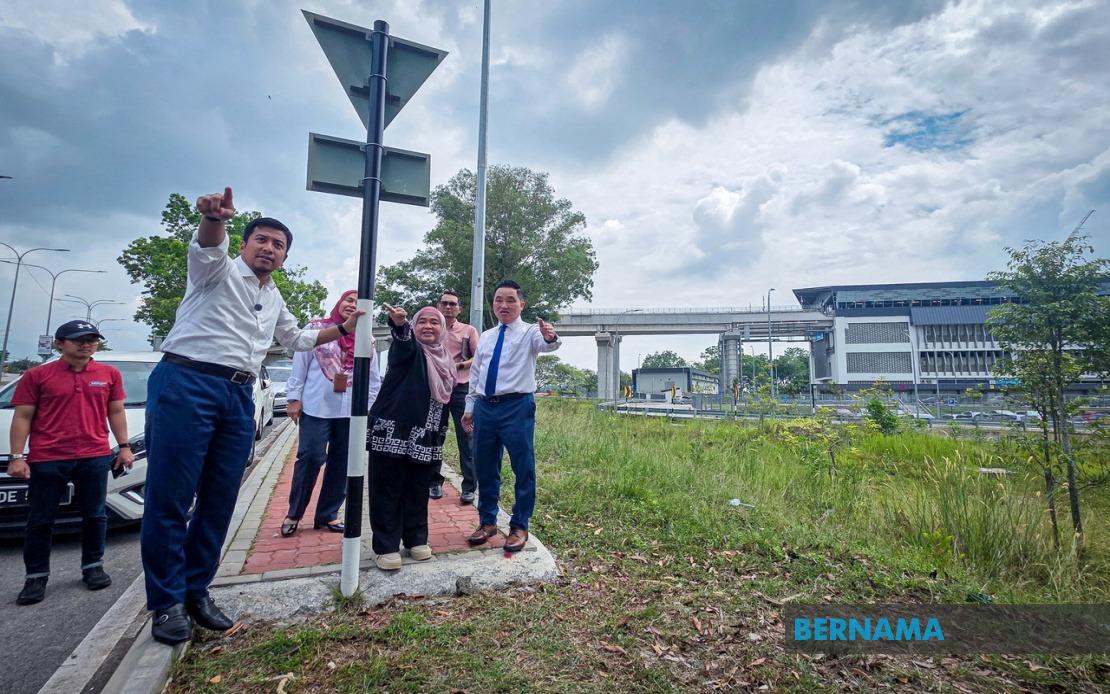
The Selangor State Government has committed to expediting the completion of connectivity infrastructure around Shah Alam Line LRT3 stations to provide a safer and more accessible experience for commuters. State Local Government and Tourism Exco Datuk Ng Suee Lim announced the action plan following an inspection of public-facing facilities at the transit nodes, signalling the administration's intent to address gaps that have emerged since the rail line's operation began.
Two stations have been identified as requiring immediate intervention. Dato' Menteri Station is facing delays related to permit applications and regulatory approvals, prompting the state government to issue a two-month directive to Prasarana, the transport operator, to complete the outstanding works. Meanwhile, Shah Alam Stadium Station presents a more complex situation, as the required improvements fall under the purview of nearby private developers who must navigate their own tender processes before commencing work. Despite this added complexity, state authorities have pledged to maintain oversight to prevent further delays.
The move reflects a broader acknowledgment within the Selangor administration that infrastructure projects, particularly those involving multiple stakeholders and developers, inevitably encounter teething problems during their initial operational phase. Rather than dismissing these issues as inevitable wear-and-tear, the government is positioning itself as proactive in identifying and rectifying shortcomings. This approach demonstrates a shift towards holding responsible parties accountable for delivering user-friendly facilities that justify the significant public investment in the LRT3 extension.
Coordination mechanisms are being strengthened to monitor progress across all affected stations. The Shah Alam City Council (MBSA) will serve as a key oversight body, while a series of coordination meetings with relevant developers has been scheduled to streamline the improvement process. This multi-agency framework aims to prevent bureaucratic delays by creating clear lines of communication and shared accountability among the council, state government, and private sector partners involved in completing the works.
The inspection also revealed that the issues affecting Shah Alam stations are not isolated incidents. The state government has directed all Local Authorities (PBT) operating LRT3 stations within their jurisdictions to conduct comprehensive reviews of their connectivity infrastructure. This broader audit seeks to identify similar deficiencies across the network, ensuring that improvements are not confined to a single location but part of a system-wide enhancement initiative. The Royal Klang City Council (MBDK) and other relevant authorities have been explicitly instructed to participate in this assessment.
Pedestrian accessibility and safety emerge as central concerns driving the state's intervention. The focus on pedestrian walkways and zebra crossings at Dato' Menteri and Shah Alam Stadium stations underscores the recognition that last-mile connectivity is essential for making public transport genuinely accessible to commuters. Without proper crossing facilities and walking infrastructure, even well-designed transit stations fail to serve their intended function, effectively isolating users from the wider urban environment the stations are meant to serve.
For Malaysian readers and Southeast Asian transit observers, this situation exemplifies the challenges that emerge when large transport infrastructure projects transition from the construction phase to actual operation. The LRT3 Shah Alam Line represents a significant investment in regional connectivity, yet its initial deployment has exposed coordination gaps between the transport operator, local authorities, and private developers who control adjacent land and facilities. These are common friction points in developing rapid transit systems across Asia.
The state's willingness to assign responsibility and set concrete timelines—particularly the two-month deadline for Dato' Menteri Station—suggests a more performance-oriented approach to governance. By publicly committing to specific completion dates and involving multiple monitoring bodies, the government creates internal accountability mechanisms that can drive results more effectively than general statements of intent. This model may offer lessons for other state administrations managing complex transport infrastructure projects.
The involvement of elected representatives at both state and local levels, including members of the Youth, Sports and Entrepreneurship portfolio, indicates that this issue has been escalated within the political hierarchy. This elevation reflects growing public expectations regarding transport infrastructure quality and the political salience of ensuring commuters receive adequate facilities. In a region where public transport is increasingly central to urban mobility strategies, the performance of these systems directly affects government popularity and public confidence in institutions.
Looking forward, the outcomes of these improvement initiatives will likely be closely monitored by other state governments considering LRT expansions or managing existing systems. Selangor's approach—combining operational oversight with developer accountability and local authority coordination—represents one model for addressing post-commissioning infrastructure gaps. The success or failure of this initiative will provide empirical evidence about whether such multi-stakeholder frameworks can deliver results efficiently.
The broader context matters significantly here. Malaysia's transport authorities have faced recurring criticism about the gap between promised and delivered service quality across various transit systems. By treating connectivity infrastructure as a priority worthy of government-level intervention, Selangor is responding to these broader concerns and positioning itself as responsive to commuter needs. This responsiveness, if followed through with tangible improvements, can build public confidence in future infrastructure investments and demonstrate that government can effectively coordinate complex multi-party projects.

