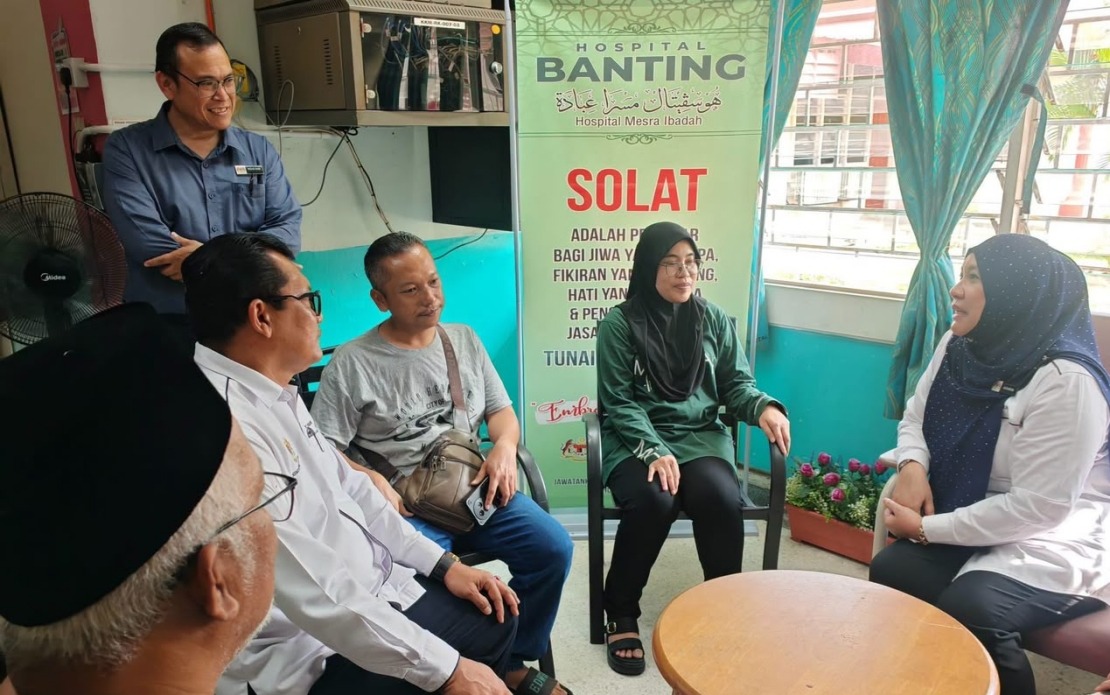
Officials from the Selangor State Education Department (JPN) made a hospital visit on Sunday to show support for a teenage girl who sustained serious injuries during a stabbing incident at her secondary school in Banting, located within the Kuala Langat district. The show of official concern, documented through a social media announcement, underscores the gravity of the attack and the state's commitment to pastoral care following the traumatic event.
The delegation was headed by JPN Selangor director Wan Nor Ashikin Abu Kassim, who spent time with the injured student at Banting Hospital where she continues her recovery. Beyond offering direct encouragement to the teenager, Wan Nor Ashikin also met privately with her parents to convey the department's support during what remains an extremely difficult period for the family. Such institutional visits, while routine in response to serious incidents affecting students, carry symbolic weight in reassuring affected families that their child's welfare remains a priority within the education system.
The victim, identified as a Form Three student, suffered extensive injuries during the attack. According to her father's account to media representatives, the 15-year-old sustained a pierced lung—a life-threatening injury—alongside sixteen separate stab wounds across her body. The severity and multiplicity of the wounds speak to a violent and sustained assault, raising urgent questions about school safety protocols and whether adequate intervention mechanisms existed to prevent such an extreme escalation of violence.
Through its official statement, the JPN Selangor expressed commitment to the student's full recovery and pledged continued cooperation with the victim's family, medical personnel at the hospital, and all government agencies involved in the investigation and response. This coordinated approach reflects recognition that trauma of this magnitude requires support extending beyond the educational sphere to encompass medical care, police investigation, and psychological counselling. The department's invocation of prayers for the student's recovery, while culturally appropriate, also acknowledges the uncertainty that surrounds such serious injuries.
The alleged perpetrator of the attack has been placed in police custody with a court-ordered remand period of four days beginning on the day of the visit. While authorities have not publicly disclosed extensive details about the suspect's background, identity, or potential motive, the remand extension suggests investigators believe they require additional time to gather evidence and construct their case. The brevity of official statements regarding the suspect contrasts sharply with more detailed reporting about the victim's condition, a pattern that may reflect either investigative discretion or judicial restrictions on pre-trial publicity.
This incident arrives against a backdrop of broader concerns about school safety and youth violence in Malaysia. While serious knife attacks within educational institutions remain relatively uncommon, the incident raises uncomfortable questions about whether current security measures and early warning systems are adequate to detect and prevent escalating conflicts before they result in physical harm. Schools function as controlled environments where staff ought theoretically to exercise greater oversight of student interactions and potential disputes than might occur in public spaces.
The stabbing in Banting has implications extending beyond the immediate victims and their families to encompass the entire school community, including fellow students who may have witnessed the attack or known the suspect. Educational psychologists have documented how such traumatic events can affect peer groups and create psychological ripples affecting academic performance and emotional wellbeing across an institution. Schools typically require robust post-incident support structures to help students process trauma and restore a sense of safety.
For Malaysian parents and educators, the incident serves as a sobering reminder of potential vulnerabilities within the school environment. While the vast majority of Malaysian schools function safely and incidents of serious violence remain atypical, the case demonstrates that schools cannot be assumed entirely immune from the broader social problems affecting Malaysian youth. Discussions about conflict resolution, mental health support, and security enhancements in schools may intensify in coming weeks, particularly if media coverage continues to focus public attention on the case.
The official response from JPN Selangor—combining immediate pastoral support, institutional coordination, and public acknowledgment of the crisis—represents standard protocol in crisis management within the education sector. However, whether such responses prove effective in preventing future incidents depends significantly on whether investigations yield insights into the underlying causes and whether identified systemic vulnerabilities are subsequently addressed through concrete policy adjustments or resource allocations.
As the investigation proceeds and the suspect remains in custody, attention will inevitably focus on understanding what precipitated such a violent attack within a school setting. Whether the incident stems from isolated interpersonal conflict, broader social pressures affecting the suspect, or undiagnosed mental health issues remains unclear from publicly available information. These distinctions matter considerably for determining appropriate preventive measures and whether the incident should be understood as an aberration or as symptomatic of deeper challenges within Malaysian schools.

