The Sejahtera MADANI initiative operating in Perak has reached a significant milestone, having channelled RM2.3 million in assistance to approximately 2,000 residents across the state. The programme's success has prompted federal authorities to inject a further RM3 million into its operations, signalling sustained commitment to broadening the reach and impact of the welfare initiative among vulnerable segments of the population. This expansion comes as the government seeks to demonstrate tangible progress in its poverty alleviation and community development agenda.
Muhammad Kamil Abdul Munim, the Finance Minister's political secretary, outlined the government's vision for the expanded initiative during an event in Kuala Kangsar. He emphasised that the additional resources would enable the programme to serve a larger cross-section of beneficiaries, with particular emphasis on supporting micro-entrepreneurs struggling with limited capital, families subsisting on modest incomes, and academically accomplished students pursuing higher education. The strategic targeting reflects a recognition that different demographic groups face distinct economic challenges requiring tailored interventions.
Beyond simple cash transfers, the Sejahtera MADANI initiative has evolved into a more comprehensive support ecosystem. Recipients classified as small-scale business operators receive not only financial assistance but also practical tools and equipment designed to enhance their productive capacity. This equipment-based support acknowledges that capital constraints alone often prevent entrepreneurs from scaling operations or improving efficiency. Students demonstrating exceptional performance in their Sijil Pelajaran Malaysia examinations have been granted laptops, recognising that technological access plays an increasingly critical role in tertiary education and future employment prospects.
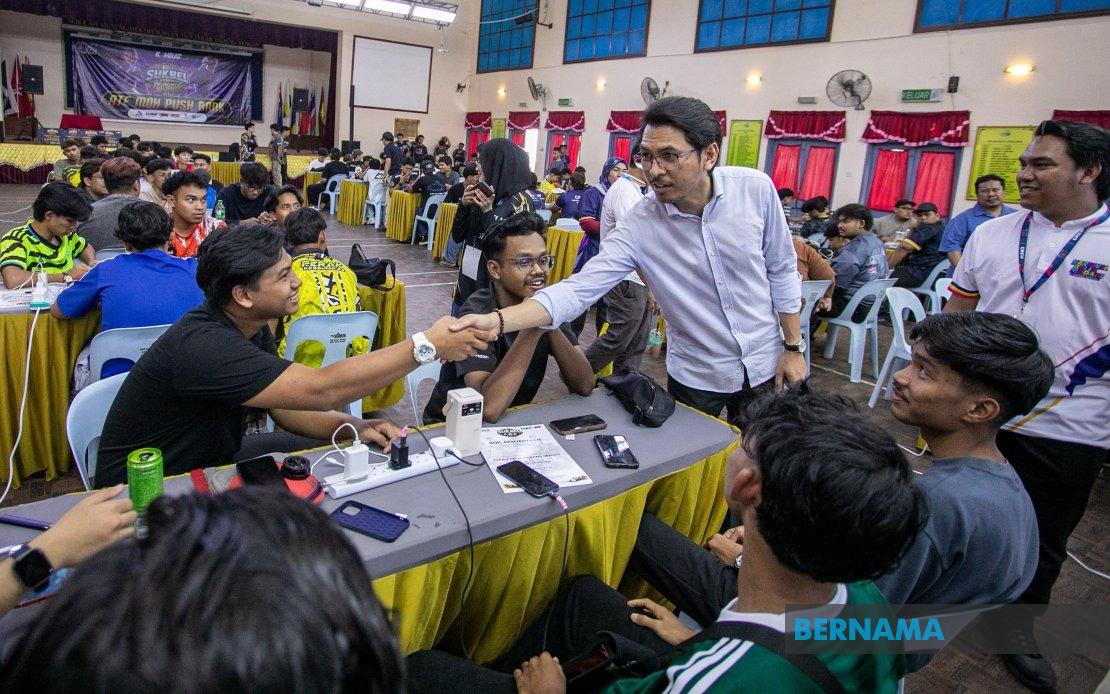
During the roadshow held at the Millennium Hall in Lubok Merbau, the programme's multifaceted approach was demonstrated in action. Thirteen high-achieving SPM students entering university received laptop computers, while five small-scale entrepreneurs were presented with business equipment. These tangible deliverables represent the government's attempt to move beyond rhetoric toward measurable assistance that directly enhances recipients' capabilities and opportunities. The selection of high-performing students for technology support reflects a deliberate strategy to invest in human capital development.
The government's framing of this initiative situates it within the broader MADANI framework, which emphasises precision in welfare delivery and direct public benefit. Muhammad Kamil articulated this philosophy explicitly, stressing that every ringgit dispersed through the programme must generate demonstrable improvements in living standards and educational attainment. This outcome-focused approach stands in contrast to generalist welfare distribution and signals an expectation that beneficiary communities will leverage the support to achieve measurable advancement.
However, the expansion announcement also carries an implicit acknowledgment of previous implementation challenges. Muhammad Kamil revealed that the government intends to substantially strengthen monitoring mechanisms governing the Sejahtera MADANI grant scheme, citing concerns about project failures and potential financial mismanagement. This candid admission reflects lessons learned from the scheme's initial rollout, where inadequate oversight apparently permitted some initiatives to falter or diverge from intended objectives.
The original programme design invested considerable trust in local communities, allowing neighbourhood groups to identify their own project priorities rather than imposing top-down directives. This community-driven approach theoretically aligns with principles of subsidiarity and democratic participation at the grassroots level. Yet Muhammad Kamil conceded that this decentralised model produced implementation weaknesses, suggesting that grassroots autonomy, while philosophically appealing, sometimes faltered when communities lacked technical expertise or administrative capacity to execute complex projects.
The government's response involves implementing tighter supervisory frameworks while accepting that minor deficiencies are inevitable in any large-scale social programme. Muhammad Kamil stated that enhanced ongoing monitoring would serve as a safeguard against fraud and financial leakages during implementation. This represents a recalibration between trusting community initiative and maintaining fiscal discipline, seeking a middle path that neither infantilises local stakeholders nor abandons accountability mechanisms. Such tension between empowerment and oversight reflects fundamental challenges in decentralised governance.
For Malaysian policymakers and Southeast Asian observers, the Sejahtera MADANI initiative offers instructive lessons about welfare programme design in contexts where capacity constraints and corruption risks necessitate careful institutional architecture. The programme's expansion to Perak demonstrates that despite implementation challenges, the political leadership considers the initiative sufficiently valuable to merit increased investment. The combination of financial transfers, equipment provision, and educational support reflects sophisticated thinking about poverty reduction that moves beyond simple cash payments.
The RM3 million supplementary allocation, while substantial in absolute terms, remains modest relative to Malaysia's broader fiscal capacity, suggesting that policymakers view this initiative as a pilot or demonstration project rather than a comprehensive national safety net. Its concentration in Perak indicates either particular political significance for that state or a deliberate approach to testing and refining the model before broader national expansion. Monitoring how effectively the enhanced oversight mechanisms function will provide valuable data for future welfare programme design across Southeast Asia.
The targeting of entrepreneurs and high-achieving students reflects strategic choices about which vulnerable populations warrant state investment. By supporting business operators with tools rather than subsidies, the government signals confidence in market mechanisms while acknowledging that initial capital constraints prevent participation. Similarly, rewarding academic excellence with laptops combines welfare provision with meritocratic principles, sending signals about which forms of disadvantage the state considers legitimate and addressable through targeted support. These choices reveal underlying assumptions about poverty causation and appropriate remedies.

