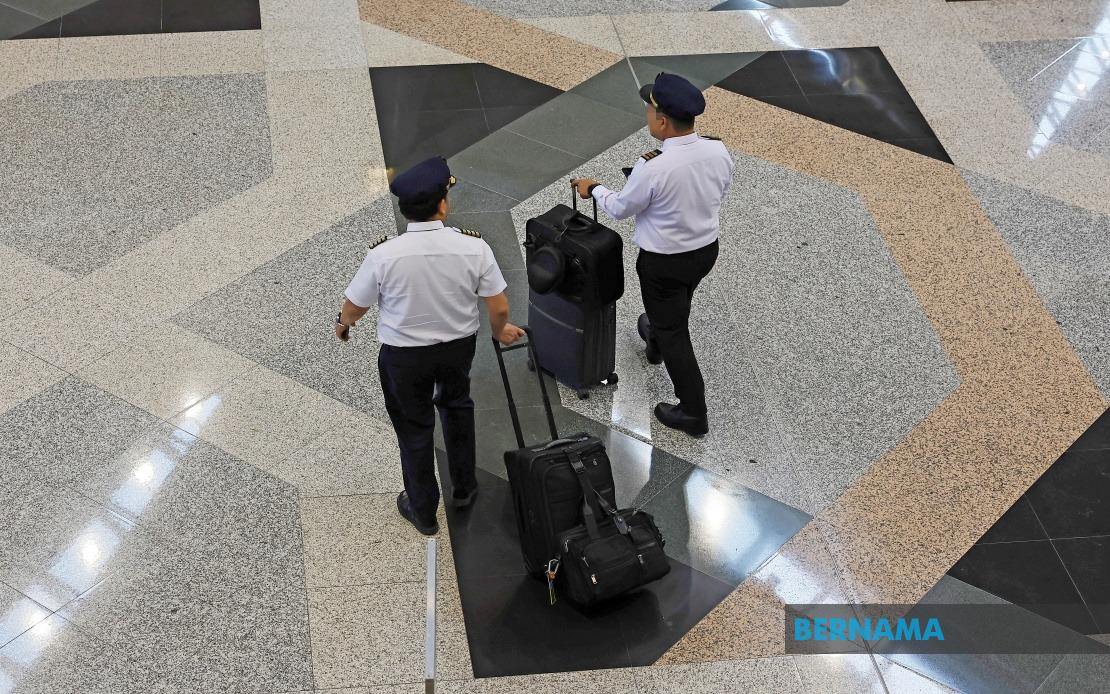
The arrest of a Malaysian airline pilot at Jakarta's Soekarno-Hatta International Airport has prompted serious questions about screening procedures at home, with civil society figures calling for an urgent overhaul of security measures at Kuala Lumpur International Airport. The 39-year-old pilot was apprehended at Terminal 3 after Indonesian authorities alleged he attempted to smuggle 25 kilogrammes of drugs, raising alarm bells about potential vulnerabilities in Malaysia's aviation security infrastructure.
Tan Sri Lee Lam Thye, chairman of the Alliance For A Safe Community, has become the most vocal voice demanding action following the incident. In a statement released on August 5, Lee stressed that while respecting legal presumptions of innocence, the case exposes uncomfortable gaps in how Malaysia's premier international airport handles security screening. His intervention signals growing concern among Malaysian civic leaders that the country's aviation security reputation could be at risk if weaknesses remain unaddressed.
The central question Lee raises cuts to the heart of airport operations: how contraband of such magnitude allegedly passed through KLIA's security checkpoints undetected. This query extends beyond simple procedural failure and touches on systemic issues that could affect Malaysia's standing as a regional aviation hub. The implication is stark—if screening measures proved inadequate in this instance, similar lapses could occur with other travellers and cargo, potentially exposing Malaysia to international scrutiny and damaging confidence in the country's transport security ecosystem.
Lee's call encompasses a multi-agency review involving airport security operators, the Royal Malaysia Police, and the Civil Aviation Authority. This horizontal coordination reflects the complexity of modern aviation security, which requires seamless integration across multiple institutional actors. Each agency manages different aspects—physical security, personnel vetting, explosives detection, and regulatory oversight—and failures in any single link can compromise the entire chain.
A particularly sensitive dimension involves airport personnel and flight crew, who enjoy greater facility access than ordinary passengers. Lee pointedly emphasized that security protocols must apply uniformly regardless of professional status or seniority within the aviation industry. This egalitarian approach to screening represents a critical principle: trust in the system depends on visible consistency and the absence of perception that certain groups receive preferential treatment or laxer scrutiny. Any suggestion that airport workers or pilots operate under different security standards would fundamentally undermine public confidence.
The timing of this incident carries regional implications for Southeast Asia. As aviation hubs across the region compete for international traffic and investment, security breaches risk reputational damage that affects passenger confidence, international partnerships, and carrier relationships. Malaysia's reputation as a reliable, secure transit point influences decisions by airlines, freight operators, and international bodies assessing regional aviation standards. A serious security lapse could have knock-on effects for related industries including tourism and logistics.
Lee's emphasis on protecting Malaysia's aviation security integrity reflects awareness that modern airports operate under intense international scrutiny. International Civil Aviation Organization standards, bilateral aviation agreements, and intelligence sharing arrangements all depend on demonstrated competence in security management. Any incident suggesting inadequate screening potentially triggers reviews by partner nations and could influence cooperation on security matters that extend far beyond airports themselves.
The case also illuminates how transnational crime exploits vulnerabilities at the intersection of national borders. An attempt to move contraband from Malaysia to Indonesia demonstrates that traffickers actively test security systems to identify weak points. The fact that detection occurred only at the destination airport rather than the departure point suggests that Indonesian authorities may have possessed specific intelligence or operated under different screening protocols. Understanding why Jakarta's screening succeeded where KLIA's apparently did not could yield valuable insights for Malaysian authorities.
Going forward, any comprehensive security review should examine multiple factors: technology used for detection, training standards for screeners, consistency of protocols across different terminals and shift times, communication systems between security personnel, and periodic audits of screening effectiveness. International best practices suggest that security measures require constant evolution as smuggling techniques become more sophisticated. Screening staff require regular refresher training, detection equipment needs calibration and updating, and operational procedures should be stress-tested against realistic scenarios.
Beyond procedural improvements, the incident raises staffing questions. KLIA operates as a major hub handling hundreds of thousands of passengers monthly, and screening effectiveness depends partly on whether security personnel work under manageable conditions. Overstretched staff working long shifts with inadequate supervision may miss warning signs. Conversely, investigating whether personnel were compromised—whether through bribery, coercion, or negligence—represents another crucial dimension that authorities must address with sensitivity but thoroughness.
Lee's call for action also reflects broader anxieties in Malaysian society about drug trafficking and aviation security. Public concern about drug smuggling has intensified in recent years, and high-profile cases reinforce perceptions that Malaysia remains a transit point for international drug networks. The pilot's arrest, regardless of eventual legal outcome, becomes symbolic of this vulnerability. Demonstrating that authorities take security seriously through visible, concrete reforms helps reassure the public and international partners that Malaysia takes its responsibilities as a regional aviation centre seriously.
The conversation around KLIA security also touches on resource allocation within Malaysia's security apparatus. Airport security competes for budget allocation and personnel against other priorities including border control, cybersecurity, and counterterrorism. Whether screening procedures represent deliberate trade-offs between security and passenger convenience, or reflect genuine resource constraints, remains an open question that a comprehensive review should address.
Ultimately, Lee's intervention represents civil society playing its proper role—demanding institutional accountability and transparency when public safety may be compromised. His call for a thorough investigation rather than defensive dismissal sets a constructive tone for how Malaysia should approach the incident. The real test will be whether relevant authorities demonstrate genuine commitment to identifying gaps, implementing corrections, and maintaining elevated security standards going forward.

