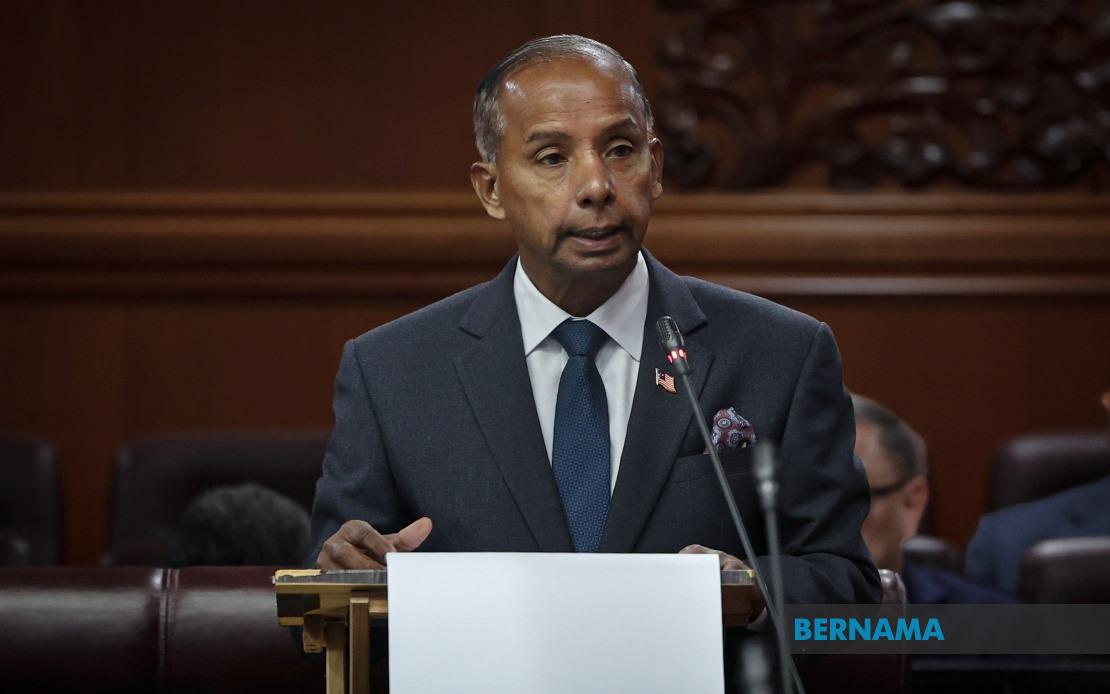
The tension between national security and individual freedoms remains one of the most delicate balancing acts facing modern democracies, and Malaysia is no exception. During a parliamentary symposium on security-related crimes, Deputy Minister in the Prime Minister's Department for Law and Institutional Reform M. Kulasegaran articulated a vision for legal reform that sidesteps the false choice between toughness and permissiveness. His message carries particular weight given Malaysia's experience with security challenges ranging from militant extremism to transnational crime, alongside growing concerns about civil liberties and institutional oversight.
Kulasegaran framed the challenge not as a binary question of whether stronger or weaker laws are needed, but rather as a fundamental design problem: how to craft legal instruments that adequately protect national security while remaining anchored to constitutional principles, the rule of law, and justice. This framing is significant because it rejects the emergency-driven mentality that often pushes governments toward expansive security powers without sufficient safeguards. Instead, it proposes that effective security policy and human rights protection are not opposing forces but complementary objectives that must be pursued through deliberate legislative craftsmanship.
The contemporary security environment has transformed dramatically from traditional military and border concerns. Cyber attacks, artificial intelligence misuse, disinformation campaigns, and hybrid threats combining physical, digital, economic, and psychological dimensions now dominate threat assessments across the region. Malaysia, as a digitally advancing nation with critical infrastructure increasingly vulnerable to sophisticated attacks, faces these emerging risks acutely. Kulasegaran acknowledged that legal frameworks must remain responsive to technological development and social change, recognising that legislation cannot become ossified in outdated threat models while adversaries adapt continuously.
Yet the deputy minister made clear that responsive does not mean unrestricted. Every security measure, he stressed, must remain grounded in the Federal Constitution and principles of justice. This constitutional anchoring serves as a guardrail against the mission creep that often accompanies security legislation. Once powers are granted—to monitor communications, detain suspects, or access private data—they tend to persist and expand beyond their original scope. By insisting on constitutional compliance, Kulasegaran implied that reform should occur within established democratic structures rather than through extraordinary measures that circumvent them.
The involvement of Rita Sarimah Patrick Insol, chairman of the Dewan Negara Special Select Committee on Law Review, highlights Parliament's intended role as a check on executive power. She underscored that modern security threats have prompted many countries to review their legislation, creating a global imperative for reform. However, she noted that this review process must occur while preserving democratic institutions, the rule of law, and human rights protections. For Malaysia, this is particularly relevant given ongoing discussions about legacy security legislation and concerns from civil society about discretionary powers vested in law enforcement agencies.
Kulasegaran's call for a whole-of-government and whole-of-society approach represents a departure from siloed, security-first policymaking. By explicitly including Parliament, the private sector, academia, civil society, and the public in national security efforts, he acknowledged that sustainable security policy requires broader legitimacy and input than traditional military or intelligence-led frameworks provide. This approach also implicitly recognises that security threats themselves are often rooted in social grievances, economic disparities, or technological inequalities—challenges that security legislation alone cannot address.
The timing of this symposium reflects Malaysia's ongoing efforts to modernise its security architecture. The country currently operates under several decades-old legislation, including provisions that scholars and human rights organisations have criticised for vague language, broad discretion, and limited parliamentary oversight. Kulasegaran's emphasis on continuous improvement suggests openness to incremental reform rather than wholesale overhaul, which may be a pragmatic approach to building consensus among diverse stakeholders with different threat perceptions.
For Malaysian readers and policymakers, the deputy minister's remarks offer a framework for evaluating proposed security measures. Rather than accepting security arguments at face value, legislation should be scrutinised for whether it contains sunset provisions, independent oversight mechanisms, proportionality safeguards, and clear definitions of criminal conduct. International precedent shows that democracies can strengthen security without wholesale suspension of rights when these elements are present. Conversely, legislation lacking such safeguards frequently becomes instruments of political control rather than genuine security enhancement.
The participation of the National Security Council's director-general signals that this discussion involves the highest levels of the security establishment. If Malaysia's security bureaucracy accepts the premise that human rights and security are complementary rather than contradictory, it creates space for genuine reform. However, implementation remains distinct from rhetoric. Track records matter—whether existing security agencies respect judicial oversight, comply with transparency requirements, and refrain from abuse will ultimately determine public confidence in any new legislation.
Regionally, Malaysia's approach may influence peer nations grappling with similar questions. Southeast Asia faces comparable security challenges, from terrorism and transnational crime to cyber threats and foreign interference. Yet the region's experience with security legislation has been mixed, with some countries using security frameworks to suppress legitimate dissent or entrench authoritarian practices. A Malaysian model that genuinely integrates human rights protections into security design could offer a middle path between security nihilism and authoritarian securitisation.
Kulasegaran's emphasis on technology-responsive legislation is particularly prescient given the rapid evolution of artificial intelligence and its security applications. AI-driven surveillance, predictive policing, and automated decision-making in security contexts raise novel questions about accountability and bias that existing legal frameworks struggle to address. A forward-looking legal reform process must grapple with these issues before AI security applications become entrenched and difficult to regulate retrospectively.
The symposium itself represents an institutional mechanism for integrating diverse perspectives. By convening security professionals, parliamentarians, and implicitly creating space for civil society input, it demonstrates that security policy need not be conducted purely through classified channels. Public deliberation about security law strengthens legitimacy and allows civil society to contribute expertise about implementation challenges and unintended consequences. This transparency-within-security framework is increasingly recognised as essential to sustainable security policy.
Ultimately, Kulasegaran's message reflects a mature approach to governance: acknowledging genuine security threats while refusing to weaponise security concerns against legitimate freedoms. Malaysia faces real security challenges that demand legal tools adequate to contemporary threats. Yet the country also has constitutional traditions and democratic institutions worth preserving. The challenge is not choosing between them but architecting legislation that serves both purposes. Whether Malaysia's executive, Parliament, and civil society can achieve this balance will shape the country's trajectory toward either stronger democracy or creeping authoritarianism.

