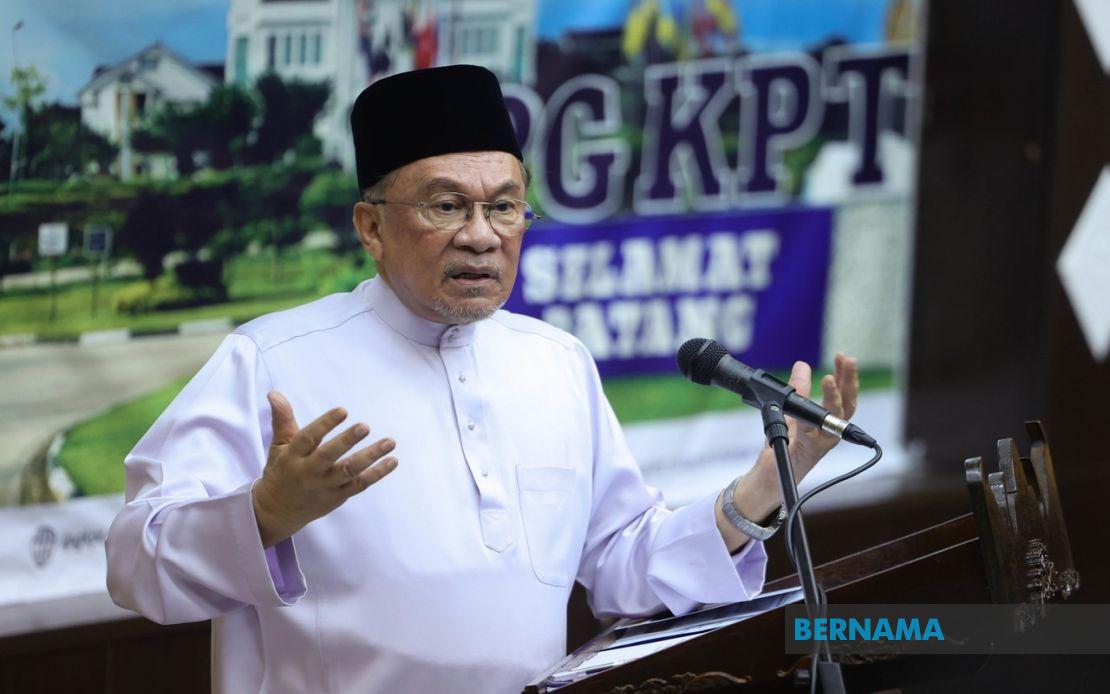
Prime Minister Datuk Seri Anwar Ibrahim has issued a direct appeal to school administrators across Malaysia to abandon the practice of concealing bullying incidents in order to preserve their institutions' public standing. Speaking in Nilai on July 17, Anwar stressed that transparency and decisive intervention are far more important than protecting a school's image, and that institutional silence on such matters ultimately harms the very students these organizations are meant to serve.
The Prime Minister's comments reflect growing concern about how bullying cases are handled within the education system. Anwar rejected the notion that reporting such incidents reflects poorly on school leadership, reframing the issue entirely. A school with 1,000 students that openly documents two bullying cases demonstrates responsible governance, he argued, whereas a headteacher or principal who fails to take action or deliberately obscures such matters has fundamentally breached their duty to safeguard student welfare. This distinction is crucial: the problem is not the existence of bullying, which can occur in any institution, but the institutional response to it.
Underscoring his position, Anwar characterized the widespread persistence of bullying in Malaysian schools as symptomatic of deeper shortcomings in moral and character education. Despite unprecedented access to religious instruction in recent decades, he observed, schools continue to grapple with behavioral issues that suggest values-based learning is not taking root. This diagnosis points to a systemic gap between curriculum design and actual outcomes—students may be receiving more religious education than previous generations, yet incidents of peer abuse persist at troubling levels.
The Prime Minister articulated a vision of education that extends far beyond academic credentials or technical competence. While Malaysia rightly aspires to produce graduates with strong qualifications and specialized skills, Anwar contended that these accomplishments ring hollow if students lack fundamental human decency. His rhetorical question—what value lies in PhDs, IT expertise, or technocratic mastery if graduates do not understand humanity and respect their peers?—crystallizes a philosophical tension that Malaysian education policy must address. Technical excellence without moral grounding creates professionals who may be intellectually capable but emotionally and ethically underdeveloped.
This perspective carries significant implications for Southeast Asia's broader development trajectory. As regional nations compete to build knowledge economies and attract high-tech investment, there is constant pressure to prioritize STEM education and vocational training. Yet Anwar's intervention suggests that Malaysia, at least at the leadership level, recognizes that sustainable development and social stability depend on cultivating empathy, integrity, and respect for human dignity alongside scientific and technical prowess. This integrated approach to education may prove increasingly valuable as societies grapple with social fragmentation and polarization.
The role of teachers emerges as central to Anwar's framework. He emphasized that educators carry profound responsibility for ensuring schools function as genuine learning communities—spaces where knowledge transmission is inseparable from the cultivation of faith, moral resilience, and compassion. This conceptualization of the teaching profession positions teachers not merely as content deliverers but as moral agents whose daily interactions with students shape character formation. Given the competing demands on teachers' time and resources, however, supporting this expanded vision will require institutional commitment and resource allocation.
Education Minister Fadhlina Sidek's presence at the event signals ministerial alignment with the Prime Minister's stance, suggesting that transparent bullying-incident reporting may become embedded in education policy frameworks. If implemented effectively, such a shift would represent a meaningful departure from institutional cultures that have historically prioritized reputation protection over victim advocacy. The challenge lies in ensuring that transparency requirements do not simply result in bureaucratic box-ticking without corresponding improvements in prevention, intervention, and support systems for affected students.
The Prime Minister's comments also implicitly validate students and families who have advocated for greater accountability in how schools handle bullying. Malaysian schools, like institutions worldwide, have sometimes responded to complaints by transferring perpetrators, minimizing incidents, or pressuring victims' families into silence. Anwar's intervention provides high-level political endorsement for those demanding better practices, potentially emboldening parents and student advocates to hold schools accountable without fear of institutional retaliation.
While acknowledging these challenges, Anwar voiced confidence in the Malaysian teaching profession's capacity and commitment. He noted that teachers are performing at high standards and expressed optimism that educational achievement will continue advancing as quality improvement initiatives take hold. This balanced assessment—simultaneously critical of systemic gaps and affirming of professional competence—reflects sophisticated understanding that widespread bullying issues cannot be attributed to teacher failure alone. Rather, they result from complex interactions between individual behavior, peer dynamics, family backgrounds, media influences, and institutional policies.
The broader context for Anwar's remarks involves Malaysia's ongoing efforts to position itself as a regional education leader while simultaneously confronting social cohesion challenges. Bullying often intersects with identity-based discrimination, and transparent incident reporting could reveal uncomfortable truths about ethnic, religious, or socioeconomic dynamics within schools. Yet avoiding such revelations through silence merely perpetuates systemic injustice. Sunlight, as the saying goes, remains the best disinfectant.
Moving forward, implementing Anwar's vision requires mechanisms for schools to report bullying without fear of punitive consequences, robust support systems for both victims and perpetrators, teacher training in conflict resolution and trauma-informed practice, and community engagement around bullying prevention. The message is clear: institutional integrity depends on transparency and accountability, not reputation management through concealment. For Malaysian schools prepared to embrace this approach, the result could be safer, more humane learning environments where students develop both intellectual excellence and genuine respect for human dignity.

