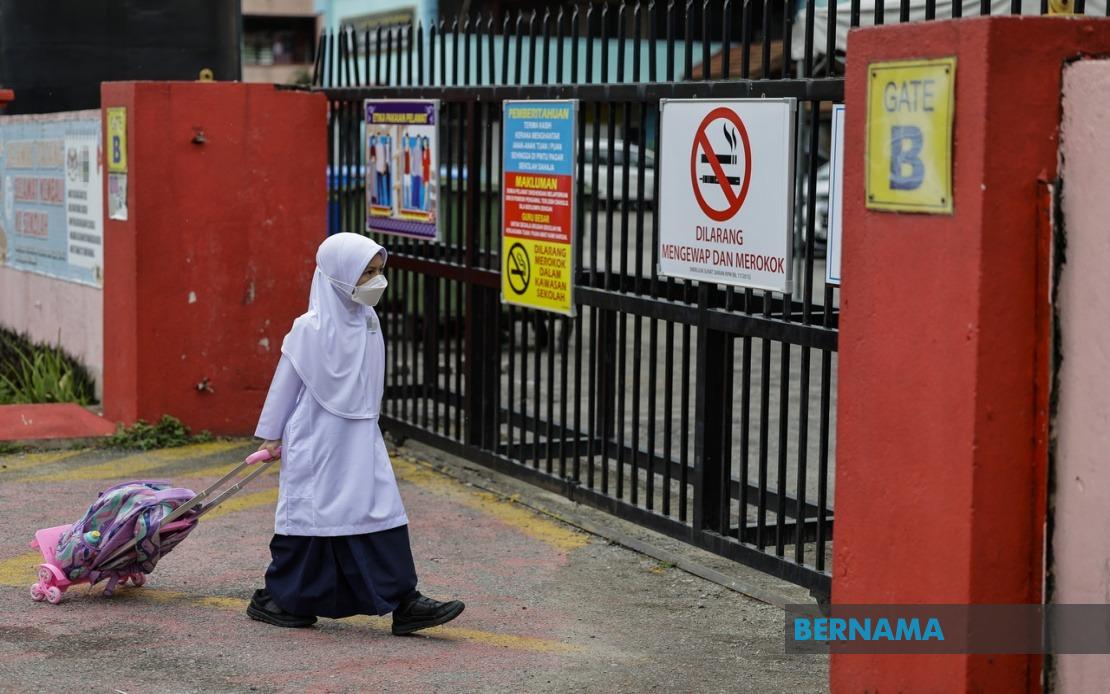
Schools across Malaysia have the authority to shut their doors when air quality deteriorates to hazardous levels, according to Deputy Education Minister Wong Kah Woh, who outlined the framework governing institutional responses during haze episodes. Speaking in Taiping after a corporate partnership signing, Wong explained that principals and headmasters can make closure decisions when the Air Pollutant Index surpasses 200, acting on recommendations from State Education Departments and District Education Offices. This discretionary approach reflects the ministry's recognition that local conditions vary significantly across the country, necessitating flexible rather than uniform protocols.
The Ministry of Education maintains a series of standing circulars specifically addressing haze management, with the most recent iterations released in 2016, 2019 and 2023. These documents form the institutional backbone for how schools nationwide manage air quality crises, establishing benchmark thresholds and procedural guidelines that have been refined through successive cycles of regional haze events. The existence of multiple circulars underscores that haze management has become an recurring operational concern for Malaysian schools, particularly those in regions vulnerable to transboundary smoke pollution.
Long before reaching the critical threshold that permits closure, schools must already be implementing protective measures. When API readings climb above 100, schools are mandated to immediately halt all outdoor activities and cancel gatherings that would expose students to degraded air. This intermediate level of intervention acknowledges that unhealthy air quality poses significant health risks to young people, whose respiratory systems remain developing and therefore more susceptible to pollution-related harm. The suspension of outdoor sports events sits alongside these general restrictions, preventing competitive fixtures and training sessions that would require sustained physical exertion in contaminated air.
The responsibility for moment-to-moment decision making rests ultimately with school administrators working in consultation with education authorities. Rather than implementing top-down mandates from the federal level that might prove inappropriate for specific localities, the system empowers principals to evaluate real-time conditions and respond accordingly. This distributed decision-making framework places considerable trust in school leadership, assuming they will access current air quality data, consult relevant authorities, and weigh the balance between educational continuity and student health protection appropriately.
Monitoring mechanisms operate continuously through official channels, with State Education Departments and District Education Offices tracking atmospheric conditions and API measurements throughout their jurisdictions. This surveillance infrastructure enables rapid identification of emerging haze situations and facilitates timely communication of alerts and recommendations to school administrators. The monitoring commitment reflects official acknowledgement that haze events can develop quickly and affect different areas unevenly, making real-time tracking essential for coordinated responses.
For Malaysian parents and students, these protocols carry immediate practical implications. School closures disrupt learning continuity and create childcare challenges for working families, yet represent necessary protective measures when air quality becomes genuinely dangerous. The clarification of closure criteria provides transparency about when families might expect institutions to shut, allowing households to plan contingencies. Students in regions frequently affected by transboundary haze face particular uncertainty about educational scheduling, making clear guidelines especially valuable.
The regional context adds another layer of complexity to Malaysia's haze management challenge. Transboundary smoke from agricultural burning in neighbouring countries regularly degrades air quality across Malaysian states, particularly Peninsular Malaysia's northern and eastern regions. These episodes occur with enough regularity that educational systems must maintain permanent protocols rather than treating them as exceptional events. Wong's comments came as several areas nationwide were simultaneously recording unhealthy API readings, illustrating the geographical breadth of potential impacts.
Comparison with neighbouring countries reveals varied approaches to school operations during haze events. Some jurisdictions implement automatic closures at specified API thresholds, while others follow Malaysia's approach of granting principals discretionary authority. The discretionary model offers flexibility but creates potential inconsistency, where schools in adjacent areas might respond differently to identical air quality conditions. However, proponents argue that local knowledge and flexibility better serve diverse school communities than rigid prescriptions.
The health implications for students exposed to poor air quality extend beyond immediate respiratory discomfort. Research on air pollution effects on children documents associations between exposure to particulate matter and reduced cognitive performance, absenteeism, and long-term respiratory health impacts. Schools serving lower-income communities that cannot afford air purification systems or alternative indoor facilities may face particular challenges in protecting vulnerable populations during haze episodes. These equity dimensions rarely feature explicitly in policy discussions but warrant consideration as climate variability potentially increases haze frequency.
Moving forward, schools should ensure they maintain updated copies of the relevant circulars and establish clear internal protocols for API monitoring and response escalation. Parent communication strategies become crucial, as families need timely notification of closures or activity suspensions. Some institutions might benefit from installing air quality monitoring equipment to supplement government data, enabling real-time informed decision-making rather than depending solely on external updates. Investment in indoor air filtration systems for classrooms could also reduce exposure during marginal air quality periods when closures might not be justified but risks remain elevated.
The broader policy context suggests that purely reactive school closures represent only one component of comprehensive haze response. Addressing underlying causes through regional cooperation on land use practices, agricultural alternatives to open burning, and transboundary air quality agreements offers longer-term solutions. In the interim, however, transparent protocols that balance educational access with health protection remain essential, particularly as climate patterns show increasing volatility in air quality across the region.

