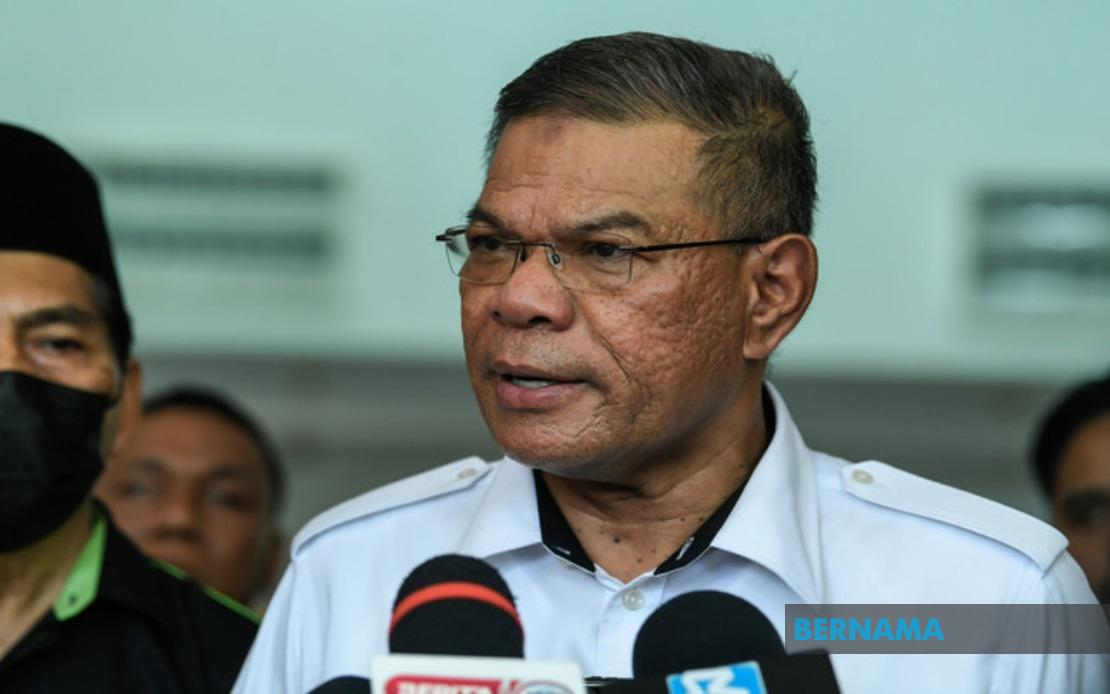
Home Minister Datuk Seri Saifuddin Nasution Ismail has moved to broaden public understanding of the mandate entrusted to School Liaison Officers across Malaysia, emphasising that their responsibilities encompass a full spectrum of institutional safety concerns rather than remaining confined to addressing bullying behaviour. Speaking in Kulim on July 22 after inspecting fire-damaged facilities at Sekolah Menengah Agama Tarbiah Diniah, Saifuddin Nasution clarified that the Royal Malaysia Police's deployment of these officers forms part of a multi-layered approach to safeguarding the school environment for students, parents and staff alike.
The Home Minister's remarks came in response to mounting public concern over viral incidents of bullying captured on social media, most recently a case in Cheras that sparked widespread discussion about security protocols in educational institutions. Rather than dismissing the concerns, Saifuddin Nasution contextualised them within a broader framework that acknowledges numerous potential hazards confronting students during their time on campus. The clarification suggests that while bullying incidents capture headlines, the actual operational focus of School Liaison Officers extends across a far more expansive terrain of risk management and welfare monitoring.
Beyond the involvement of police personnel stationed at schools, the Home Ministry also deploys officers from the National Anti-Drugs Agency (AADK) to work within educational settings, creating a dual-pronged monitoring apparatus intended to track student welfare across multiple dimensions. This collaborative structure allows institutions to maintain vigilance not only against interpersonal conflicts but also against substance-related threats and other emerging risks that could compromise the integrity of the school environment. The combination of police and anti-drugs personnel creates overlapping networks of observation designed to capture warning signs that might otherwise escape notice in the ordinary functioning of a large institution housing hundreds of young people.
School Liaison Officers themselves are drawn from district police headquarters and nearby police stations, selected for their ability to work effectively with younger populations and to build trust with school management, parents and students through structured engagement programmes. The deployment strategy reflects an understanding that effective safety management requires ongoing presence and relationship-building rather than reactive intervention following incidents. Officers participate in various community-based initiatives designed to normalise police presence within schools and to create channels of communication that students might access if they encounter problems or witness concerning behaviour among their peers.
The push to clarify and expand understanding of these officers' roles appears to reflect government sensitivity to criticism that existing mechanisms have proven insufficient in preventing bullying incidents that escalate to the point of viral social media exposure. By articulating the broader mandate, the Home Minister positions the initiative as a comprehensive response to institutional risk rather than a narrow response to a single problem category. The reference to ongoing investigations into incidents such as a student's fall at a school in Kuala Nerang demonstrates the diversity of situations that fall within the scope of School Liaison Officer monitoring.
Saifuddin Nasution's visit to Kulim was precipitated by a hostel fire at Sekolah Menengah Agama Tarbiah Diniah that erupted around 2:30 am and destroyed the building entirely, affecting 116 students who lost their belongings and temporary shelter. The incident, occurring in the early hours when students were sleeping, represents precisely the kind of crisis situation that demands immediate coordinated response across multiple government agencies. The fire's severity—complete destruction of a hostel building housing adolescents—underscores the unpredictable nature of threats to school safety that extend far beyond interpersonal conduct.
The government's response to the hostel fire fire demonstrated rapid mobilisation of emergency resources. Saifuddin Nasution announced immediate cash assistance of RM500 per affected student to help replace essential school materials lost in the blaze, with some students left with only the clothes they wore when evacuated. This direct financial support aimed to ease the transition period while more substantial recovery measures were organised. The minister acknowledged the psychological and practical hardship imposed by sudden loss of personal property during critical years of schooling.
Following consultation with the Prime Minister, the Home Ministry secured an emergency allocation of RM200,000 specifically for constructing temporary accommodation for displaced students, enabling them to continue their residence at school while permanent solutions were arranged. This commitment of capital resources signals governmental recognition that allowing the incident to interrupt students' education or residential stability would compound the initial loss. The allocation reflects pragmatic understanding that providing shelter is prerequisite to maintaining educational continuity.
Additional support measures included deployment of the National Registration Department's mobile services to the school site to facilitate replacement of identity documents destroyed in the fire, provided at no cost to affected students. This administrative support removes bureaucratic barriers that might otherwise delay students' ability to obtain replacement identification—a necessity for accessing various services and facilities. The coordination between the Home Ministry and the NRD demonstrates cross-agency understanding of the cascading complications that follow such disasters.
Saifuddin Nasution's personal contribution of RM10,000 to the school's Parent-Teacher Association added to the government support package, channeling resources toward recovery at the institutional level alongside individual student assistance. The multi-layered support structure—individual cash assistance, temporary accommodation funds, administrative support for document replacement, and institutional contributions—reflects a comprehensive approach to crisis response that acknowledges both immediate needs and medium-term recovery requirements.
The Home Minister framed the government's response within the broader MADANI Government agenda, emphasizing that protection of school facilities and student welfare represents a top policy priority. This positioning integrates the specific incident into wider policy commitments, suggesting that responses to school crises should be understood not as isolated emergency management but as expressions of core governmental values around child protection and educational access. The language used emphasises that government resources exist to serve citizens in moments of acute need.
For Malaysian parents and educators observing these developments, the Home Minister's expanded explanation of School Liaison Officer responsibilities provides useful context for understanding existing safety infrastructure while highlighting areas where additional measures may be warranted. The clarification that bullying represents only one component of the safety mandate suggests that institutional oversight extends across fire safety, medical emergencies, substance abuse prevention and other domains requiring coordinated attention. However, the recent viral bullying incidents indicate that despite the breadth of existing programmes, public confidence in school safety mechanisms may require further strengthening through enhanced visibility of prevention efforts and more responsive engagement protocols when incidents occur.

