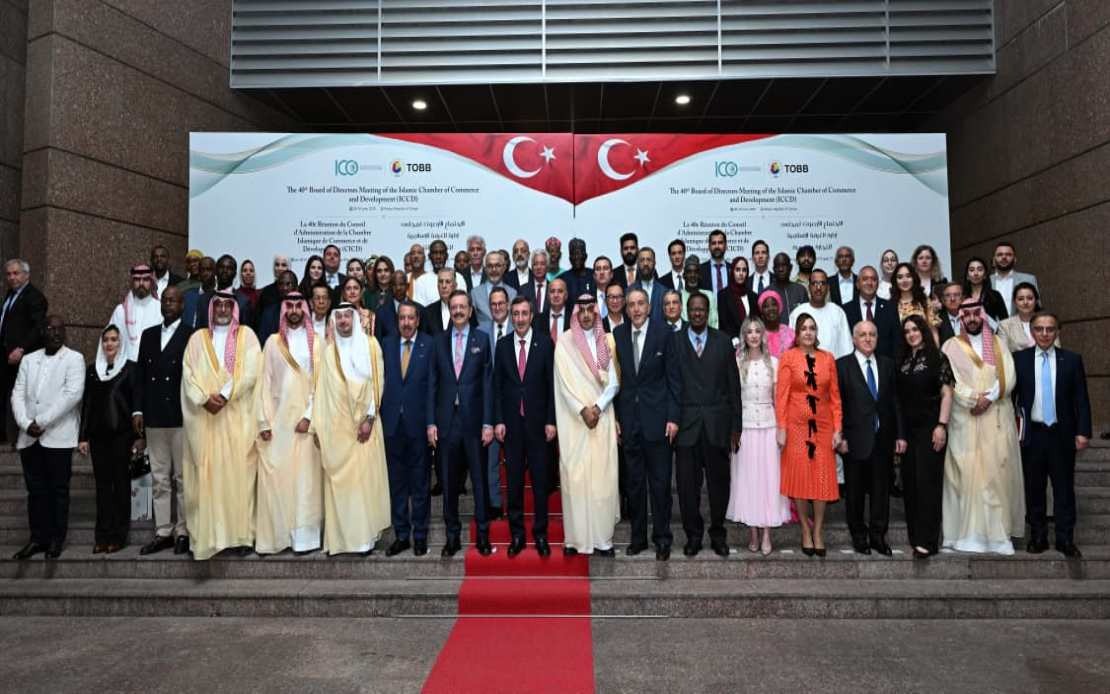
Saudi Arabia is signalling renewed commitment to building closer economic relationships with Muslim-majority countries, with particular emphasis on major Southeast Asian economies like Malaysia. The call comes from Abdullah Saleh Kamel, chairman of the Federation of Saudi Chambers and president of the Islamic Chamber of Commerce and Development, who made the remarks during the organization's 40th Board of Directors Meeting held in Ankara, Turkiye.
Kamel's push reflects Riyadh's strategic positioning within the broader framework of Islamic economic cooperation. The Kingdom has long positioned itself as a cornerstone of the Islamic Chamber of Commerce and Development since the organization's founding, and this latest intervention demonstrates its intent to leverage that historical role to shape future economic partnerships across the Muslim world. By explicitly naming Malaysia alongside Indonesia, Saudi Arabia is signalling that Southeast Asian economies occupy a central place in its economic vision for Islamic nations.
The timing of this appeal carries particular weight for Malaysia's policymakers and business community. Both nations share interests in expanding intra-Islamic trade mechanisms and investment flows that might reduce dependence on Western markets and create new corridors for economic growth. For Malaysian entrepreneurs and companies, closer cooperation with Saudi Arabia and other Islamic economies could unlock opportunities in sectors ranging from technology to food production.
The Saudi business leader identified several areas where Islamic economies must concentrate their efforts to achieve meaningful integration. Youth entrepreneurship emerged as a priority, recognizing that younger generations across the Muslim world need pathways to economic participation and wealth creation. This resonates particularly strongly in Malaysia, where youth unemployment and the lack of accessible startup capital remain persistent challenges despite the country's relatively advanced economy.
Food security and sustainable agriculture featured prominently in Kamel's agenda, indicating that practical cooperation on ensuring stable food supplies across Islamic nations remains a strategic concern. For Malaysia, which imports significant quantities of agricultural products despite its own production capacity, greater integration with fellow Muslim-majority economies could improve supply chain resilience and reduce vulnerability to global price shocks that disproportionately affect developing nations.
Regional trade connectivity constitutes the third pillar of the proposed cooperation framework. Current trade volumes between Malaysia and other Islamic economies remain modest relative to their potential, with many Malaysian businesses directing their international efforts toward Western markets or China. A coordinated push to improve logistics, reduce tariff barriers, and harmonize regulations among Islamic nations could fundamentally reshape regional commerce and create competitive advantages for Malaysian enterprises.
The ICCD Board's discussions extended beyond immediate trade issues to encompass longer-term strategic planning. Members reviewed various initiatives designed to deepen economic and development cooperation among member countries, suggesting that this represents part of a sustained effort rather than a one-off diplomatic gesture. The organization is also preparing celebrations for its golden jubilee in 2027, which will likely serve as a platform for announcing new cooperative frameworks.
For Malaysia specifically, engagement with these initiatives carries both opportunity and complexity. Closer ties with Saudi Arabia could strengthen Malaysia's position as a financial hub for Islamic banking and commerce, building on existing strengths in Islamic finance. However, Malaysian policymakers must carefully balance deepened cooperation with Muslim-majority economies against existing commitments to multilateral trading arrangements and relationships with non-Muslim trading partners.
The emphasis on private-sector engagement through organizations like the Federation of Saudi Chambers suggests that implementation will rely heavily on business-to-business connections rather than government-to-government directives. This approach may actually prove more effective for Malaysian companies, which can pursue opportunities based on market signals and competitive advantage rather than navigating government policies. Malaysian chambers of commerce and industry associations have a clear role to play in facilitating these connections.
Indonesia's inclusion alongside Malaysia in Kamel's remarks underscores that the proposed cooperation framework targets the region's economic powerhouses. Both nations, together with other ASEAN members, represent crucial markets and sources of investment within the Islamic world. This regional dimension suggests potential for broader ASEAN-wide initiatives, though coordinating across Southeast Asia's diverse political and economic systems presents its own challenges.
The practical benefits for Malaysian businesses could range from improved access to Saudi capital for expansion into Gulf markets, to collaborative ventures in sectors where Islamic economies have complementary strengths. Malaysian companies in logistics, halal food production, Islamic finance, and technology could all find new pathways for growth through formalized cooperation frameworks.
Looking ahead, Malaysia's government and business community would be wise to engage constructively with these overtures while maintaining the pragmatic, internationally-oriented approach that has served the country well. The window for shaping how Islamic economic cooperation evolves in coming years remains open, and active participation could yield substantial dividends as the ICCD moves toward its 2027 jubilee celebration.

