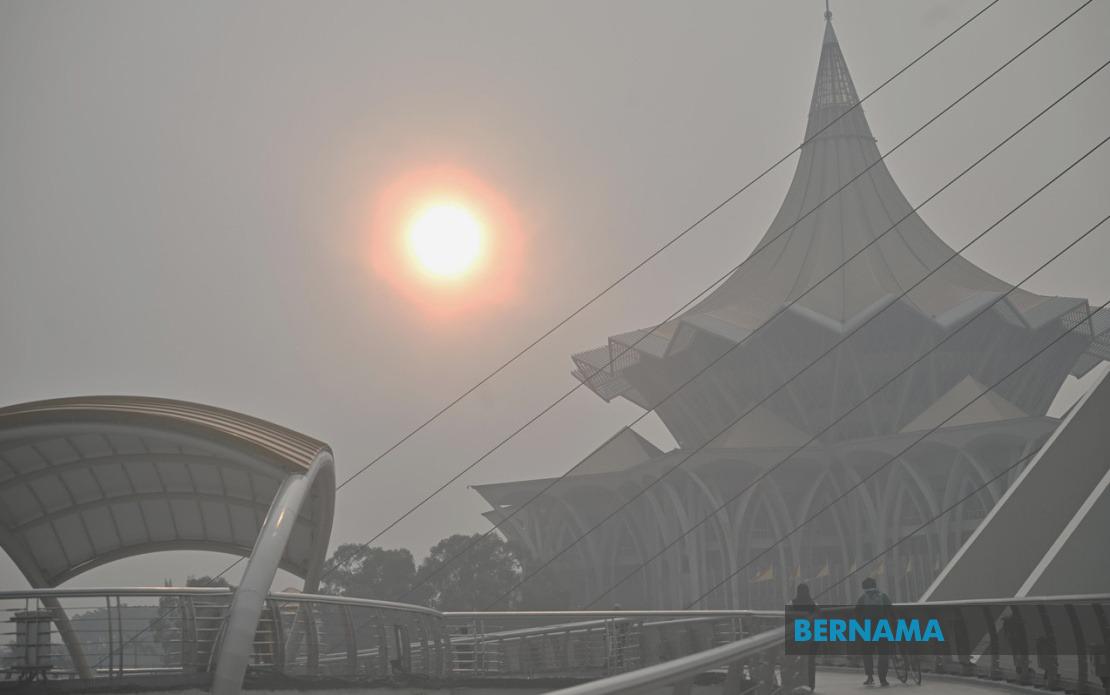
The Sarawak Education Department has ordered the temporary closure of 591 schools spanning two days as the state grapples with an extended period of hot, dry weather creating hazardous conditions for students and staff. The decision affects a significant portion of the state's student population, with 197,323 pupils across primary and secondary institutions unable to attend classes during the closure period.
The scale of this educational disruption underscores the severity of the meteorological situation across Sarawak. Primary schools account for the majority of the shuttered institutions, with 509 facilities serving 107,590 pupils forced to suspend operations, while 82 secondary schools with 89,733 students also remain closed. These closures span 10 District Education Offices, creating a coordinated response across multiple administrative regions that reflects the widespread nature of the weather phenomenon rather than an isolated localized problem.
Geographically, the affected districts represent both urban centres and more rural areas, indicating that the environmental stress is not concentrated in any single region. The impacted District Education Offices include Kuching, Padawan, Bau, Lundu, Samarahan, Simunjan, Serian, Sri Aman, Lubok Antu and Betong, painting a picture of heat stress affecting the state from its populated lowlands to its interior districts. This distribution suggests that the entire state is experiencing synchronous weather patterns that exceed safe thresholds for outdoor activities and educational operations.
The decision to close schools reflects authorities' concern not merely about temperature but about compounding environmental stressors. Heat exposure combines with additional hazards created by dry conditions to create a threatening scenario for young people and educators. The prolonged nature of this weather pattern indicates that single-day fluctuations are unlikely to resolve the situation, necessitating the two-day closure window as officials assess whether conditions will improve sufficiently for safe resumption.
Parallel to educational closures, Sarawak's State Disaster Management Committee has activated enhanced monitoring protocols across multiple environmental dimensions. The committee is tracking atmospheric conditions, air quality measurements, forest fire hotspots, peatland fire risks, and the adequacy of water supplies—a comprehensive approach reflecting how interconnected these environmental challenges have become. Each element of this monitoring matrix connects to the others; dry conditions that enable forest fires simultaneously degrade air quality, while water stress threatens both public supply networks and ecosystem resilience.
Air quality degradation has emerged as an immediate public health concern accompanying the drought conditions. Across nine monitored locations at 2 p.m. on the closure date, readings indicated unhealthy Air Pollutant Index levels, with Serian recording 195, Lundu at 180, both Kuching and Lubok Antu at 191, and Tebedu at 169. These readings exceed thresholds considered safe for vulnerable populations including children, elderly residents, and those with respiratory conditions. Sri Aman, Samarahan, Sarikei and Sibu also registered unhealthy API levels ranging from 108 to 178, confirming that air quality deterioration is a state-wide phenomenon rather than a localized atmospheric problem.
The convergence of heat stress, fire danger, air quality degradation and water scarcity represents a complex environmental crisis that exceeds the parameters of any single sectoral response. The Sarawak State Disaster Management Committee's emphasis on strengthening monitoring, preparedness and mitigation measures in high-risk areas acknowledges that this situation requires sustained vigilance and coordinated intervention across multiple government agencies. The identification of high-risk zones indicates that vulnerability is unevenly distributed and that targeted resource deployment is strategically necessary.
For Malaysian policymakers and regional observers, Sarawak's situation illustrates how climate variability can rapidly cascade into multiple simultaneous crises affecting education, public health, environmental integrity and resource security. The closure of nearly 600 schools demonstrates that even wealthy, relatively developed regions within Malaysia are not insulated from environmental disruption. This incident provides evidence that existing contingency planning may require enhancement, particularly regarding protocols for environmental emergencies that extend beyond single-day events.
The economic and social implications of prolonged school closures extend beyond the immediate disruption to learning schedules. Families with school-age children face childcare challenges, particularly in regions where both parents work outside the home. Extended closures can exacerbate educational inequities if some families have access to alternative learning arrangements while others do not. For students approaching critical examination periods, accumulated closure time may impact academic preparation and performance trajectories.
Looking forward, the sustainability of Sarawak's water resources emerges as a critical underlying concern. Seasonal drought patterns may become more pronounced or frequent under changing climate conditions, requiring long-term infrastructure and policy adjustments. Water supply security affects not only household consumption but also agricultural productivity, industrial operations and ecosystem health. Policymakers must weigh whether current drought response measures represent adequate adaptation or whether more fundamental structural changes to water management are necessary.
The Sarawak situation also carries implications for regional climate resilience planning. As one of Malaysia's largest states with significant forest coverage and biodiversity, Sarawak's environmental stresses ripple through regional ecosystems and climate systems. Forest and peatland fire risks, if realized, would generate transboundary smoke and air quality impacts affecting neighbouring jurisdictions. This regional dimension underscores why environmental crisis management requires cooperation beyond state boundaries.
Authorities' decision to implement temporary school closures represents a precautionary approach prioritizing student welfare over maintaining educational continuity during hazardous conditions. However, the underlying challenge remains unresolved: developing sustainable strategies for managing environmental extremes that protect both education provision and public health while addressing root causes of increasing climate variability.

