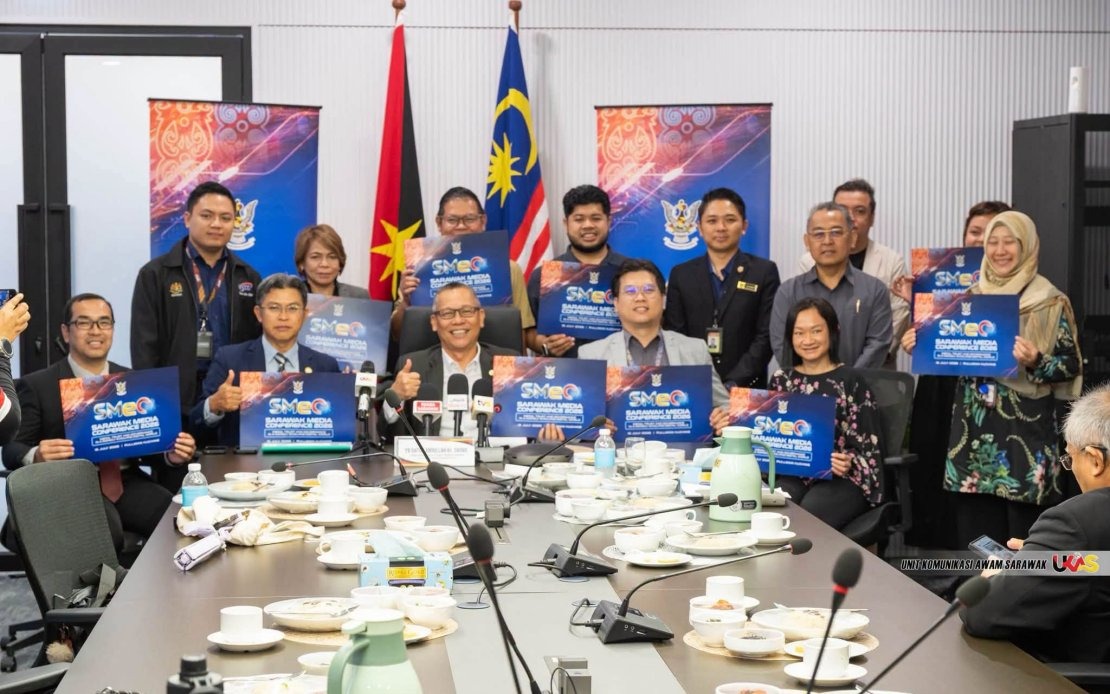
The Sarawak Government is preparing to host a major convergence of media and communications professionals this week, with the Sarawak Media Conference (SMeC) 2026 expected to bring together around 800 participants from across the industry and academia. Organised through the Sarawak Public Communications Unit (UKAS), the gathering represents a significant effort to address pressing contemporary issues affecting journalism and public information in an increasingly digital landscape. The conference will be formally opened by Sarawak Premier Tan Sri Abang Johari Tun Openg, underlining the state government's commitment to media sector development and dialogue.
Under the overarching theme "Media, Trust and Governance in a Rapidly Evolving Digital World," the conference will examine interconnected challenges that newsrooms, communicators and policymakers across Southeast Asia are grappling with. Datuk Abdullah Saidol, Deputy Minister in the Sarawak Premier's Department overseeing corporate affairs and information, outlined that discussions will centre on rebuilding and sustaining public confidence in media institutions—a concern that extends well beyond Sarawak's borders. The decline in media trust remains a critical issue throughout Malaysia and the region, driven by misinformation, changing consumption habits and the fragmentation of the information ecosystem.
The conference programme will probe opportunities and pitfalls associated with emerging technologies, particularly artificial intelligence, which is reshaping newsroom operations and content distribution globally. As newsrooms experiment with AI-assisted reporting, verification tools and audience analytics, practitioners need forums to exchange experiences and establish shared standards. The SMeC 2026 agenda reflects recognition that technological change must be accompanied by renewed commitment to ethical journalism principles, ensuring that innovation enhances rather than undermines the profession's foundational mission of serving the public interest.
Industry luminaries will headline discussions, including SOL Digital founder Lunnie Gan and Malaysian Media Council deputy chairman Premesh Chandran, both respected voices in Southeast Asian media circles. Gan's digital platform expertise and Chandran's advocacy for media standards position them as valuable contributors to conversations about sustainable business models and journalistic integrity in the digital age. The inclusion of such figures suggests the conference intends to move beyond theoretical frameworks toward practical insights grounded in real-world experience.
The participant demographic reveals the breadth of the gathering's scope. Beyond working journalists and editors, the conference will host academics researching media systems, policymakers shaping regulatory environments, technology industry leaders developing communications tools, and students entering the profession. This cross-sector composition creates potential for genuine knowledge exchange, though successful outcomes will depend on whether attendees emerge with concrete commitments to collaborative action rather than merely exchanging perspectives.
Parallel to the main conference, a National Journalists' Day (HAWANA) 2026 celebration dinner will recognise outstanding contributions to Malaysian journalism. Deputy Prime Minister Datuk Seri Fadillah Yusof will attend this evening function, emphasising the federal government's engagement with the event. The dinner will feature presentation of the Sarawak Premier's Special Appreciation Awards across five categories—Editor/Journalist/Stringer, Photographer, Videographer, Radio News Presenter/Broadcaster and Social Media Influencer—reflecting the expanding definition of journalism and content creation in contemporary media ecosystems.
The inclusion of social media influencers among award recipients signals evolving attitudes toward who qualifies as a storyteller or information purveyor. While traditional journalism institutions sometimes view influencers with scepticism, the SMeC organisers are acknowledging that significant audience segments now obtain news and information through social platforms and independent creators. This recognition carries implications for media literacy initiatives, content verification practices and the regulatory frameworks that governments develop to manage online speech.
For Malaysian readers and regional observers, the conference timing and focus merit attention. Media freedom, digital governance and journalistic standards remain contested terrain across Southeast Asia, where governments navigate tensions between encouraging innovation and maintaining social order. Sarawak's decision to host such a discussion demonstrates serious engagement with these issues at the state level, potentially informing policy conversations in federal forums.
The emphasis on rebuilding trust reflects broader anxieties about information ecosystems in democratic societies. When significant portions of the public question whether media organisations serve their interests fairly, social cohesion suffers and political polarisation intensifies. The SMeC 2026 agenda acknowledges that restoring credibility requires not only better journalism but also improved communication about journalistic processes, transparent corrections policies and genuine engagement with audience concerns.
Artificial intelligence will likely generate considerable debate at the conference, particularly regarding its applications in reporting, editorial decision-making and content distribution. Journalists worry that AI-generated content could displace human reporters, while also recognising that algorithmic tools can enhance investigative capabilities and personalise information delivery. Establishing ethical guidelines and best practices for AI use in journalism represents one of the most pressing challenges facing the industry globally, and Southeast Asian newsrooms are keen to participate in these conversations rather than simply adopting frameworks developed elsewhere.
The governance component of the conference theme speaks to questions about who determines media standards, how editorial independence is protected and what role government, professional bodies and industry associations should play in setting norms. These discussions carry particular significance in Malaysia, where relationships between state institutions, media organisations and civil society remain subject to ongoing negotiation and periodic tension.
Ultimately, the SMeC 2026 gathering signals that Sarawak's leadership views media development as integral to broader governance and development objectives. Whether the conference catalyses concrete initiatives—revised editorial standards, improved industry collaboration, enhanced training programmes or policy recommendations to state and federal authorities—will determine its lasting impact beyond the immediate networking and knowledge-sharing it will surely facilitate.

