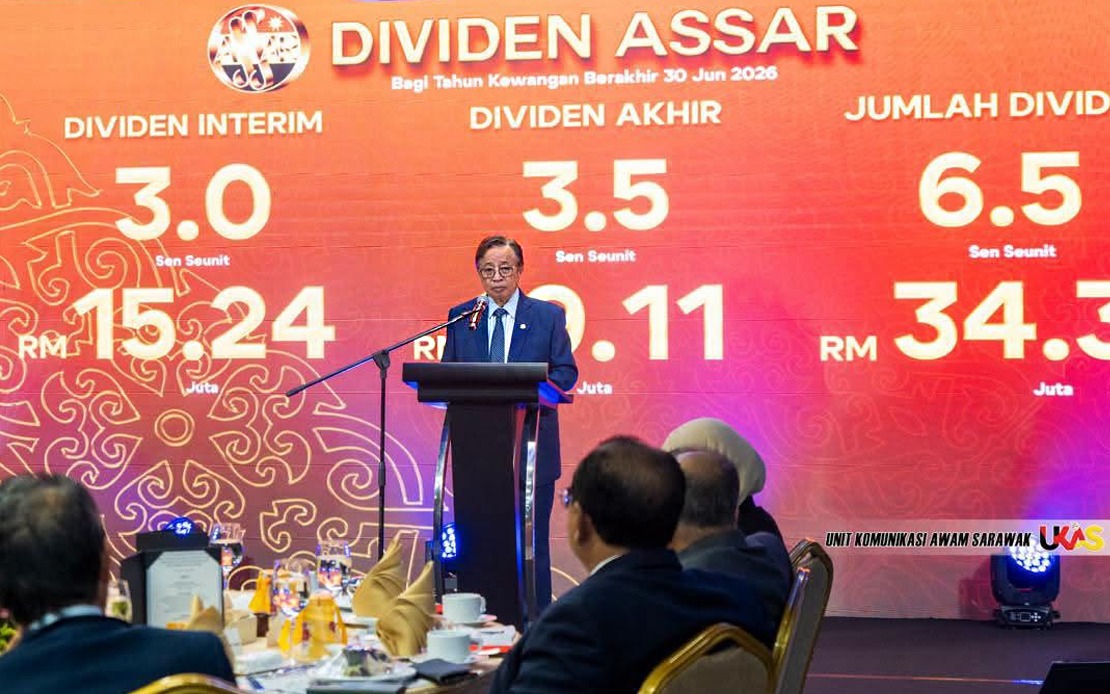
Sarawak's government has begun exploring the possibility of making its flagship Amanah Saham Sarawak (ASSAR) investment scheme accessible to non-Bumiputera residents, marking a significant shift in the state's approach to wealth distribution and economic participation. Premier Tan Sri Abang Johari Tun Openg unveiled the proposal at the ASSAR Dividend Announcement ceremony on July 13, suggesting the creation of a parallel investment vehicle—tentatively named ASSAR 2—that would allow non-indigenous Sarawakians to participate in state-based investment opportunities alongside the existing Bumiputera-focused scheme.
Currently, ASSAR operates exclusively for Bumiputera investors, concentrating capital mobilisation within the indigenous community and reflecting traditional affirmative action policies across Malaysia. The proposed expansion signals recognition that broadening the investor base could generate additional capital flows into the Sarawak economy while simultaneously advancing the state government's stated commitment to inclusive development. By creating a dual-track system similar to models employed by federal investment vehicles like Permodalan Nasional Berhad (PNB), Sarawak could potentially tap into capital that has historically remained outside state-level investment schemes.
Abang Johari emphasised that the proposal aligns with Sarawak's contemporary economic philosophy, which prioritises inclusive growth over narrower sectional interests. He articulated the rationale clearly: permitting non-Bumiputera participation through ASSAR 2 would enable the state to consolidate larger investment pools while providing investment opportunities to all Sarawak residents, regardless of ethnicity. This framing suggests the state government views economic inclusivity as a driver of competitive advantage in attracting and retaining capital within Sarawak's borders.
The timing of this proposal merits consideration within Sarawak's broader economic trajectory. The state has experienced sustained growth in recent years, driven by commodity exports, manufacturing expansion, and infrastructure development. An enlarged investment base through ASSAR 2 could theoretically accelerate capital formation for state-level projects and enterprises, creating a virtuous cycle where broader participation generates larger pools for reinvestment. Non-Bumiputera investors, particularly business owners and professionals in Sarawak's urban centres, currently lack formal mechanisms to channel savings into state-backed investment vehicles, potentially representing untapped domestic liquidity.
However, the proposal faces implicit tensions with Malaysia's constitutional framework and established affirmative action principles. Article 153 of the Federal Constitution safeguards special rights for Bumiputeras, and while individual states possess considerable autonomy in economic matters, expanding investment schemes to non-Bumiputeras could invite scrutiny regarding the proper balance between inclusive governance and protected categorical interests. How Sarawak's federal representatives and the federal government respond to such a move remains uncertain, though the proposal's framing as a separate initiative rather than a modification of existing ASSAR arrangements may provide some political cover.
The governance and operational structure of ASSAR 2 will prove critical to its success and acceptance. The ASSAR board of directors and management must conduct feasibility assessments addressing investment objectives, risk parameters, dividend sustainability, and management cost structures. Drawing from PNB's experience with multiple fund vehicles serving different investor demographics could provide valuable lessons, particularly regarding how to maintain investment discipline and returns while expanding participation. Abang Johari's reference to PNB suggests the government is examining proven institutional models rather than inventing entirely novel approaches.
From a Malaysian investor perspective, ASSAR 2 could represent an additional savings and investment avenue, particularly for Sarawakians seeking exposure to state-level economic growth without geographical relocation. The scheme could appeal to professionals, entrepreneurs, and salaried workers in Kuching, Sibu, and other urban centres who wish to participate in Sarawak's development narrative. However, potential investors would require clarity on minimum investment thresholds, expected dividend yields relative to the original ASSAR, liquidity arrangements, and the fund's underlying asset allocation strategy.
The proposal also reflects broader Southeast Asian trends toward inclusive capitalism and stakeholder-oriented economic management. Governments across the region increasingly recognise that narrowly circumscribed investment schemes may leave growth potential untapped and create social grievances among excluded groups. By positioning ASSAR 2 as expanding opportunity rather than eroding existing protections, Sarawak attempts to frame the initiative within narratives of progress and forward-thinking governance, appealing to younger generations and urbanised voters who prioritise meritocratic opportunity over categorical protection.
Detailed discussion around the specifics of ASSAR 2 remains limited pending formal board review and internal assessment. Questions persist regarding whether the two-tier structure might dilute brand identity, complicate administrative processes, or create perception of unequal treatment between original ASSAR and ASSAR 2 investors. The state government will need to communicate clearly how both schemes contribute to Sarawak's economic sovereignty and development objectives, emphasizing that expansion represents opportunity multiplication rather than erosion of Bumiputera interests.
Looking forward, approval of ASSAR 2 would place Sarawak at the forefront of experimentation with inclusive state investment schemes in Malaysia. Success would likely prompt observation from other states and federal policymakers, potentially influencing national conversations around balancing constitutional protections with contemporary economic inclusion. Conversely, implementation challenges or investor hesitation could reinforce conventional approaches to categorical investment schemes. The coming months, as the ASSAR board deliberates the proposal's feasibility and mechanics, will determine whether Sarawak's inclusive vision materialises into concrete policy or remains aspirational rhetoric.

