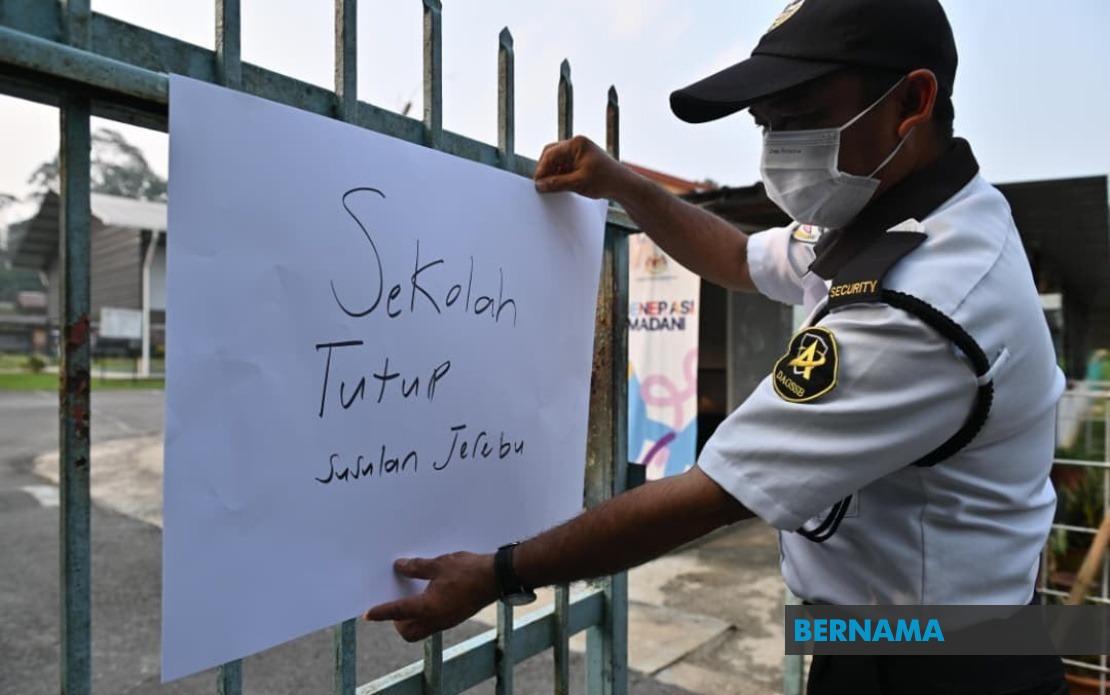
The Sarawak State Education Department has prolonged the temporary shutdown of educational institutions across the Serian district through Friday, responding to deteriorating air quality conditions linked to cross-border haze that continues to affect the state. The decision came after the department held consultations with principals and headmasters overseeing secondary and primary schools operating under the Serian District Education Office.
Sarawak, a state frequently challenged by transboundary smoke pollution during fire seasons, faces recurring challenges in maintaining normal school operations when air quality drops to dangerous levels. The extended closure reflects a growing recognition among education authorities that keeping students and staff indoors during hazardous conditions better protects public health than attempting to maintain regular schedules. The Serian area, located in the southwest portion of Sarawak, has emerged as one of the state's pollution hotspots in recent years, vulnerable to smoke drift originating from agricultural burning and forest fires across the border in Indonesian Borneo.
According to the Air Pollution Index Management System readings taken at 4 pm on Wednesday, Serian recorded an API measurement of 178, placing the district firmly within the unhealthy category and indicating conditions that pose genuine health risks to vulnerable populations including children, the elderly, and those with respiratory conditions. This threshold represents a significant deterioration that justified halting classroom instruction and related school activities. The department emphasized that the closure decision prioritized reducing strain on multiple stakeholder groups simultaneously—school administrators managing operational disruptions, teaching staff coordinating alternative arrangements, parents adjusting childcare plans, and particularly students in residential boarding facilities who face compounded challenges during facility shutdowns.
The reliance on the Air Pollution Index Management System for monitoring air quality levels reflects Malaysia's established framework for responding to atmospheric pollution episodes. Educational institutions throughout Serian have been instructed to maintain active awareness of evolving API readings by consulting the APIMS platform to track pollution developments within their specific areas and districts. This approach enables schools to make timely decisions about operational status rather than relying solely on centralized government directives, distributing responsibility for air quality monitoring across the education system.
Transboundary haze episodes affecting Sarawak demonstrate the environmental interconnectedness of Southeast Asian nations and the limitations of purely domestic pollution control measures. Indonesian Borneo's agricultural and forestry activities generate smoke that routinely drifts across state boundaries into Malaysian territory, creating air quality crises that disrupt education, commerce, and public health regardless of efforts to manage local emissions. Serian's vulnerability reflects its geographical positioning closer to cross-border pollution sources compared to other Sarawak districts further from the state's southwestern boundary.
The practice of closing schools during haze episodes has become an established response mechanism within Sarawak's education administration, though it raises ongoing questions about educational continuity and equitable impacts across student populations. Boarding school residents face particular complications during facility shutdowns, as these students cannot simply return home and must instead remain in institutional settings under modified conditions. The department's explicit acknowledgment of this burden suggests recognition that blanket closures create cascading logistical challenges beyond those affecting day students.
Climate variability and shifting fire patterns across the region create uncertainty regarding haze frequency and severity year to year. Some researchers correlate increases in transboundary smoke episodes with broader environmental changes and land-use patterns throughout Indonesian Borneo, where plantation expansion, logging operations, and agricultural development have transformed landscapes in ways that potentially amplify fire risk during dry periods. This long-term trend raises concerns about whether school closures will become increasingly frequent occurrences rather than exceptional responses to occasional pollution events.
The decision-making process employed by Sarawak's education department reflects a consultative approach involving multiple stakeholder perspectives rather than unilateral top-down directives. By engaging with school principals and headmasters before announcing closures, the department incorporated frontline knowledge about institutional realities and implementation challenges. This collaborative methodology potentially yields more practical decisions than centralized planning divorced from operational contexts, though it also requires time for coordination that may delay announcements and create uncertainty for families planning their weeks.
Government communication protocols around school closures carry significance for public confidence in institutional responsiveness and decision-making transparency. The department's commitment to providing updated information as circumstances develop acknowledges that haze conditions fluctuate and that Friday's situation might warrant further adjustments. Clear, timely communication channels between education authorities, schools, parents, and students become critical infrastructure during environmental disruption episodes, particularly given the time-sensitive nature of attendance decisions and childcare arrangements.
Looking forward, persistent transboundary haze challenges may drive discussions about climate adaptation strategies, regional cooperation mechanisms for managing cross-border pollution, and educational system resilience planning. Malaysian policymakers increasingly recognize that environmental disruptions from neighboring jurisdictions require bilateral or multilateral coordination rather than unilateral responses. Sarawak's repeated school closures exemplify how environmental conditions transcending political boundaries create governance challenges that extend far beyond traditional education policy domains into broader questions of regional environmental management and climate adaptation.

