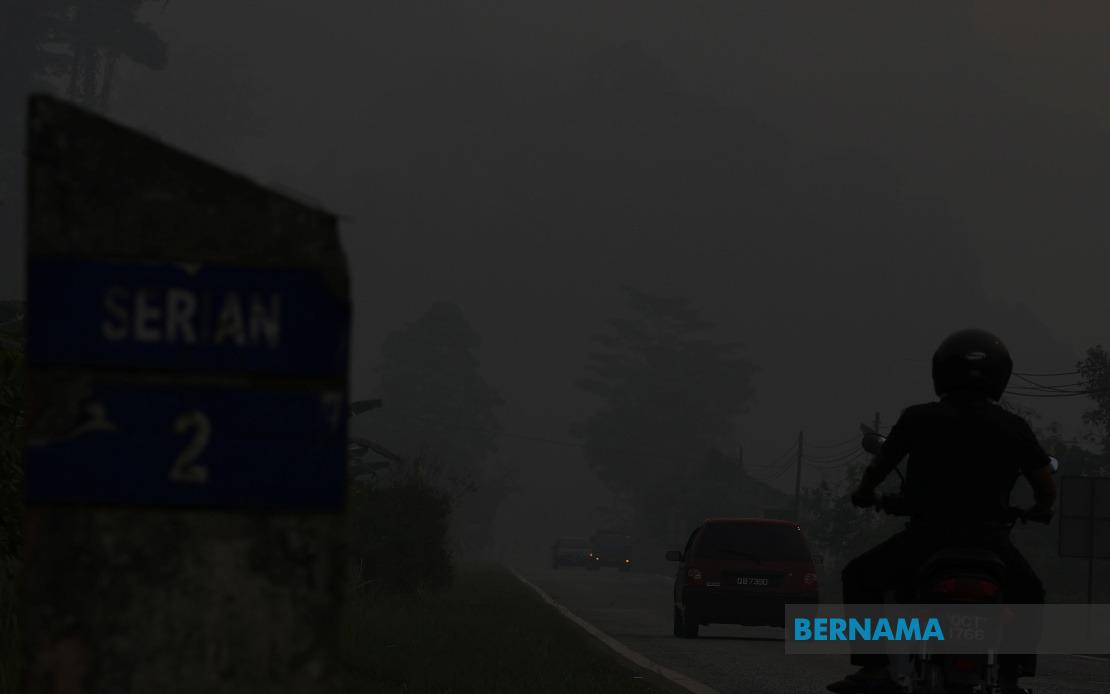
The Sarawak Disaster Management Committee has issued fresh guidance to organisers of all types of events—from official government functions to private and grassroots gatherings—to carefully evaluate current haze conditions and Air Pollutant Index readings when making decisions about whether their activities should go ahead, be postponed, or cancelled entirely. This advisory comes as air quality across multiple parts of the state deteriorated markedly, with several monitoring stations registering dangerous pollution levels that pose genuine health risks to the public.
Datak Amar Douglas Uggah Embas, chairman of the SDMC and also Sarawak Deputy Premier, emphasised that responsibility for these decisions currently rests with individual event organisers themselves, though he stressed the importance of making choices guided by scientific data and public health considerations. The statement makes clear that while no blanket ban has been imposed, organisers must act with due diligence, particularly when their events involve outdoor activities that expose participants to prolonged air exposure. This approach reflects a measured response that balances event continuity with community wellbeing during transboundary pollution episodes that periodically affect the region.
A critical threshold identified by SDMC is an API reading of 200, which signals unhealthy air quality unsuitable for vigorous physical exertion. Beyond this point, organisers are strongly advised to reconsider whether to proceed with outdoor sporting events, physical training programmes, or strenuous exercises, especially when vulnerable populations including children, elderly persons, and those with pre-existing respiratory or cardiovascular conditions are among the participants. This guidance acknowledges the documented health impacts of prolonged exposure to air pollutants, which can trigger acute respiratory symptoms and exacerbate chronic diseases among susceptible groups.
To mitigate risks without necessarily abandoning scheduled activities, the SDMC has encouraged organisers to explore practical alternatives. These include relocating events from outdoor venues into indoor facilities equipped with air filtration, redesigning programmes to reduce physical intensity and duration of exposure, or shifting activities to future dates when air quality is expected to improve. Such flexibility allows communities to maintain their social and sporting calendars while prioritising participant safety—an approach that recognises the importance of these gatherings to Sarawak's social fabric.
The committee has outlined an escalation framework tied to specific API thresholds. When readings reach or exceed 500, which represents hazardous air quality posing risks even to the general healthy population, the established guidelines mandate closure of government offices, private sector workplaces, and educational institutions, except for essential services that maintain critical functions. This level of intervention would require formal declaration of a Disaster Emergency by the National Disaster Management Committee, signalling that the air pollution episode has reached crisis proportions demanding coordinated national response.
At the time of the SDMC statement on August 30, several districts were already experiencing severely degraded air quality. The Serian District Police Headquarters monitoring station recorded the highest API reading at 412, classified as hazardous and posing immediate health threats to the general population. Samarahan registered 332, indicating unhealthy-plus conditions, while Kuching's reading of 304 reflected unhealthy air quality. These levels, particularly the figure from Serian, already approached the threshold where outdoor activities should be curtailed and vulnerable persons advised to remain indoors or wear appropriate respiratory protection.
Beyond these three worst-affected districts, air quality across other parts of Sarawak ranged from unhealthy to moderate. Sarikei recorded 197, Sibu 190, Bintulu 183, Mukah 176, Samalaju 175, Kapit 161, Miri 159, and the Miri Industrial Training Institute 156, according to readings from the Department of Environment's Air Pollutant Index Management System portal at 12:30 pm on that date. While these readings were below the 200 threshold triggering strongest caution, they still indicated air quality significantly above normal and warranting precautionary measures, particularly for outdoor activities and vulnerable populations.
The SDMC's statement underscores the state government's commitment to continuous monitoring and progressive implementation of response measures aligned with established disaster management protocols. By working in coordination with both state and federal agencies responsible for environmental monitoring and disaster response, Sarawak authorities aim to provide timely, accurate information that allows event organisers and the public to make informed decisions. This coordinated approach is essential given that transboundary haze episodes affecting Sarawak originate from land clearing and agricultural burning in neighbouring regions, often beyond immediate state control.
For Malaysian and Southeast Asian readers, this episode reflects a recurring challenge across the region. Sarawak's experience with periodic haze events, driven largely by peatland and forest fires during dry seasons in Kalimantan and Sumatra, has made the state a subject of study in regional air quality management. The SDMC's approach—balancing precaution with pragmatism, relying on clear API thresholds, and empowering organisers with information rather than imposing blanket restrictions—offers a model that other Southeast Asian jurisdictions facing similar challenges might consider.
The economic and social dimensions of haze episodes deserve consideration alongside health impacts. Event cancellations carry costs for organisers and lost opportunities for communities. By providing clear guidance rather than rigid mandates, the SDMC allows decision-makers to weigh these factors against health risks. However, this approach also places responsibility on organisers to stay informed about real-time air quality data and to act responsibly, which requires accessible, user-friendly information platforms and clear communication of health risks.
Looking ahead, the situation will likely remain fluid as weather patterns and transboundary pollution sources change. The SDMC's framework provides flexibility to escalate responses if air quality worsens significantly, while allowing normal activities to resume when conditions improve. For residents and visitors planning events or outdoor activities in Sarawak, regularly checking the Department of Environment's APIMS portal and heeding SDMC guidance remains essential. The principle underlying this approach—that informed decision-making based on scientific data serves both public health and community needs better than either unfounded alarm or dangerous complacency—offers valuable lessons for air quality management across Southeast Asia.

