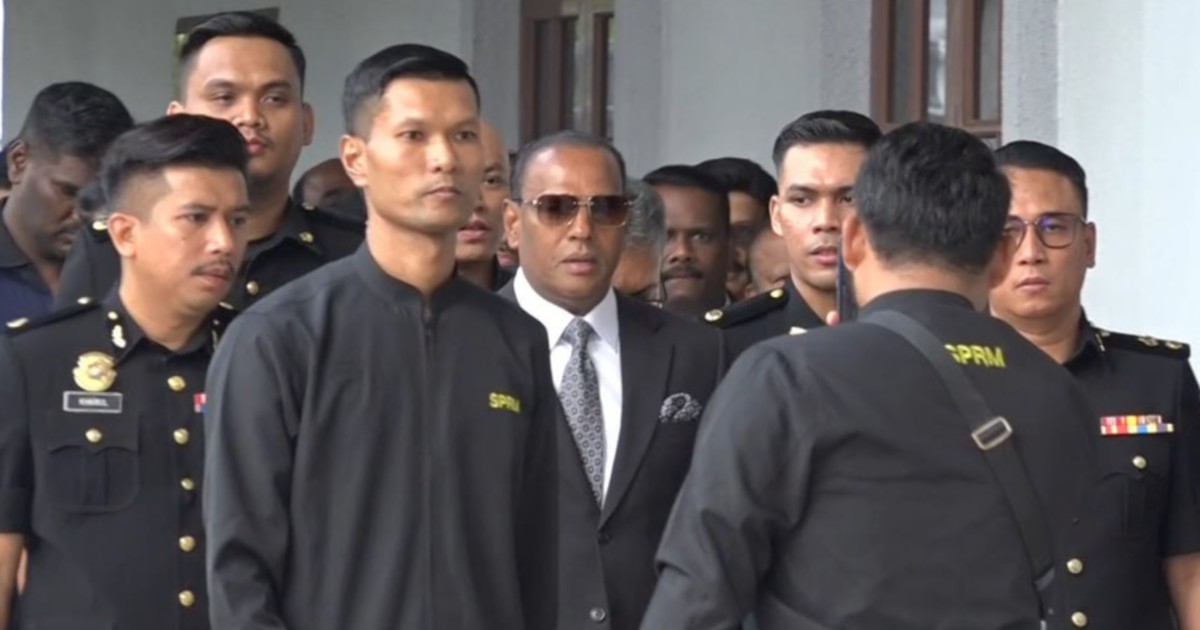
Datuk Seri M. Saravanan, who previously held the portfolio of Human Resources Minister, entered a not guilty plea at the Sessions Court in Kuala Lumpur today to three separate charges alleging he accepted RM1.097 million in bribes. The charges centre on his role in approving foreign worker quotas during 2022, a period when Malaysia's labour market remained heavily reliant on migrant workers across manufacturing, construction, and domestic service sectors.
The case marks a significant development in the ongoing effort to combat corruption within Malaysia's ministerial ranks, particularly concerning the administration of foreign worker permits. The alleged bribes, according to court documents, were solicited to facilitate approval of foreign worker applications, underscoring vulnerabilities in the quota system that regulates Malaysia's intake of migrant labour. Such allegations raise concerns about how discretionary powers within the Human Resources Ministry might be exploited for personal gain, potentially compromising the integrity of labour market controls.
Foreign worker quotas represent a crucial mechanism through which Malaysia manages its migrant labour force, determining how many workers employers in specific sectors can recruit from abroad. The system carries substantial financial implications for businesses seeking to expand their workforce, making quota approvals inherently valuable to prospective recipients. When ministerial officials are accused of leveraging this authority for personal enrichment, it suggests systemic weaknesses that could distort legitimate business operations and create unfair competitive advantages for those willing to pay illicit fees.
Saravanan's tenure as Human Resources Minister spanned a period of significant labour market turbulence. The year 2022 saw Malaysia grappling with post-pandemic economic recovery, during which many employers faced acute labour shortages and increasingly sought foreign worker allocations to maintain operational capacity. The alleged bribery scheme, if substantiated, would have exploited this desperation to extract payments from businesses seeking essential workforce approvals.
The specifics of how such corruption allegedly functioned deserve scrutiny from a Malaysian governance perspective. Quota approval systems, by their nature, involve subjective assessment of employer needs and labour market conditions. This discretionary element creates opportunities for officials to demand payments in exchange for expedited or favourable decisions. The three separate charges suggest a pattern of conduct rather than isolated incidents, implying systematic extraction of bribes across multiple quota approvals throughout 2022.
For Malaysian businesses, particularly small and medium enterprises reliant on foreign labour, such allegations highlight the regulatory risks embedded in the quota system. Companies needing foreign workers must navigate approval processes that, if compromised by corruption, become unpredictable and potentially costlier. This erodes business confidence and creates unequal playing fields where willingness to pay illicit fees determines access to necessary labour.
Regionally, Malaysia's handling of corruption cases involving senior government officials demonstrates its commitment to accountability, though such prosecutions often arrive belatedly and follow public pressure or whistleblower complaints. The case also reflects broader Southeast Asian concerns about maintaining labour market integrity as countries compete for foreign worker inflows and grapple with ensuring that immigration systems serve economic objectives rather than corrupt officials' personal enrichment.
The Sessions Court proceedings will likely examine evidence regarding how the alleged bribes were solicited, transferred, and concealed. Investigating agencies and prosecutors must establish clear links between Saravanan's ministerial decisions and the receipt of funds, demonstrating that quota approvals were contingent upon payment. Such proof proves challenging in corruption cases, as officials typically distance themselves from direct solicitation, often employing intermediaries or creating ambiguity about the true purpose of fund transfers.
Saravanan's not guilty plea signals his intention to contest the allegations vigorously. His defence team will presumably argue that any payments received were legitimate, unrelated to official decisions, or that evidence fails to establish the requisite quid pro quo arrangement necessary for conviction on bribery charges. The burden remains with prosecutors to prove guilt beyond reasonable doubt.
The case carries implications for how Malaysia enforces accountability across its public service. If corruption allegations against high-ranking ministers persist and sometimes result in prosecution, it signals that no official remains beyond the reach of law. Conversely, if such cases are resolved through acquittals or delayed convictions, it undermines faith in institutional capacity to address ministerial misconduct. Malaysian civil society and international observers will monitor this case closely for what it reveals about the country's anti-corruption enforcement mechanisms.
Beyond the immediate criminal proceedings, the allegations underlying this case raise questions about whether Malaysia's foreign worker quota system requires structural reform. Enhanced transparency, reduced discretionary authority, and robust oversight mechanisms could curtail opportunities for corruption. Digitalisation of quota approval processes, independent review panels, and mandatory public disclosure of quota allocation decisions might strengthen system integrity.
For Malaysian workers, foreign worker quota decisions ultimately influence local labour market competition and wage dynamics across sectors. Ensuring that such consequential decisions are made on merit rather than through corrupt arrangements protects both employment prospects and overall economic efficiency. As the Sessions Court hears evidence in coming months, the case will test whether Malaysia's judicial institutions can effectively hold former ministers accountable for alleged abuse of ministerial powers.

