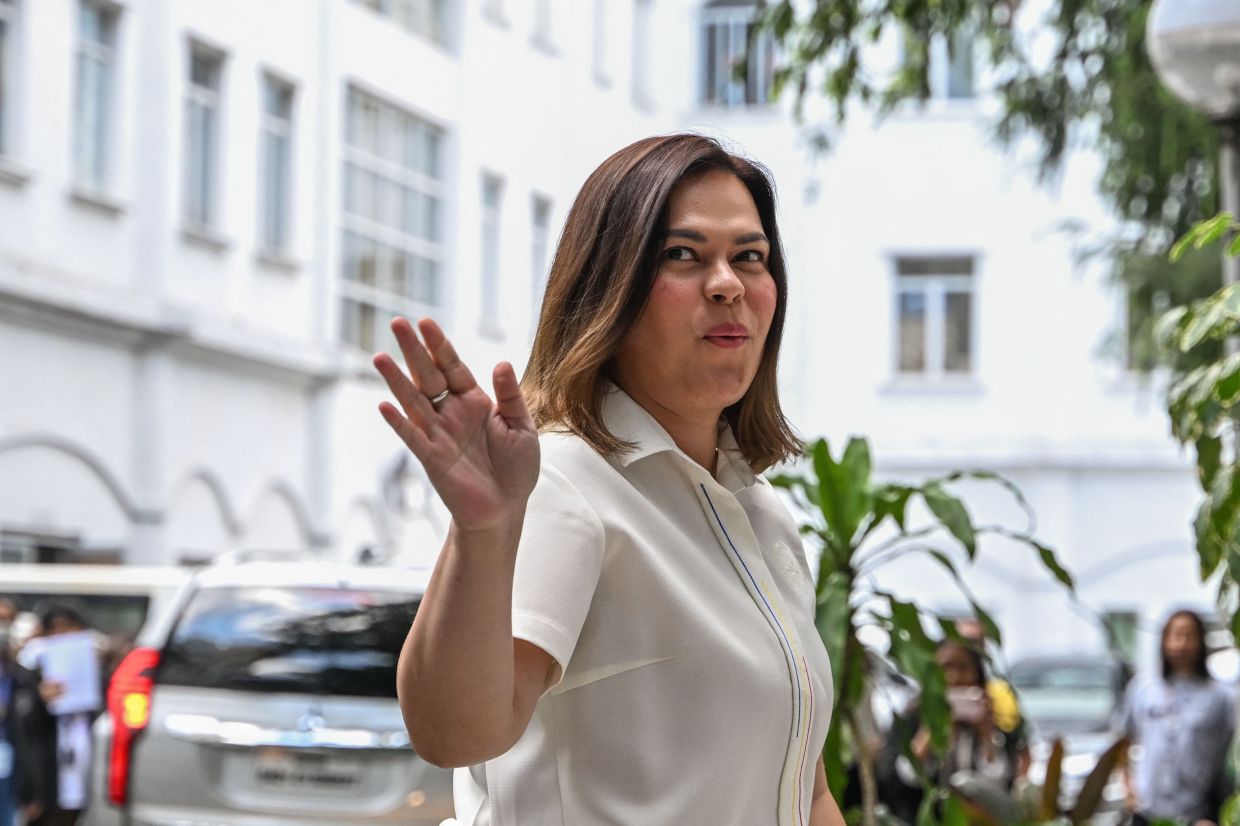
Vice President Sara Duterte has received official clearance to remain outside the Philippines through the end of July while her impeachment case continues in her absence, the presidential office announced on Tuesday. Palace Press Officer Claire Castro confirmed during a media briefing that President Ferdinand Marcos Jr, acting through the Office of the Executive Secretary, had authorized the Vice President's international journey spanning from mid-July through the month's conclusion. The approval represents a notable development in an already contentious political situation marked by rising tensions between the executive and legislative branches.
The Vice President's authorized itinerary encompasses five countries across the Middle East and Europe, taking her through Qatar, Germany, the United Kingdom, Northern Ireland, and the Netherlands over the two-week period. Officials characterized the journey as a personal undertaking rather than an official state mission, though the distinction carries limited practical meaning given the high-profile nature of the Vice President's movements and the timing coinciding with formal proceedings against her in Manila. Her defence lawyer Michael Poa confirmed during a press conference preceding the trial session that Duterte was currently residing in The Hague, though he indicated she planned to return to the Philippines in the near term.
The timing of the Vice President's absence takes on particular significance given the parallel impeachment trial now underway in the Philippine Congress. The simultaneous proceedings and foreign travel have fueled criticism from political observers questioning whether the arrangement allows adequate opportunity for Duterte to mount a robust defence against charges filed by House members. The presidential authorization effectively permits the Vice President to avoid day-to-day courtroom presence during a politically charged proceeding, a development that complicates the trial's procedural framework and raises questions about the administration's role in managing the dispute between its own second-in-command and the legislature.
Duterte's presence in The Hague directly connects to her family's involvement in an international legal proceeding of unprecedented scope for Philippine leadership. Her father, former President Rodrigo Duterte, has remained detained in the Dutch city since his arrest by Philippine authorities more than a year earlier, following an International Criminal Court warrant issued in March 2025. The former president faces accusations of crimes against humanity stemming from alleged indirect involvement in extrajudicial killings perpetrated during his administration's aggressive anti-drug and anti-crime campaigns. These operations, which took place between 2011 and 2019 while Duterte served successively as Davao City mayor and then as Philippine President, resulted in thousands of deaths under circumstances that remain contested and investigated internationally.
The ICC case against the former president represents a landmark moment in efforts to hold Asian leaders accountable through international judicial mechanisms. The tribunal has scheduled full trial proceedings for November 30, establishing a formal proceeding that could significantly influence Philippine domestic politics and set precedent for international intervention in the nation's justice system. The Vice President's repeated visits to The Hague during her father's detention suggest ongoing family engagement with the legal proceedings and potential consultation regarding defence strategy. Her ability to travel freely while her own impeachment trial proceeds in Manila underscores the political leverage currently enjoyed by her administration allies, particularly within the executive branch and among sympathetic legislators.
The impeachment proceedings against Sara Duterte initiated when House members filed charges related to various allegations, though the specific constitutional basis and detailed accusations have remained subject to interpretation and political dispute. The decision by President Marcos Jr to approve her foreign travel despite the concurrent trial implies confidence in her political position or strategic acceptance of her absence from Manila during a crucial phase of the proceedings. The arrangement also reflects broader patterns within Philippine governance whereby executive authority can be deployed to manage intra-government disputes, with presidential approval of travel serving as a form of tacit political endorsement.
For Malaysian and regional observers, the developments underscore persistent governance challenges within major Southeast Asian democracies, particularly regarding the intersection of executive prerogative, legislative oversight, and the rule of law. The Philippines' constitutional framework, inherited substantially from American-influenced democratic traditions, theoretically constrains presidential power through separation of powers and legislative checks. The Vice President's approved absence during her own trial, however, suggests those constitutional safeguards function unevenly in practice, particularly when political actors share sufficient common ground to accommodate unusual arrangements.
The case also illustrates tensions between national legal sovereignty and international accountability mechanisms that increasingly characterize governance in the region. As the ICC proceeding against former President Duterte advances, questions about compliance with international warrants and the detention of sitting politicians' relatives will continue affecting Philippine-international relations. Other Southeast Asian nations grapple with comparable issues regarding potential ICC jurisdiction over their own leadership figures, making the Philippine situation a bellwether for regional approaches to international justice institutions.
Duterte's approved travel represents a temporary but significant absence from Philippine politics during a period of constitutional contestation. Her defence team's indication that she would return relatively soon suggests awareness of the political costs associated with extended absence during formal proceedings against her. Nevertheless, the immediate authorization from the executive permits her to attend to family matters in The Hague while maintaining distance from the opposition-controlled Congress. The approval also reflects the continued political salience of the Duterte political machine within Philippine governance structures, notwithstanding the transition to the Marcos administration and the filing of impeachment charges.

