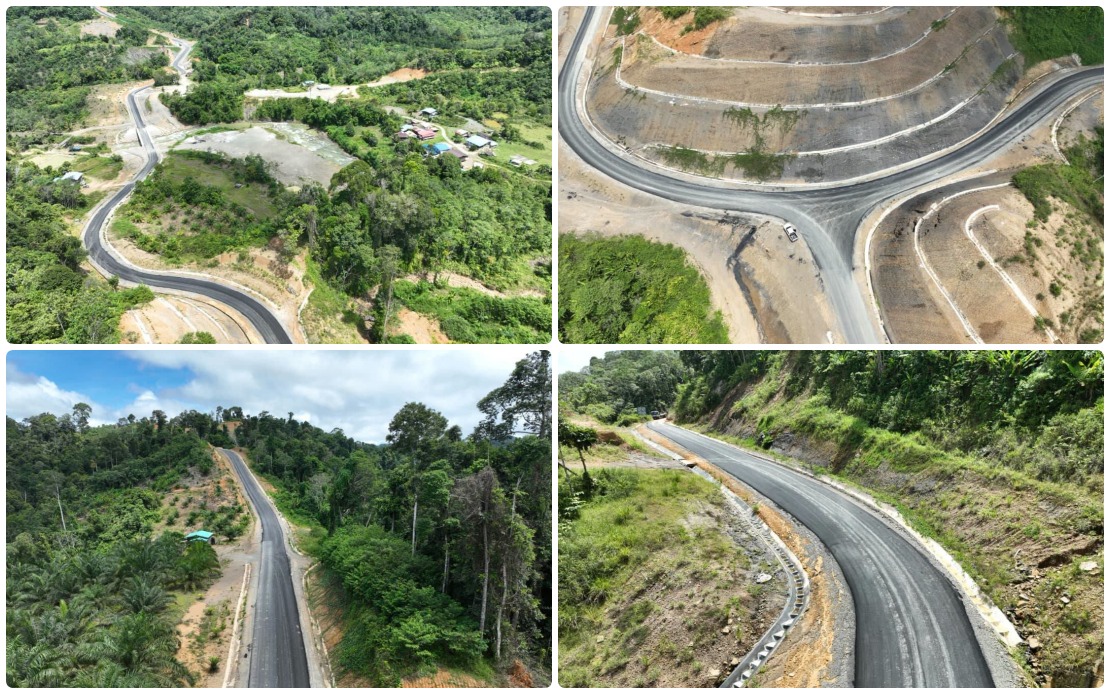
The completion of the Sapulut-Salong-Pagalungan-Pensiangan road project marks a significant milestone for Sabah's remote interior, with Datuk Seri Arthur Joseph Kurup, Minister of Natural Resources and Environmental Sustainability, announcing that the thoroughfare now extends fully to Pensiangan town. The project fulfils a manifesto commitment made by Kurup as the Member of Parliament for Pensiangan and reflects a broader strategic effort to modernise transport infrastructure in one of the state's least accessible regions.
The transformation in accessibility is dramatic. The journey from Keningau to Pensiangan has compressed from over six hours to just three hours, eliminating a substantial barrier that once made the area vulnerable to disruption during adverse weather. Travellers previously faced the risk of being stranded when conditions deteriorated, a hazard that has now been substantially mitigated. This improvement carries tangible consequences for essential services—teachers, medical professionals, and nurses can now access the town with greater reliability, addressing a chronic challenge in delivering human resources to isolated communities across Southeast Asia where geographic barriers often compound existing shortages.
The shift in local economic activity is already visible on the ground. Kurup's observations during a recent site visit revealed a marked change in the character of Pensiangan town, where the presence of personal vehicles has increased noticeably as road quality improved. Previously, boat transport dominated the landscape; now motorcars and vehicles are commonplace. This transition symbolises not merely improved mobility but a fundamental shift in how communities perceive and engage with their surroundings. The ability to move goods and people by road rather than water reduces transaction costs, shortens supply chains, and makes local commerce more viable.
The project represents Phase Three of an ambitious master development plan extending across multiple years. Kurup has articulated a vision that transcends basic road construction, encompassing a holistic transformation of the Pensiangan parliamentary constituency and adjacent interior areas. The eventual Phase Four aims to extend the road network to the Indonesia-Kalimantan border, positioning the region for cross-border trade and tourism flows that could materialise as regional integration deepens. Such border infrastructure carries strategic importance for Malaysia, signalling commitment to inland development and potentially unlocking economic corridors that currently remain dormant due to access constraints.
The complementary infrastructure initiatives underscore a coordinated development strategy rather than isolated projects. The Sapulut coffee processing factory represents value-addition capability, enabling local producers to capture higher margins by processing raw materials locally. Agricultural collection centres at Pagalungan Tamu and the Salong Agrobazaar provide market infrastructure that reduces farmer vulnerability to exploitative middlemen. Upgraded jetty and boat facilities at Pangkalan Salong maintain the river transport option while complementing the new road system, creating a multi-modal transport network suited to the region's topography and existing settlement patterns.
Telecommunications improvements accompany the physical infrastructure initiatives. Enhanced telephone and internet connectivity throughout the district addresses a critical gap for communities seeking to participate in digital commerce and access government services. In an era when e-commerce, online banking, and digital education have become essential, connectivity infrastructure rivals road infrastructure in importance. For young people in particular, reliable digital access can mean the difference between remaining economically isolated or accessing opportunities that require no physical relocation.
The return migration phenomenon that Kurup identifies—young people coming back to develop land and support local economies—merits close attention as an outcome of improved infrastructure. Rural development across Southeast Asia frequently encounters the challenge of youth outmigration to urban centres, draining communities of working-age population and entrepreneurial energy. When infrastructure improvements lower transaction costs and improve livelihood prospects, they can reverse this trend, allowing communities to retain and attract young people willing to invest in local agricultural and commercial ventures. This dynamic holds implications for regional inequality patterns and demographic stability.
Educational infrastructure has not been neglected in the development programme. The completed Sixth Form Centre at Sekolah Menengah Kebangsaan Nabawan serves Nabawan district, extending post-secondary education access beyond centralised urban locations. For students whose families lack resources to support relocation for education, such facilities prove transformative, enabling educational advancement without forcing geographic or social displacement. The presence of such facilities signals government commitment to inclusive development and reduces structural barriers that typically disadvantage rural populations.
The proposed immigration and customs complex at the Kalimantan border crossing currently navigates the approval process, indicating that the infrastructure vision contemplates formal institutional frameworks to facilitate lawful cross-border movement. Such facilities represent the institutional scaffolding necessary to realise the economic potential of improved roads and thereby transition from merely physical connectivity to functional economic integration. Without corresponding institutional capacity, even excellent roads fail to generate anticipated benefits when regulatory frameworks remain cumbersome or ambiguous.
From a Malaysian development policy perspective, the Pensiangan road project exemplifies an approach to regional inequality that combines hard infrastructure with supporting systems—agricultural processing capacity, market facilities, education, and digital connectivity working in concert. This integrated approach acknowledges that roads alone, however well-constructed, cannot generate development without complementary institutional and economic infrastructure. For other East Malaysian regions and interior areas across Southeast Asia facing similar geographic barriers, the Pensiangan model offers a potential template, provided that projects receive adequate funding and political commitment throughout implementation cycles that typically span several years.
The economic implications extend beyond Pensiangan itself. As connectivity improves, the Pensiangan constituency becomes more integrated into broader Sabah supply chains and markets. Agricultural products can reach urban consumers more quickly and economically. Tourists interested in rural and border experiences gain easier access. Inter-regional commerce becomes feasible where it was previously impractical. These effects ripple through the regional economy, potentially benefiting suppliers, transporters, and retailers across Sabah and neighbouring states. The road becomes a catalyst for economic reorganisation rather than merely a physical amenity.
The timeline and phasing of projects reveal a pragmatic approach to implementation within fiscal constraints. Rather than announcing a comprehensive package and delivering little, the government has selected priority corridors and sequenced work across phases. This staged approach allows for mid-course adjustments based on performance and feedback while maintaining momentum and visible progress. For communities accustomed to long delays in infrastructure delivery, tangible annual progress in road extension provides evidence of commitment and justifies trust in longer-term planning horizons.
Looking forward, the completion of the Sapulut-Pensiangan section establishes a foundation upon which subsequent phases can build. As Phase Four extends toward Kalimantan, the opportunity emerges to position Sabah's interior not as a remote periphery but as a functional part of regional economic networks. The convergence of improved roads, agricultural processing, market facilities, border infrastructure, and digital connectivity creates conditions for sustainable local development. Success in Pensiangan could validate this integrated model and encourage replication in other interior constituencies, gradually rebalancing economic geography across Sabah and contributing to more inclusive regional development across Malaysian Borneo.

