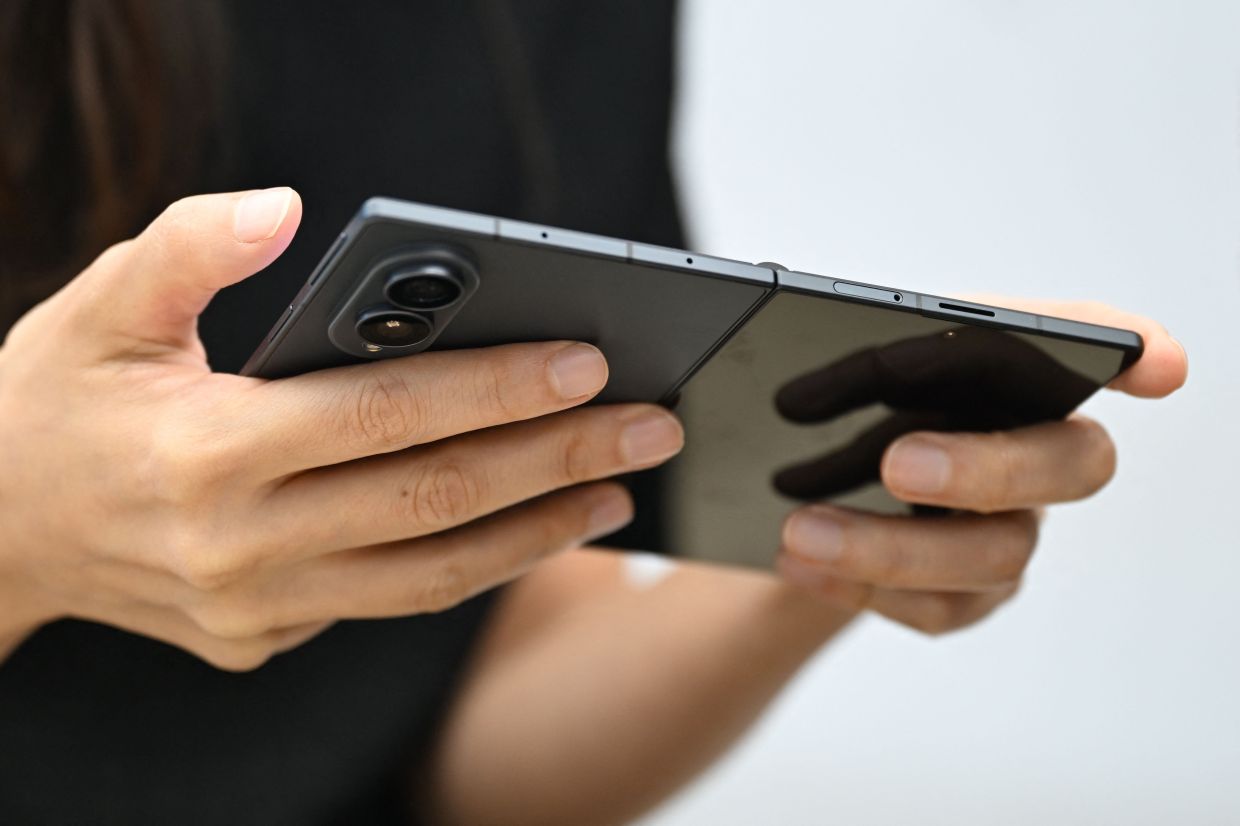
Samsung Electronics' latest foldable device, the Galaxy Z Fold 8, heralds a pronounced shift in how manufacturers are reimagining portable computing. Rather than the tall, narrow profile that defined early foldables, this new model adopts a stockier, wider aesthetic reminiscent of a passport—a design choice that prioritises content consumption and improves one-handed usability. The development gains momentum as Apple prepares to unveil its inaugural folding iPhone within the next two months, virtually guaranteeing that Western consumers will encounter this design philosophy on a much broader scale than ever before.
The passport-inspired proportions are not entirely novel to the industry. Google's original Pixel Fold flirted with similar dimensions before retreating to a taller layout, while Chinese manufacturers Oppo and Huawei have already deployed wide foldables in their domestic and regional markets. Yet the convergence of Samsung's US$1,900 offering—locally priced from RM7,299 and beginning shipments on August 7—with Apple's imminent entry creates a critical mass that could fundamentally alter consumer expectations about what foldables should look like. This tandem approach suggests industry-wide confidence that the compact, wide form factor addresses genuine user needs that traditional flagship phones have failed to meet.
Handling the Z Fold 8 reveals why manufacturers are embracing this aesthetic. At 201 grams, the device possesses a remarkable lightness that belies its versatility, and its shortened profile makes one-handed operation surprisingly ergonomic. The 5.5-inch cover screen, measuring just 4.9 inches in height, sits comfortably in the palm without imposing the grip anxiety associated with larger devices like the Galaxy S26 Ultra or iPhone 17 Pro Max. This ergonomic advantage represents a meaningful distinction in a market where premium phones have grown increasingly unwieldy, often forcing compromises on portability for the sake of screen real estate.
However, the design philosophy carries tangible trade-offs. The repositioned rear camera module creates a noticeable rocking motion when the phone rests on a table—a flaw that proves difficult to ignore despite Samsung's otherwise assured engineering. More significantly, the squat outer screen's 10:16 aspect ratio substantially reduces information density. Users accustomed to viewing ten email subject lines on an iPhone 17 Pro Max will see merely five on the Z Fold 8, a compression that extends across Gmail, Slack, and the home screen grid, which shrinks from five app columns to four. For professionals reliant on constant information consumption, these vertical constraints may prove frustrating during the workday, though adjustment of text size preferences offers partial mitigation.
The inner 7.6-inch display compensates for these limitations in unexpected ways. When rotated to portrait orientation, the expansive screen transforms cramped social media feeds and video content into genuinely immersive experiences that surpass what any conventional smartphone can deliver. Reading on this larger canvas feels more natural and less fatiguing than on traditional narrow devices, while the reduced weight—compared to previous Z Fold iterations—enables extended use without hand strain. Displaying photographs proves particularly revelatory; since smartphone cameras capture in 4:3 aspect ratio, images automatically fill the entire display when viewed on the inner screen, creating a vivid gallery experience superior to any conventional handset.
Photography capabilities present a curious constraint. The Z Fold 8's dual-camera configuration—comprising a primary shooter and ultrawide lens—notably omits a telephoto option, forfeiting the optical zoom capability that Samsung's computational photography has historically leveraged to outperform Apple and Google in portrait mode separation and background blur. This limitation becomes especially poignant given that Apple's forthcoming folding iPhone will reportedly adopt an identical dual-lens approach, potentially missing an opportunity to differentiate through superior zoom capabilities. For consumers who value photographic zoom reach, conventional flagship models may remain the more pragmatic choice, at least until manufacturers address this gap.
Video consumption, ostensibly a primary motivation for the wider form factor, delivers less transformative results than marketing rhetoric suggests. While the inner display allows pinch-to-zoom magnification beyond what traditional phones permit, modern films encoded in cinematic aspect ratios do not scale dramatically larger on the Z Fold 8 than on a 17-inch Pro Max or S26 Ultra. The advantage resides chiefly in narrower black bars flanking the content, a refinement rather than a revolution. To truly unlock the entertainment potential of this design, Samsung would require a larger variant approaching the dimensions of the discontinued Galaxy Z TriFold—a concession that would sacrifice the portability gains that make the current Z Fold 8 compelling. This contradiction hints at an emerging strategic question: whether Samsung might eventually streamline its foldable lineup to two sizes of the compact, wide design, serving both minimalists seeking versatile portability and power users demanding a true mobile workstation.
Samsung's internal forecasts reveal considerable confidence in this direction. The company anticipates the passport-shaped form factor will comprise approximately one-third of its foldable sales across the United States, a projection that signals substantial faith in market adoption. This optimism stems partly from the Z Fold 8 feeling genuinely novel after years of incremental smartphone refinements. In an era where flagship devices often differentiate through marginal camera improvements or algorithmic artificial intelligence features that feel superfluous to everyday users, the Z Fold 8's reinvented physical form delivers authentic innovation—the kind that transforms the tangible experience of using a device.
Apple's strategic sequencing reinforces this analysis. The foldable iPhone represents the second phase of a three-year plan to revolutionise flagship aesthetics, following last year's introduction of redesigned Pro and Pro Max models and the thinner iPhone Air variant. A further device overhaul is scheduled for 2027 to commemorate the iPhone's twentieth anniversary, suggesting Apple views foldables as one component of a broader design renaissance rather than a singular reinvention. This methodical pacing contrasts with the urgent positioning that Samsung has assigned to the Z Fold 8, possibly reflecting different market philosophies: Samsung pivoting aggressively toward the new form factor, while Apple approaches foldables as a complementary option within an expanding portfolio.
Despite genuine innovation, foldable devices—including this refined iteration—are unlikely to supplant conventional flagship phones in the near term. The design concessions remain meaningful for specific user segments. Email power users, social media enthusiasts, and consumers prioritising screen real estate will likely find greater satisfaction and value in the significantly less expensive Galaxy S26 Ultra, iPhone 17 Pro Max, or iPhone Air, all of which provide superior information density and established interaction patterns. The form-factor trade-offs, while worthwhile for some, do not universally serve all purchasing preferences or use cases.
Yet the psychological dimension of the Z Fold 8 warrants recognition. After years of marketing saturation promising marginal innovations, this device restores a sense of tangible difference—a feeling that foldable technology has matured beyond iterative screen refreshes and camera megapixel increases. For consumers experiencing fatigue with predictable annual phone releases, the passport-shaped form factor offers genuine novelty. Whether this aesthetic becomes the mainstream standard the market seems prepared to adopt, or remains a niche preference for design-conscious early adopters, will depend on how seamlessly Apple executes its foldable entry and whether manufacturers can resolve the persistent compromises that currently attend the wider design.

