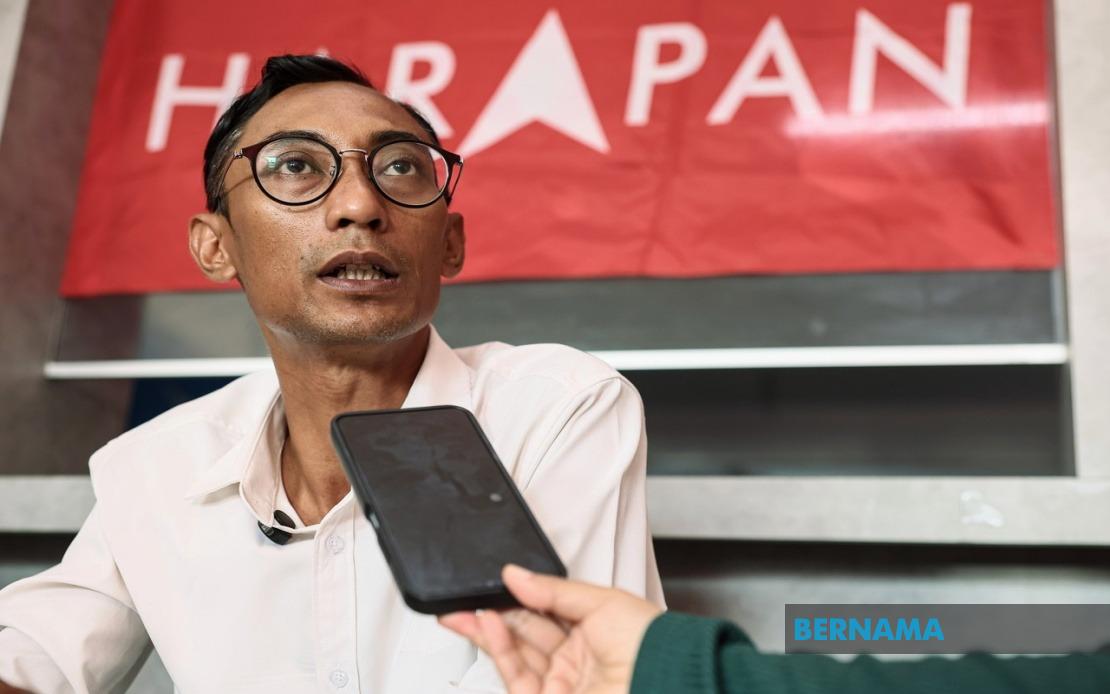
Pakatan Harapan candidate Saiful Nizam Samat is banking on a distinctive pitch to voters in the Endau state seat as the Johor election enters its final stretch. Rather than claiming broader ambitions, his campaign is framed around what he calls the 'Suara Endau ke Putrajaya' mission—fundamentally a promise to ensure the Endau community's concerns reach decision-makers in the federal capital. This hyperlocal approach reflects a strategic calculation that voters in this constituency are more interested in effective advocacy than grand political rhetoric.
The candidate believes this focused positioning addresses a genuine governance gap. In an interview with Bernama, Saiful Nizam explained his reasoning for not contesting from larger urban constituencies like Iskandar Puteri or Kota Iskandar. The logic is straightforward: a representative with direct lines to Putrajaya could streamline the bureaucratic process of translating community needs into tangible development projects. He argues that better coordination between local concerns and federal planning mechanisms would accelerate infrastructure improvements and economic initiatives benefiting ordinary residents.
Saiful Nizam's approach reflects broader frustrations in Malaysia's federal system, where state and local representatives sometimes struggle to bridge the gap between constituent demands and national resource allocation. By explicitly positioning himself as a conduit rather than claiming to solve all problems himself, he is attempting to reset expectations and demonstrate realism. This resonates particularly in constituencies where development has lagged, making direct access to federal planning processes a genuine competitive advantage.
The campaign itself has been energetic across multiple channels. Over the first week, organisers report consistently positive responses from voters spanning different demographics—from young voters to senior citizens. The team is employing both traditional grassroots methods and digital platforms to extend their reach, recognising that a diverse electorate requires varied messaging approaches. This dual-track strategy appears designed to avoid the trap of appearing either technologically disconnected or divorced from face-to-face community engagement.
Creativity in messaging has also featured prominently. The campaign commissioned an original theme song described as light-hearted and catchy, deliberately targeting younger voters who might otherwise dismiss electoral messaging. Such cultural production is increasingly common in Malaysian campaigns, reflecting recognition that breaking through information clutter requires entertainment value alongside substance. The song strategy suggests organisers understand that policy arguments alone rarely mobilise younger voters.
Geographically, the campaign is casting its net widely across the Endau constituency. Upcoming activities will particularly focus on Orang Asli settlements, acknowledging that indigenous communities represent both a demographic constituency and a symbol of development challenges in rural areas. This targeted attention may also signal that Saiful Nizam believes PH can make inroads among voters traditionally considered part of Barisan Nasional's support base.
Saiful Nizam faces stiff competition in a four-way contest. The incumbent is Alwiyah Talib, a two-term Barisan Nasional representative, suggesting strong personal appeal and established networks. Perikatan Nasional has fielded Hasnul Hakimi Hussien, representing the opposition coalition's attempt to fracture anti-government voting. Additionally, Jati Awang represents Parti Orang Asli Malaysia, potentially appealing to indigenous voters concerned that national parties do not adequately represent their interests. Yet despite these challengers, Saiful Nizam projects confidence, attributing optimism to campaign strength and what he describes as realistic rather than fantastical commitments.
A notable feature of his appeal is the explicit call to diaspora voters. Saiful Nizam directly addressed Endau residents working in Singapore, the Klang Valley, and other regions, urging them to return home to vote. This outreach acknowledges rural-to-urban migration patterns while attempting to mobilise voters who may feel disconnected from local politics despite maintaining voting rights. Such messaging could be significant in constituencies where work migration has reduced participation rates.
The Endau contest sits within the broader 16th Johor state election, taking place on July 11, with early voting on July 7. This timing places Johor among the first state polls following recent national developments, making results potentially significant for broader coalition dynamics. A PH victory in Endau would demonstrate capacity to challenge BN strongholds in Johor, historically one of the government coalition's most reliable states.
Saiful Nizam's campaign strategy reflects evolving Malaysian electoral dynamics. Rather than pitching himself as a transformational figure, he is positioning representation and coordination as the core value proposition. This suggests growing voter sophistication and disillusionment with grandiose promises. For Malaysian and Southeast Asian observers tracking democratic development in the region, the Endau race exemplifies how representation itself has become a contested terrain, with candidates competing partly on claims to more effective government communication rather than purely ideological grounds.
The Johor election serves as a crucial test for Pakatan Harapan's capacity to expand beyond established strongholds into traditionally BN-dominated states. Success in constituencies like Endau would validate the strategy of identifying specific local vulnerabilities and positioning representatives as solutions to concrete governance problems rather than relying solely on national narratives.

