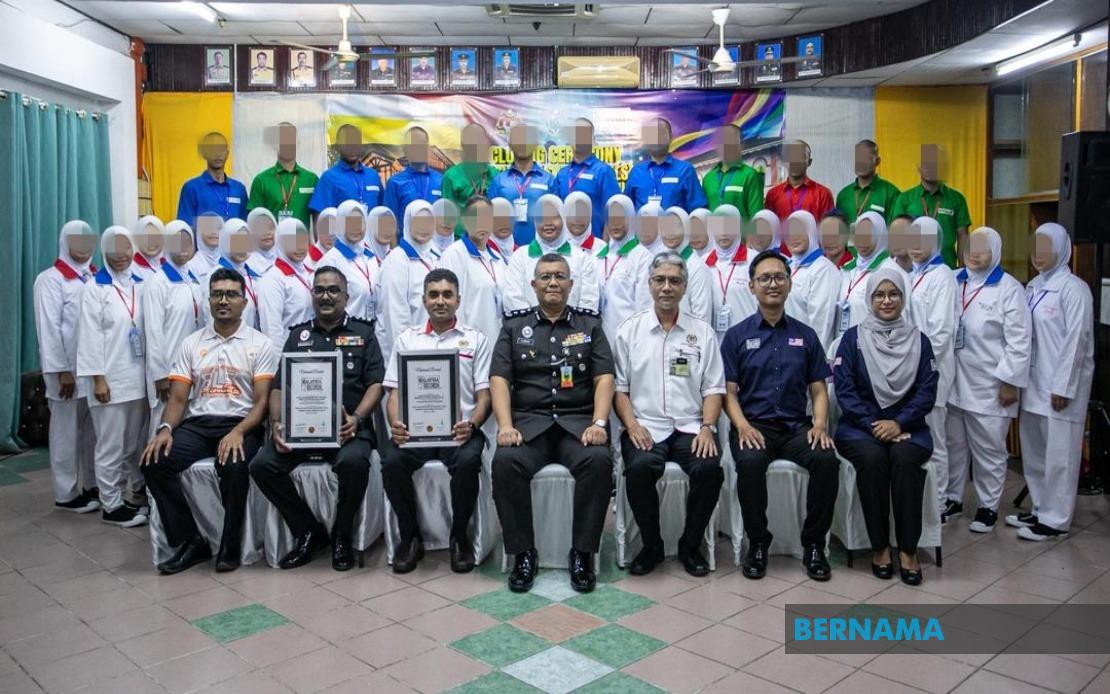
Home Minister Datuk Seri Saifuddin Nasution Ismail has commended the Malaysian Prisons Department for achieving recognition from the Malaysia Book of Records following a significant training initiative at Batu Gajah Correctional Centre. The distinction recognises a Basic Life Support and Automated External Defibrillator training programme that involved 42 incarcerated individuals, marking a notable milestone in the nation's correctional system.
The accolade represents far more than a ceremonial recognition. Rather, it underscores a fundamental philosophical shift within Malaysia's approach to incarceration, one that positions prisons as institutions of transformation rather than mere punishment. According to the Home Minister, the achievement demonstrates the potential within correctional facilities to nurture personal development and equip individuals with practical, life-affirming skills that extend beyond the prison walls.
The training programme itself carries substantial symbolic weight. By qualifying 42 inmates to provide emergency medical assistance, the initiative bridges a gap between rehabilitation aspirations and tangible outcomes. Participants acquired competencies in cardiopulmonary resuscitation and the operation of defibrillators—abilities that represent genuine social utility and personal accomplishment. These are not abstract concepts but concrete, certifiable skills recognised within Malaysia's formal achievement framework.
Saifuddin's statement emphasises that such programmes embed multiple layers of personal development beyond the immediate technical training. Life-saving skills training inherently conveys humanitarian principles, fostering empathy and a sense of responsibility for others' welfare. Participants are simultaneously instilled with discipline, self-reliance, and confidence—psychological attributes that challenge the stigma and hopelessness frequently accompanying incarceration. This multidimensional approach addresses both practical competency gaps and the psychological barriers that often impede successful reintegration.
The broader policy context here reflects contemporary global thinking about correctional reform. Rather than exclusively emphasising deterrence or punishment, progressive correctional systems increasingly recognise that equipping inmates with marketable skills, educational credentials, and psychological resilience produces measurable reductions in recidivism. Malaysia's approach, as articulated through this initiative, positions rehabilitation as a strategy for enhancing public safety rather than merely an altruistic gesture toward incarcerated populations.
For Malaysian society, the implications extend beyond the 42 individuals who completed the Batu Gajah training. Successful reintegration of formerly incarcerated persons reduces strain on social welfare systems, decreases family disruption, and enhances economic productivity. When individuals return to their communities equipped with formal qualifications and renewed self-confidence, they become potential contributors rather than sustained burdens on correctional infrastructure. The private sector stands to benefit from access to a labour pool that might otherwise remain marginalised and economically inactive.
The Home Minister's remarks also signal governmental commitment to scaling such initiatives across Malaysia's correctional network. His expressed hope for expanded high-impact programmes suggests potential budget allocation and institutional support for similar training ventures in other facilities. This expansion would amplify the cumulative effect of rehabilitation activities and potentially influence the trajectory of thousands of individuals annually passing through the system.
Southeast Asian governments increasingly face pressure to demonstrate human rights compliance while managing prison overcrowding and escalating crime. Malaysia's spotlight on successful rehabilitation initiatives serves dual purposes: it provides tangible evidence of commitment to international standards regarding prisoner treatment whilst simultaneously addressing domestic security concerns. Inmates who possess skills and self-esteem are statistically less likely to recidivate than those released into society without preparation or qualification.
The Malaysia Book of Records recognition carries institutional validation that extends beyond Home Ministry statements. Official documentation of achievement creates measurable benchmarks and enables comparative analysis across facilities. Other correctional institutions can adopt similar frameworks, creating systemic momentum toward rehabilitation-focused operations. The recognition mechanism thus functions as both an incentive for institutional innovation and a mechanism for disseminating best practice throughout the correctional apparatus.
Critically, the initiative addresses a persistent challenge within incarceration systems: the psychological demoralisation that accompanies prolonged confinement. Participation in structured training with external recognition combats the dehumanisation and learned helplessness that extended imprisonment can produce. Participants experience themselves as learners and achievers rather than exclusively as offenders, a reframing with profound implications for psychological wellbeing and post-release behaviour.
The Batu Gajah programme also demonstrates potential collaboration between correctional authorities and healthcare systems. Training in emergency medical response represents a public health contribution that extends correctional benefits into broader community welfare. Inmates trained in BLS and AED deployment represent an expanded reserve of certified responders available for civilian emergencies, adding measurable social value to rehabilitation outcomes.
Saifuddin's emphasis on preparing inmates to become "productive members of society" reflects economic pragmatism underlying rehabilitation philosophy. Malaysia's development objectives depend partly upon sustained human capital utilisation. Formerly incarcerated individuals represent a significant demographic segment whose productive capacity has previously been largely forfeited through incarceration. Rehabilitation investment represents strategic human resource development with long-term economic implications for national growth and competitiveness.

