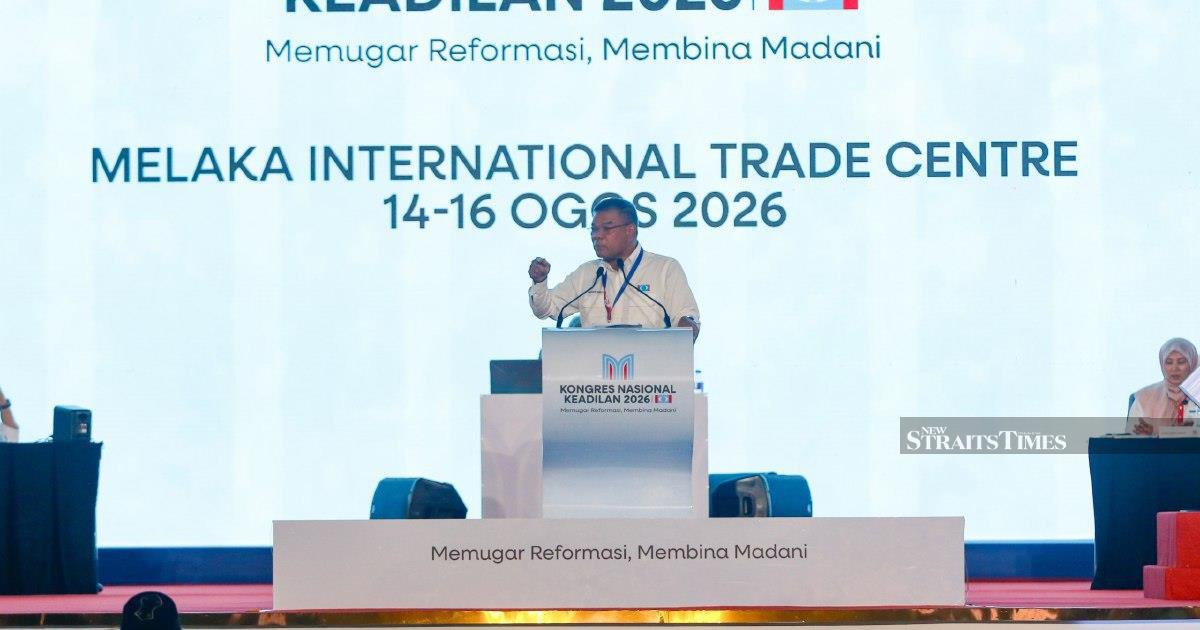
Datuk Seri Saifuddin Nasution Ismail, the PKR vice-president, has made a significant appeal for Malaysia's anti-corruption agenda to be depoliticised and reclaimed as a matter of ethical governance that should unite rather than divide the nation along communal lines.
Speaking in Ayer Keroh, Saifuddin articulated a vision where the nation's fight against graft transcends the communal and religious fault lines that often shape public discourse in Malaysia. His intervention represents an effort to reorient debate around corruption—a challenge that touches every Malaysian regardless of ethnic or religious background—away from the sectarian framing that has become increasingly common in recent years.
The timing of Saifuddin's remarks carries weight in the Malaysian political context. As the country continues to grapple with high-profile corruption cases and the institutional weakening of enforcement agencies, the way corruption is discussed carries implications for national cohesion. When graft investigations or anti-corruption campaigns become ammunition in racial or religious disputes, they risk delegitimising both the moral case against corruption and the legitimacy of institutions charged with combating it.
Saifuddin's position reflects a broader concern within reform-minded political circles that corruption discourse has been captured by sectarian interests. By insisting that graft must be treated as a governance and moral question, he is essentially arguing that citizens should evaluate anti-corruption efforts on their merits and institutional integrity, rather than assessing them through the lens of which community or religion stands to benefit or lose from enforcement actions.
This framing also has pragmatic implications for Malaysia's international standing. Foreign investors, development partners, and international observers assess Malaysia partly through the lens of corruption perception indices and institutional credibility. When anti-corruption efforts become entangled with racial or religious politics, it muddies the message that Malaysia is serious about improving governance standards and the business environment. A corruption fight that appears neutral and institutionally grounded carries more weight with external stakeholders than one that appears to serve communal interests.
The distinction Saifuddin draws between treating corruption as a moral issue versus allowing it to become racial or religious politics is instructive for how Malaysian society approaches other complex governance challenges. Public institutions perform more effectively when they are seen as serving the common interest rather than particular groups. Anti-corruption agencies, the judiciary, and enforcement authorities derive their legitimacy partly from perceptions that they operate according to universal standards rather than serving factional interests.
For the Pakatan Harapan coalition, of which PKR is a member, Saifuddin's intervention also signals an internal commitment to ensuring that anti-corruption becomes a unifying theme rather than a point of contention among the coalition's multiethnic and multireligious base. This is particularly relevant given that Harapan's 2018 victory was substantially built on public anger over corruption scandals under the previous administration, and maintaining the moral high ground on this issue remains strategically important.
The challenge Saifuddin identifies—keeping corruption discourse separate from racial and religious politics—reflects a persistent structural problem in Malaysian public life. The ease with which almost any policy issue can be reframed along communal lines suggests that deliberate effort is required to anchor discussions in institutional and moral grounds. This is especially true for corruption, where enforcement inevitably affects some individuals and communities more visibly than others, creating opportunities for those affected to recast their situation in communal terms.
Effective anti-corruption policy also requires sustained public support and institutional capacity. When citizens view corruption investigations through communal lenses, they are more likely to dismiss or question findings that implicate their own community members, and more likely to celebrate outcomes that affect members of other communities. This selective endorsement weakens the moral consensus necessary for serious anti-corruption work and makes corruption-fighting agencies vulnerable to claims of bias or political manipulation.
Saifuddin's call thus extends beyond mere rhetoric. It is a normative claim about how Malaysian institutions and society should approach a critical governance challenge. It acknowledges that communal sensitivities exist in Malaysia but argues that the nation must develop sufficient maturity and institutional strength to address corruption as a problem that affects all citizens and that demands universal standards of accountability and rule of law.
The remarks also underscore the ongoing debate within Malaysian political leadership about national identity and solidarity. Some voices argue that Malaysia's social cohesion depends on explicitly recognising and managing communal interests. Others, like Saifuddin, maintain that the path to stronger national unity lies in building institutions and public discourse that operate according to principles transcending communal identity. How Malaysia resolves this tension will likely shape not just anti-corruption efforts but the trajectory of institutional trust and governance quality more broadly.

