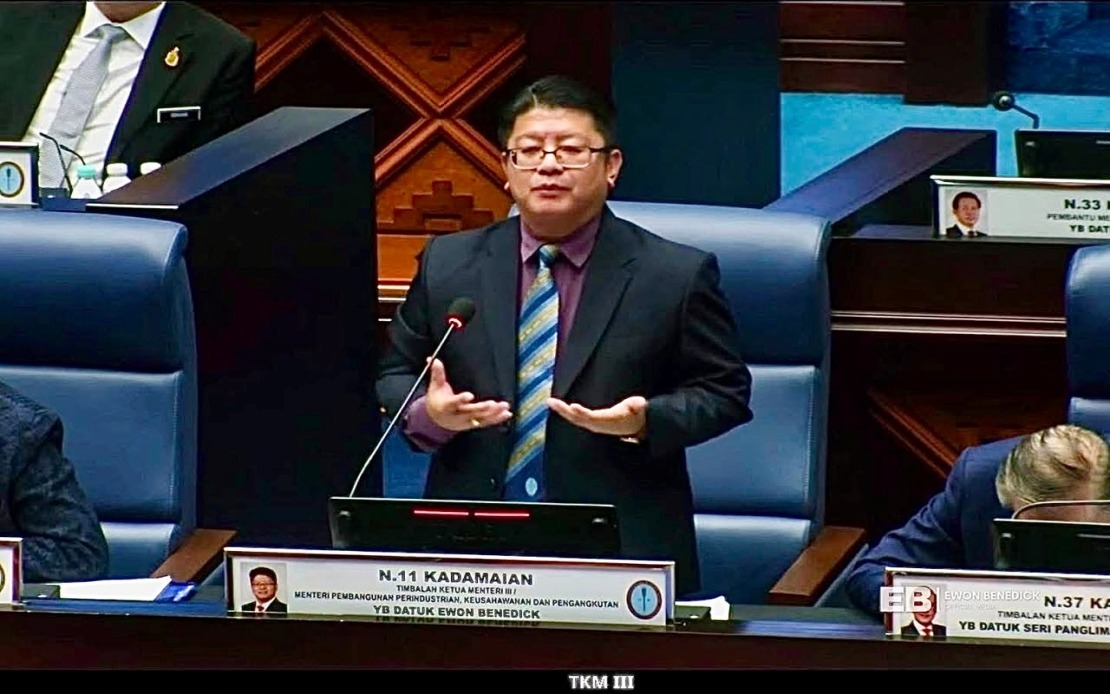
The Sabah state government has achieved tangible progress in combating a persistent logistical challenge that has plagued Sepanggar Port—the accumulation of abandoned containers occupying valuable berthing space. The solution hinged on restructuring port fee schedules to make storage economically unviable, prompting swift removal of 103 containers that had languished at the facility for extended periods. Deputy Chief Minister III Datuk Ewon Benedick disclosed this achievement during parliamentary proceedings, presenting it as evidence that decisive administrative action, paired with financial incentives, can resolve infrastructure bottlenecks that often frustrate maritime operators across Southeast Asia.
The container problem had accumulated insidiously over time, with some units remaining stationary for over 13 months. The longest-detained container had occupied port space for 407 days—a staggering figure that underscores how ineffective pricing mechanisms can inadvertently encourage poor resource management. These idle containers represented lost opportunities for the port authority to generate revenue from active cargo movements and blocked berths needed for legitimate shipping operations. The scenario mirrored congestion issues observed in other regional ports, where outdated fee structures fail to discourage low-value, long-duration storage.
Previous tariff regimes at Sepanggar had undercharged for container dwell time, making it economically rational for storage operators to park inventory at the port rather than transferring it to dedicated inland depots. This perverse incentive structure distorted port operations, favouring speculative or negligent storage over genuine transshipment activity. The decision to implement substantially higher charges effectively altered the cost-benefit calculation, rendering extended port storage prohibitively expensive. Within weeks of the new pricing announcement, owners rushed to retrieve their containers, freeing approximately 103 units and reclaiming critical operational capacity.
Under the revised operational framework, Sabah Ports Authority has established a 21-day threshold beyond which containers face potential disposal under regulatory protocols. This grace period balances fairness with operational necessity, providing genuine account holders reasonable time to claim goods whilst establishing clear boundaries for abandoned cargo. The threat of formal disposal mechanisms proved psychologically potent—once the authority publicly committed to removing unclaimed containers, owners who had previously demonstrated indifference suddenly mobilised retrieval operations. This outcome vindicated the government's willingness to enforce penalties previously announced but perhaps not consistently applied.
The administrative restructuring of Sabah's government portfolio precipitated this legislative refinement. Port affairs transitioned from the Ministry of Works and Utilities to the Ministry of Industrial Development, Entrepreneurship and Transport—a bureaucratic realignment that created opportunity to audit existing port governance frameworks. The Sabah Ports (Privatisation) (Amendment) Bill 2026, subsequently passed by the State Legislative Assembly through majority voice vote, formally codified the ministerial responsibility change and harmonised definitional inconsistencies between the Sabah Ports (Privatisation) Enactment 1998 and the Sabah Ports Authority Enactment 1981. Such legislative housekeeping often proves necessary following government restructuring but typically receives scant public attention.
However, the fee increases have generated friction among port user associations representing shipping companies, freight forwarders, and logistics operators who shoulder the ultimate cost burden. Recognising this constituency friction, Datuk Ewon signalled administrative flexibility, indicating his ministry remains receptive to engagement dialogues aimed at calibrating charges to acceptable levels. Rather than imposing unilateral solutions, the government incorporated representatives from port user associations, shipowners' organisations, and maritime industry bodies into a formal task force structure. This inclusive governance approach facilitates monthly structured discussions, theoretically enabling evidence-based fee calibration that balances port authority revenue requirements with shipper competitiveness.
Such stakeholder-inclusive policymaking reflects maturation in port governance methodology across Southeast Asia. Ports operate within competitive regional networks—goods can route through alternative facilities in Brunei, Sandakan, or even Peninsular Malaysia if Sepanggar pricing becomes uncompetitive. The government's recognition that sustainable solutions require industry buy-in rather than pure administrative imposition suggests sophisticated understanding of port economics. Malaysia's container-dependent supply chains require efficient berthing facilities; congestion at any major container gate imposes systemic costs across manufacturing and trading networks.
Beyond port operations, the legislative session also addressed indigenous governance frameworks through two additional bills. The Sabah Native Affairs Council (Amendment) Bill 2026 expanded the council's advisory scope to encompass customary education and native law preservation—critical functions given Sabah's ethnically diverse population and the importance of maintaining communal heritage structures. The amendment created a Native Affairs Officer position, formalising the investigation and prosecution of customary offences within native court systems. Such institutional development recognises that effective governance in Sabah requires parallel legal and administrative systems accommodating indigenous traditions alongside statutory law.
The District Chief, Native Chief and Headman Bill 2026 simultaneously established comprehensive legal architecture governing traditional leadership positions. Rather than operating through informal or poorly documented protocols, these positions now have codified appointment procedures, defined functions, transparent accountability mechanisms, and explicit revocation grounds. The Bill stipulates that responsible ministers appoint these officials upon district officer recommendations, with removal possible due to incapacity, financial insolvency, criminal conviction, misconduct, or failure to reside within designated areas. This professionalisation of indigenous leadership reflects broader governance trends throughout Malaysia.
These legislative initiatives collectively demonstrate Sabah's multi-dimensional governance agenda. Whilst container congestion at Sepanggar may appear narrowly technical, it exemplifies how port efficiency directly impacts economic competitiveness and trading costs throughout the supply chain. Similarly, institutional clarification of native leadership roles strengthens administrative legitimacy within communities maintaining deep customary traditions. The legislative programme balances commercial infrastructure concerns with cultural preservation imperatives—a balance essential for inclusive development in ethnically complex jurisdictions like Sabah.
For Malaysian stakeholders dependent on Sabah's maritime connectivity, the container resolution carries implications beyond Kota Kinabalu. Efficient regional ports reduce transshipment costs and improve supply chain predictability for manufacturers and traders throughout Southeast Asia. As international logistics competition intensifies, ports must simultaneously manage cost recovery pressures with competitiveness requirements. Sabah's resolution of its container congestion through fee restructuring paired with stakeholder engagement offers a replicable model for other port authorities confronting similar inefficiencies, suggesting that administrative innovation and strategic pricing can achieve operational objectives without requiring massive infrastructure investment.

