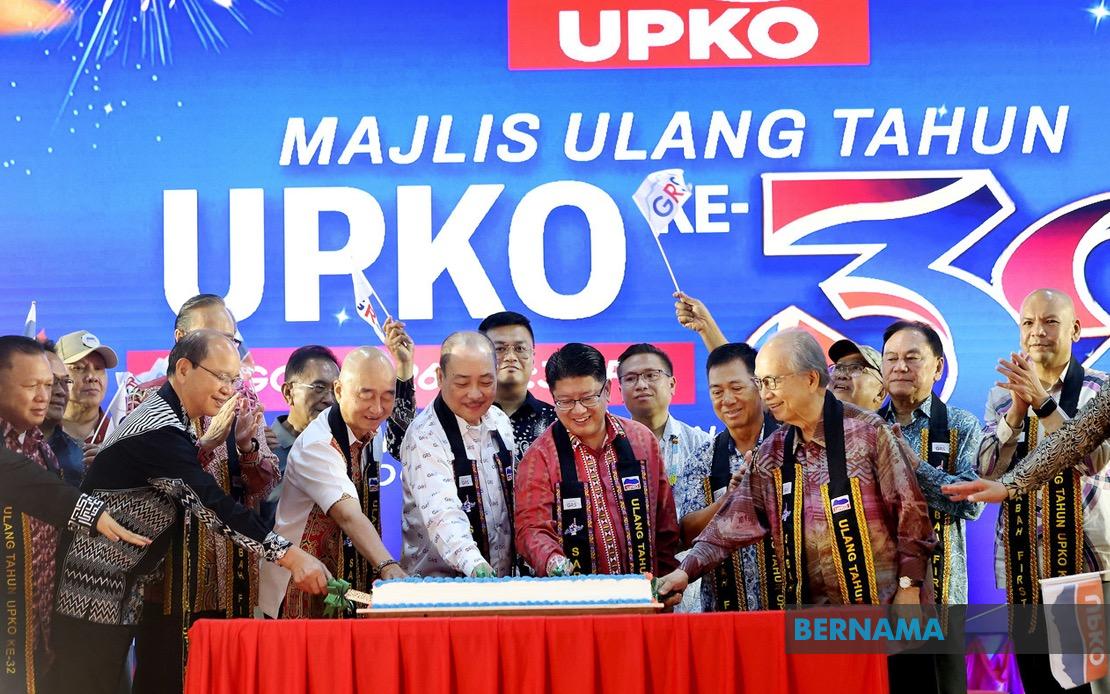
Sabah's Chief Minister Datuk Seri Hajiji Noor has reiterated his government's commitment to ensuring that every dollar received from Kuala Lumpur translates into tangible benefits for ordinary Sabahans. Speaking at the 32nd anniversary celebration of the United Progressive Kinabalu Organisation (UPKO) and the opening of the 17th UPKO Triennial Delegates Conference in Kota Kinabalu, Hajiji underscored the state administration's intention to deploy incoming federal allocations across multiple channels designed to elevate living standards and fortify community welfare across the state.
The timing of Hajiji's remarks comes as Sabah prepares to fully utilise a significant boost in federal support. Prime Minister Datuk Seri Anwar Ibrahim's decision to raise the interim special grant to RM1.5 billion annually represents a meaningful injection of capital that the state government views as instrumental to addressing long-standing infrastructure deficits. According to Hajiji, the additional funding will prioritise the expansion of road networks and bridge construction, two areas where Sabah has historically faced chronic underinvestment relative to its geographical size and dispersed population centres.
The infrastructure agenda extends beyond basic connectivity. The state administration has flagged water and electricity supply improvements as integral components of its spending strategy, reflecting persistent challenges in service delivery across rural and remote communities. In many parts of Sabah, particularly in interior divisions, residents continue to experience intermittent water and power shortages, a situation that constrains economic activity and diminishes quality of life. By channelling federal resources toward these utilities, the government aims to close the service gap between urban and rural Sabah, a critical prerequisite for balanced development.
Beyond infrastructure, Hajiji highlighted the role of social assistance programmes in the government's distribution framework. The Rumah Mesra Sabah Maju Jaya (SMJ) initiative, which focuses on constructing affordable housing units, and the Sentuhan Kasih Rakyat (SYUKUR) programme, designed to provide targeted relief to vulnerable segments of society, figure prominently in the allocation strategy. These initiatives reflect an understanding that federal transfers must address not only physical infrastructure but also the socioeconomic dimensions of development, ensuring that poorer households benefit directly from state coffers.
The RM1.5 billion interim grant represents a substantial component of Sabah's engagement with the federal fiscal framework. The state had already received RM600 million of this allocation in June, demonstrating the commencement of the fund flow. For Malaysian federalism, such transfers between national and state governments remain contentious terrain, with resource-producing states like Sabah frequently arguing that their contributions to federal revenues warrant proportionally higher returns. The enhanced interim payment may signal federal acknowledgment of such concerns, though questions persist regarding the adequacy of allocations relative to Sabah's development needs.
Sabah's own revenue generation capacity forms the other pillar of Hajiji's fiscal narrative. The state government has maintained annual internal collections at approximately RM7 billion since 2022, a figure projected to reach RM8 billion in the current year. This consistent revenue base, complemented by federal transfers, provides the state with a degree of fiscal autonomy and demonstrates the state administration's capacity to fund development initiatives independently. Nevertheless, the reliance on federal grants indicates that internal revenue alone remains insufficient to fully address the state's infrastructure and welfare requirements.
The broader economic context underscores the relevance of Hajiji's fiscal messaging. Despite navigating complex global supply chain disruptions and volatile commodity prices that directly impact Sabah's oil and palm oil revenues, the state has maintained macroeconomic stability. This resilience, Hajiji argued, positions Sabah as an attractive destination for private investment, a claim buttressed by consistent revenue growth and the government's disciplined financial management. For investors evaluating opportunities across Southeast Asia, such fiscal credibility becomes a competitive advantage.
Hajiji's emphasis on returning federal allocations to the populace also reflects political calculation within the Sabah context. The statement came during a party function, a venue where reaffirming the government's commitment to distributing resources equitably serves to strengthen intra-coalition bonds and reinforce legitimacy among party grassroots. In Malaysian politics, particularly in states where federal transfers loom large in budgetary capacity, demonstrating tangible benefits becomes essential to maintaining electoral support and sustaining the ruling coalition's dominance.
The specificity of Hajiji's commitments—naming particular programmes and quantifying allocations—suggests an effort to move beyond rhetorical promises toward documented accountability. By publicly linking the RM1.5 billion increase to designated projects, the government creates benchmarks against which performance can be measured. This approach carries implicit risks, as unmet infrastructure timelines or incomplete welfare distributions could undermine the government's credibility in future resource negotiations with Kuala Lumpur.
For Sabahans, the significance of these assurances hinges on implementation quality. Road and bridge projects, water infrastructure, and housing schemes represent essential services that directly affect daily life and long-term economic prospects. Whether the state administration can execute these programmes efficiently, avoid cost overruns, and ensure equitable geographic distribution of benefits remains an open question that will determine public satisfaction and, ultimately, political fortunes.
The broader implications extend to federal-state relations within Malaysia's constitutional framework. Sabah's assertion that federal revenue should be reinvested in state development reflects a competitive federalism dynamic where wealthier or strategically significant states demand enhanced transfers and greater fiscal flexibility. As the federal government navigates resource constraints and competing demands from all states, the precedent set through enhanced interim payments to Sabah may shape expectations elsewhere across the federation.
Moving forward, the effectiveness of Sabah's revenue redistribution model will depend on transparency, efficient project execution, and demonstrated improvements in citizen welfare metrics. The government's pledge to return federal funds to the people through structured programmes provides a framework for accountability, yet sustained commitment to this principle across electoral cycles and fiscal pressures remains crucial to building enduring institutional trust in Sabah's public sector.

