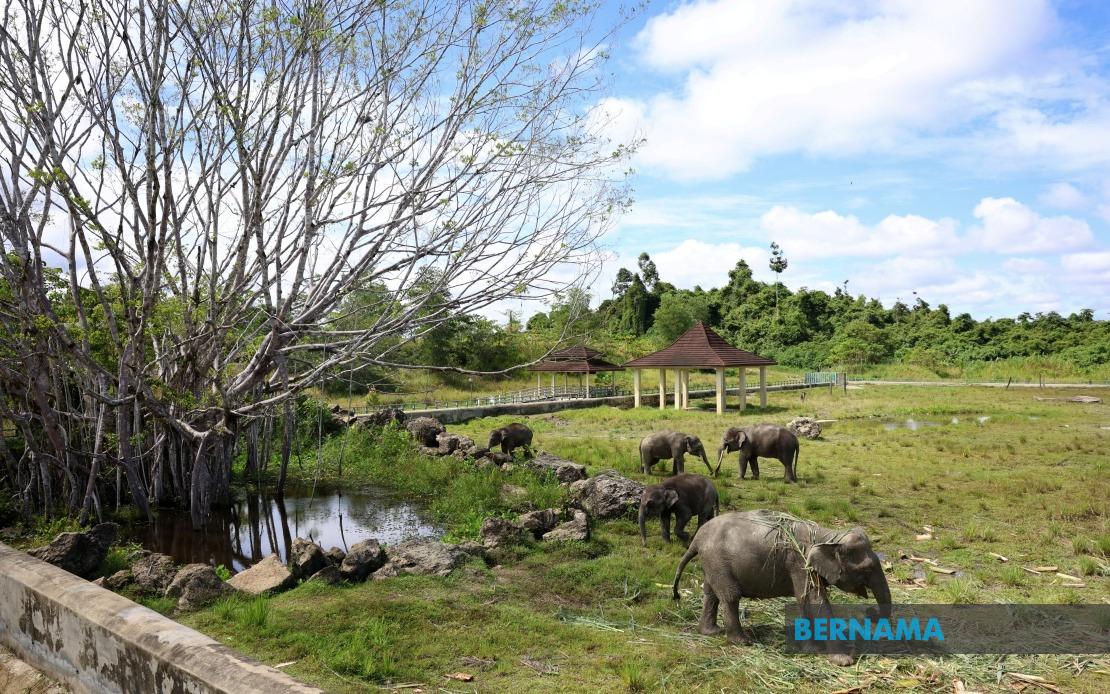
Sabah's approach to managing escalating conflicts between humans and wild animals may soon shift from reactive capture-and-move operations to a more sustainable sanctuary-based model, a senior state official indicated this week. Datuk Dr Andi Md Shamsureezal, the Sabah Assistant Minister of Tourism, Culture and Environment, told the State Legislative Assembly that a proposed elephant sanctuary in Tawau represents an experimental framework authorities believe could fundamentally reshape wildlife management across the region. The pilot project signals growing recognition that traditional solutions—capturing and relocating problem animals—have consistently failed to address underlying tensions between expanding agricultural communities and protected species seeking habitat and food sources.
The sanctuary concept gained traction after sustained pressure from rural legislators concerned about mounting crop damage and livestock losses plaguing farming districts. Datuk Seri Mohd Shafie Apdal, representing the opposition Warisan-Senallang constituency, advocated for designating dedicated wildlife reserves that could simultaneously function as ecotourism destinations, potentially generating revenue while protecting both farmers and animals. This dual-purpose vision aligns with broader Southeast Asian efforts to integrate conservation with economic development—an approach that recognizes poorer rural communities cannot indefinitely absorb losses from wildlife interactions without government support or alternative income streams.
The Tawau sanctuary initiative emerged from collaboration between Sabah's Tourism, Culture and Environment Ministry and the Sabah Wildlife Department, with input from affected stakeholders ranging from farming cooperatives to indigenous communities living on wildlife borders. Dr Andi emphasized that success in Tawau would trigger systematic expansion to other districts experiencing similar pressures, potentially transforming how Sabah manages Bornean elephants, wild boars, and primate populations. This cautious, staged approach reflects awareness that scaling ecological interventions without careful monitoring often generates unintended consequences—a lesson Southeast Asia has learned through decades of conservation experiments that prioritized either human interests or wildlife protection exclusively rather than pursuing genuine coexistence.
The sanctuary model represents a philosophical departure from conventional relocation strategies, which Sabah authorities now acknowledge merely displace rather than resolve conflict. When elephants captured in one region are relocated to another, they typically abandon reserves and return to agricultural areas, or they establish new territories that create fresh human-wildlife tensions elsewhere. Similarly, translocation exhausts finite funding while producing negligible long-term conservation gains. By contrast, sanctuaries offer confined spaces where animals can be monitored, managed, and maintained semi-permanently, reducing pressure on farming regions while preserving populations that might otherwise face culling.
Implementing this vision requires sophisticated infrastructure and community engagement beyond sanctuary perimeters. The Sabah Wildlife Department has already deployed elephant ranger teams in conflict zones, recruiting local residents whose intimate knowledge of animal behavior and landscape conditions proves invaluable for early conflict prevention. These ranger units function as frontline interpreters between communities and wildlife, identifying warning signs of animal movements and alerting farmers to heightened risk periods. Additionally, the department has begun fitting satellite collars on selected elephants, enabling real-time tracking that generates predictive data about migration patterns and habitat preferences. This technology-enabled approach allows authorities to anticipate conflicts days or weeks in advance, providing communities time to protect crops or relocate livestock rather than confronting damage after it occurs.
Wild boar and primate management incorporates different strategic logic tailored to each species' ecology and behavioral patterns. The Sabah Wildlife Department is undertaking controlled population reduction for monkeys in selected localities, framing the initiative through dual lenses of disease prevention—reducing zoonotic disease transmission to human populations—and public safety enhancement. Wild boar management proceeds within legal frameworks and risk-assessment protocols, responding to specific complaints from affected agricultural areas rather than implementing blanket control measures. These differentiated approaches acknowledge that elephants, boars, and primates present distinct conservation and conflict challenges requiring customized solutions rather than uniform policy templates.
The sanctuary expansion proposition carries significant implications for Malaysian agricultural policy and regional conservation. If Sabah successfully demonstrates that sanctuaries reduce human-wildlife conflict while maintaining viable animal populations, Peninsular Malaysia and other Southeast Asian nations facing similar pressures may adopt comparable models. Sabah's experiment occurs amid broader recognition that climate change, habitat fragmentation, and rural development intensify competition between humans and wildlife across the region. Countries like Indonesia and Thailand have similarly invested in sanctuary expansion, though results remain mixed due to funding constraints, inadequate community participation, and insufficient integration with landscape-level conservation planning.
Economic sustainability represents the sanctuary model's most uncertain dimension. Initial capital requirements for land acquisition, fencing, water systems, and visitor facilities demand substantial government investment or external funding. Long-term operational costs—veterinary care, ranger salaries, maintenance—must be met through sustained budget allocations or self-generated revenue from ecotourism activities. Malaysia's track record managing ecotourism ventures shows mixed results: some facilities become profitable attractions generating genuine community income, while others deteriorate into neglected infrastructure. The Tawau sanctuary's success hinges partly on Sabah's ability to market the facility to international and domestic tourists while maintaining genuine conservation objectives rather than prioritizing visitor volume at wildlife welfare's expense.
Community buy-in represents another critical variable determining whether the sanctuary model achieves legitimacy among affected farmers and rural populations. Conservation initiatives perceived as prioritizing animal welfare over human livelihoods historically encounter resistance, particularly in communities already experiencing economic precarity. The ranger team recruitment strategy partially addresses this concern by creating employment and positioning farmers as conservation partners rather than stakeholders forced to accept wildlife damage as unavoidable. However, meaningful compensation mechanisms for crop losses and livestock predation must accompany any sanctuary expansion, ensuring rural communities view the initiative as equitable arrangement rather than externally imposed constraint on land use and agricultural practices.
The satellite collar technology and ranger team deployment represent intermediate steps toward the broader sanctuary framework. These interventions generate data and community relationships that inform sanctuary design, site selection, and management protocols. Early warning systems reduce conflict frequency, building evidence that coordinated human-wildlife management produces tangible benefits for both agricultural production and animal welfare. This evidence becomes politically valuable when presenting sanctuary expansion proposals to rural constituencies skeptical of conservation initiatives. Documenting that ranger teams prevented specific elephant-crop conflicts or that satellite collar data enabled farmers to protect livestock accumulates credibility that abstract conservation arguments rarely achieve.
Sabah's experimentation occurs within Malaysia's federal structure, where environmental policy development involves consultation between state authorities, federal wildlife agencies, and international conservation organizations. The sanctuary model's expansion within Sabah may eventually prompt discussions about harmonizing wildlife management approaches across states, particularly for migratory species like Bornean elephants that cross administrative boundaries. Regional coordination mechanisms would strengthen protection across landscapes, though they require negotiated agreements among states with divergent economic priorities and conservation philosophies. The International Union for Conservation of Nature and other global forums increasingly emphasize transboundary wildlife management as essential for protecting species whose ranges transcend political borders, creating international pressure for Malaysian states to coordinate elephant conservation.
If the Tawau sanctuary demonstrates effectiveness in reducing human-wildlife conflict while maintaining viable animal populations and generating community benefits, the model could reshape how Sabah allocates conservation resources over coming decades. Rather than investing primarily in reactive capture operations and animal relocation, the state would gradually shift toward preventive infrastructure and proactive management strategies. This reorientation requires sustained political commitment across election cycles, sufficient funding commitments independent of tourism revenue fluctuations, and genuine community participation extending beyond token consultation. For Malaysian policymakers and conservation practitioners across Southeast Asia watching Sabah's experiment, the outcome carries lessons about whether sanctuary-based approaches offer more durable solutions to human-wildlife conflict than the temporary relief provided by traditional capture-and-relocation strategies that have dominated regional wildlife management for decades.

