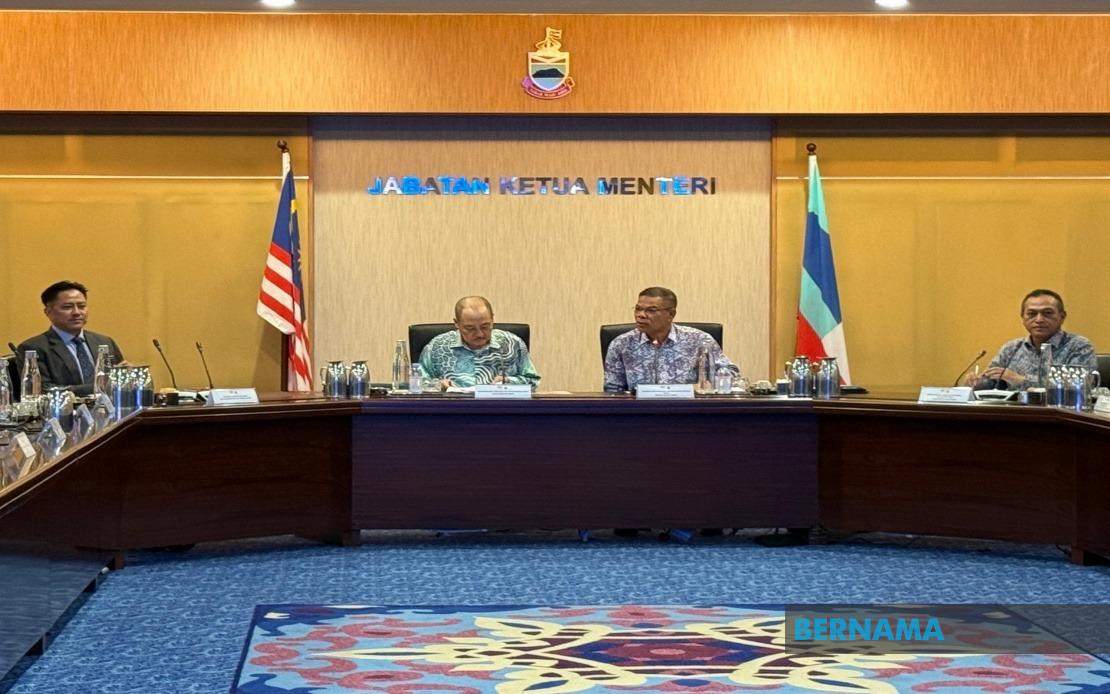
Sabah's leadership is mounting a coordinated diplomatic initiative aimed at persuading foreign governments to revise downward their travel warnings for the state's eastern territories, a move designed to unlock the region's substantial tourism potential. Chief Minister Datuk Seri Hajiji Noor underscored the importance of sustained engagement between Malaysian diplomatic channels and international embassies and high commissions, arguing that external perception remains a critical barrier to economic recovery in one of Southeast Asia's most strategically sensitive regions.
The push reflects a broader recognition that security improvements, while genuine and measurable, remain insufficient to alter international risk assessments without structured diplomatic communication. Foreign governments typically maintain travel advisories based on formal threat evaluations, and shifting these designations requires deliberate outreach demonstrating concrete progress. Hajiji's emphasis on the need for embassies to conduct fresh security assessments suggests that current advisory levels do not reflect ground realities in what authorities describe as a stabilised operational environment.
The Eastern Sabah Security Zone, an area encompassing disputed maritime territories and historically troubled coastal regions, has become a testing ground for integrated security governance in Malaysia. The region's significance extends beyond tourism—it touches upon national sovereignty concerns, maritime commerce, and the persistent challenge of transnational criminal networks operating across the Sulu and Celebes Seas. The fact that no kidnap-for-ransom cases have been documented since January 2020 represents a watershed moment in regional stability, achieved through sustained military and paramilitary operations.
Hajiji's recent inspection tour of six islands across Sabah waters served as both a security assessment and a political signal. Such high-profile visits by civilian leadership to remote security installations carry multiple messages: reassurance to personnel deployed in challenging circumstances, visible commitment to frontline operational readiness, and gathering of first-hand intelligence to inform policy decisions. The Chief Minister's direct observation of security infrastructure positioning and capability levels grounds his advocacy in experiential knowledge rather than mere administrative reports.
The Eastern Sabah Security Command (ESSCOM), the specialised regional security apparatus formally established to coordinate multi-agency operations, remains central to this success narrative. ESSCOM's coordination of personnel from the Royal Malaysia Police, the Malaysian Armed Forces, and the Malaysian Maritime Enforcement Agency represents a consolidation of previously fragmented security responses. This integration has enabled rapid intelligence sharing and coordinated operational responses across domains that historically operated independently. The six-year achievement represents institutional learning and adaptation in real time.
The meeting co-chaired by Hajiji alongside Home Minister Datuk Seri Saifuddin Nasution Ismail demonstrated deliberate alignment between state and federal governance structures on maritime security. Such high-level convocations signal that the matter occupies strategic priority within national security calculations. The participation of ESSCOM Commander Datuk Victor Sanjos and Chief Executive Officer Datuk Dr Jamaluddin Mohd Ali, alongside senior bureaucratic figures including Sabah State Secretary Datuk Zainudin Aman and Home Ministry Secretary-General Datuk Dr Awang Alik Jeman, created a forum where operational realities could inform policy adjustment.
The diplomatic campaign addresses a genuine paradox affecting Eastern Sabah's development trajectory. International travel advisories, while appropriate risk-management tools for foreign governments protecting their citizens, can become self-fulfilling obstacles to regional prosperity. Reduced visitor arrivals depress local economies dependent on tourism revenue, limiting government resources available for development and security sustainment. The absence of kidnapping incidents since early 2020 positions Sabah competitively against other regional destinations facing persistent security challenges, yet international travel warnings prevent capitalisation on this advantage.
For Malaysian policymakers, the initiative reflects recognition that security alone does not determine foreign investment or tourism flows. Perception management and structured communication with international counterparts shape how security achievements translate into economic opportunities. Malaysia's broader positioning as a regional tourism and business hub depends partly on confidence in the security of peripheral regions, and Eastern Sabah's rehabilitation carries implications beyond Kota Kinabalu's immediate jurisdiction.
The welfare and retention of security personnel stationed across the frontier represents an often-overlooked dimension of long-term stability. Hajiji's commitment to upgraded security assets and enhanced operational preparedness addresses material concerns affecting force morale and effectiveness. Personnel serving in remote maritime security posts operate under challenging conditions with limited amenities, and visible governmental commitment to improving their circumstances supports recruitment and retention of experienced personnel capable of maintaining operational continuity.
The zero-kidnapping record, while remarkable, operates within a specific temporal and geographical context. Sabah's maritime boundaries encompass vast ocean areas where surveillance and interdiction remain technically challenging. The achievement reflects sustained operational commitment from multiple agencies, but maintaining this record requires continuous investment and vigilance. Complacency represents an acute threat to gains achieved over the past six years, necessitating perpetual readiness despite absence of recent high-profile incidents.
Regionally, Sabah's security stabilisation carries implications for broader Southeast Asian maritime security frameworks. The Sulu-Celebes region encompasses shipping lanes of international significance and territorial claims involving multiple nations. Improvements in unilateral Malaysian capability contribute to broader regional stability, though persistent challenges involving non-state armed groups and transnational criminal enterprises extend beyond any single nation's security apparatus. Diplomatic engagement with foreign missions regarding Sabah's progress carries subtle messaging regarding Malaysia's commitment to regional maritime governance.
The diplomatic initiative announced by Hajiji represents a sophisticated approach to translating security accomplishments into tangible economic benefits. Foreign governments maintaining travel advisories do so from legitimate risk-management perspectives, yet those assessments can become outdated when ground conditions improve markedly. Structured communication, supported by third-party verification and transparent data sharing regarding security metrics, creates pathways for advisory revision that benefit both foreign governments seeking accurate risk assessment and Malaysian regions seeking to capitalise on improved conditions.

