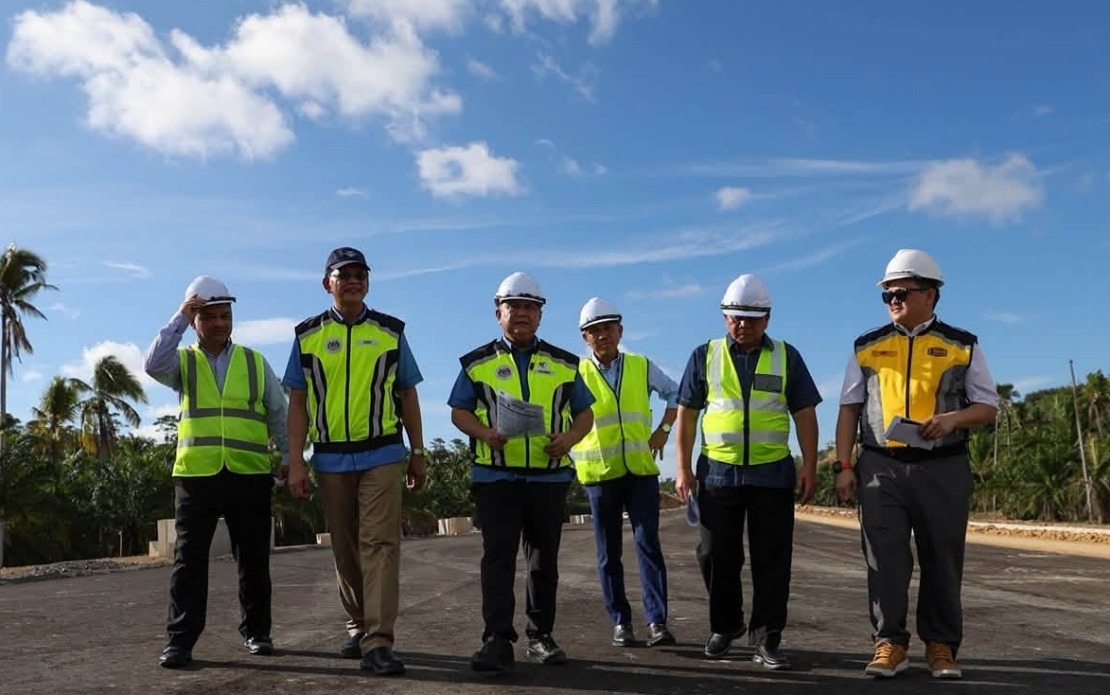
The contractor responsible for Sabah's Pan Borneo Highway Work Package 11 has formally presented a recovery plan designed to counteract construction delays that have accumulated to 32 days. The measure marks a coordinated effort between the Works Ministry, the Sabah Public Works Department, project consultants, and contractors to maintain momentum on this critical infrastructure development that is scheduled for completion by September 29, 2026.
Works Minister Datuk Seri Alexander Nanta Linggi confirmed the submission while addressing ongoing concerns about the RM167.48 million project's timeline. As of late June, the 7.3-kilometre Rampayan Laut-Sarang alignment section had achieved approximately 61.76 per cent physical progress, though this represented a shortfall of 4.35 per cent against the original schedule. The recovery plan targets a reduction of the accumulated delay to just 14 days by August 2026, positioning the project for timely handover within the contractual window.
The challenges hampering progress have proven multifaceted and demanding of coordinated solutions across several government agencies and private utility providers. Utility relocation complications have emerged as particularly significant bottlenecks, with delays stemming from coordination requirements involving Sabah Electricity Sdn Bhd, the Sabah State Water Department, and Celcom Timur Sabah Sdn Bhd. Concurrently, land acquisition difficulties have further complicated on-site works, necessitating enhanced collaboration between stakeholders to resolve impediments efficiently.
The Works Ministry has signalled a commitment to intensified oversight of the recovery implementation, with assurances that all parties will engage in proactive and integrated problem-solving. The recovery plan represents a structured approach to mitigating the identified delays through systematic coordination rather than ad-hoc interventions, reflecting recognition that infrastructure delivery of this magnitude requires sustained institutional commitment.
The Pan Borneo Highway project carries substantial strategic significance for Sabah's development trajectory and regional connectivity. Work Package 11's completion will establish a considerably more efficient transport corridor, reducing travel distances to Simpang Mengayau or Kudat by approximately 30 kilometres compared to existing routes. This translates into tangible time savings ranging from 30 to 60 minutes per journey, fundamentally altering the practical viability of travel and commerce in these regions.
Beyond immediate travel convenience, the completed alignment is positioned to catalyse broader economic development patterns across northern Sabah. The improved infrastructure connectivity directly supports the Tourism Belt initiative and the Northern Sabah Coastal Tourism Master Plan, expanding accessibility for visitors and investors targeting these emerging tourist destinations. The highway will function as an economic multiplier, reducing transportation costs for local businesses and facilitating supply chain efficiencies that extend well beyond the immediate corridor.
The employment and investment implications warrant particular attention for Sabah's local communities and the broader regional economy. Enhanced connectivity typically stimulates business formation in peripheral areas, as reduced transportation friction creates viable opportunities for entrepreneurs previously disadvantaged by geographic isolation. The Works Ministry's acknowledgement of these indirect economic benefits reflects understanding that infrastructure investment extends beyond construction activity itself to shape long-term development patterns.
For Malaysian readers and policymakers, this project exemplifies the complexities inherent in managing large-scale infrastructure delivery across geographically challenging terrain with multiple stakeholder dependencies. The delays, while notable, remain manageable within the contractual framework, underscoring the importance of recovery planning and sustained institutional coordination. The case study demonstrates that infrastructure timelines can be sustained through proactive management and stakeholder engagement, even when initial schedules encounter friction.
The Works Minister's explicit emphasis on quality, safety, and integrity alongside schedule compliance signals appropriate prioritisation of delivery standards over mere deadline adherence. This stance reflects lessons learned from infrastructure projects elsewhere where shortcuts to meet timelines have resulted in substandard outcomes requiring expensive remediation. The commitment to highest standards serves both immediate beneficiaries and establishes precedent for future infrastructure governance across Sabah and the broader region.
Looking forward, the recovery plan's effectiveness will likely depend on sustained commitment from utility providers and land authorities to resolve coordination challenges efficiently. The August 2026 checkpoint for reducing delays to 14 days will serve as a critical test of whether the recovery measures prove adequate or whether further interventions become necessary. Successful completion within the revised timeline would position this project as a demonstration of effective large-scale infrastructure delivery in Malaysia's most challenging geography.

