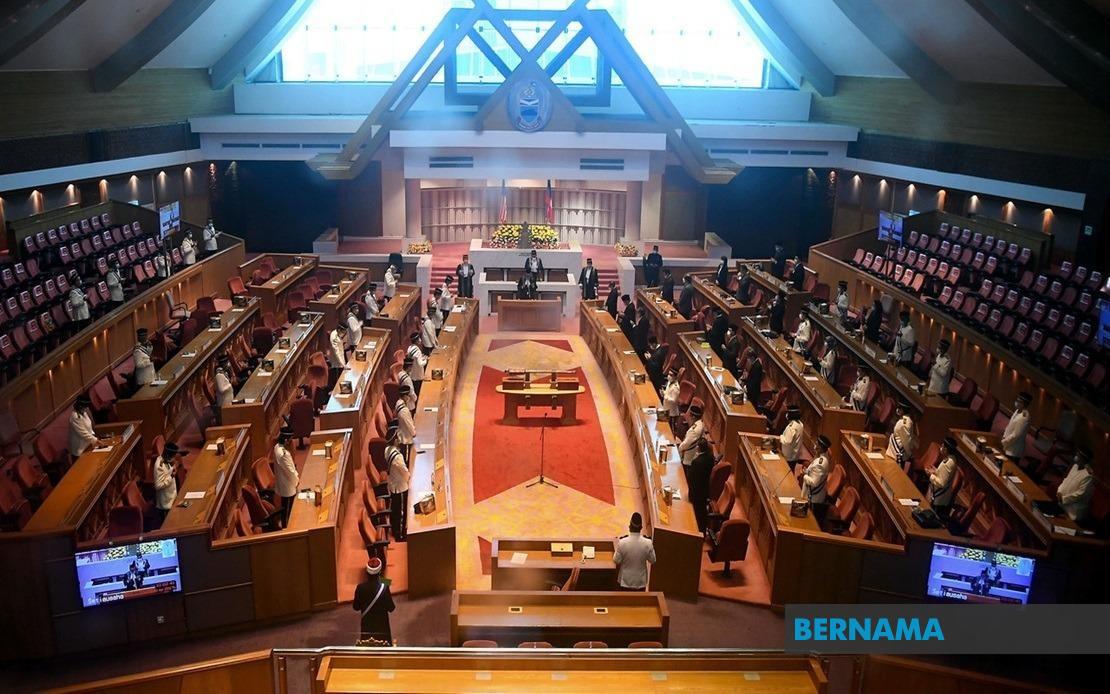
The Sabah State Legislative Assembly has endorsed the Ports Authority (Amendment) Bill 2026, marking a legislative response to the state government's recent administrative restructuring. Deputy Chief Minister III Datuk Ewon Benedick, who introduced the measure in his capacity as Minister of Industrial Development, Entrepreneurship and Transport, guided the bill through debate and passage, with Deputy Speaker Datuk Al Hambra Tun Juhar overseeing proceedings. Six assemblymen participated in deliberations before the chamber approved the legislation.
The amendment addresses a functional gap created by last December's cabinet portfolio reorganisation. When the state government restructured its ministerial assignments on December 3, 2025, responsibility for port-related matters shifted from the Ministry of Public Works and Utilities to Ewon's portfolio in Industrial Development, Entrepreneurship and Transport. However, the underlying statutory framework governing the Sabah Ports Authority had not been updated to reflect this change, creating potential inconsistencies in administrative authority and operational oversight.
Ewon explained that the existing definition of 'Minister' within Section 2 of the Sabah Ports Authority Enactment 1981 explicitly referenced the minister responsible for communications and public works. With port affairs now operating under different ministerial supervision, this outdated terminology risked creating legal ambiguity about who held decision-making authority over port operations and strategic direction. The amendment corrects this mismatch by redefining ministerial responsibility in alignment with current administrative reality.
This legislative adjustment holds particular significance for Sabah's economic development agenda. Ports represent critical infrastructure for the state's trade, tourism, and industrial sectors, linking northeastern Borneo to regional and global commerce networks. By consolidating port management within the industrial development portfolio rather than maintaining it under public works, the state appears to be signalling a strategic pivot toward treating ports as economic enablers rather than mere infrastructure maintenance responsibilities. This framing could influence how port authorities approach expansion, efficiency improvements, and sectoral partnerships moving forward.
Ewon provided assurances that the amendment carries no direct financial burden for the state government. Unlike legislation requiring budgetary allocation or establishing new revenue mechanisms, this bill operates purely as a clarifying measure that aligns statutory language with existing administrative reality. Such amendments, while procedurally necessary for legal coherence, often escape public attention despite their operational importance in ensuring governmental continuity and clarity.
The legislation includes a protective transitional clause preserving the validity of all ministerial decisions, approvals, and actions taken by the previous portfolio holder regarding port affairs. This safeguard prevents legal challenges to decisions made under the old administrative framework and ensures that ongoing port projects, contractual commitments, and regulatory approvals remain enforceable. Such provisions demonstrate legislative prudence in managing administrative transitions without creating retrospective legal uncertainty.
The amendment's passage reflects broader patterns in Malaysian state governance, where periodic cabinet restructuring often requires enabling legislation to maintain statutory coherence. These technical adjustments, though unglamorous, form essential scaffolding for effective governmental operation. Sabah's experience mirrors similar recalibrations undertaken in other states when ministerial portfolios shift to better align with development priorities or reflect changing political dynamics within coalition administrations.
For port operators, stakeholders, and businesses depending on Sabah's maritime infrastructure, this legislative clarity removes potential obstacles to administrative efficiency. Port authorities function optimally when ministerial oversight remains unambiguous and undisputed. The amendment eliminates grounds for procedural challenges or disputes about proper authority, streamlining operations at institutions like Sabah Port Authority that manage considerable daily traffic, revenue, and economic impact.
The timing of this legislative action, occurring several months after the cabinet restructuring itself, suggests a deliberate pace typical of Malaysian parliamentary practice. While the administrative change took effect immediately in December 2025, the corresponding legislative amendment proceeded through normal parliamentary cycles in the state assembly. This sequencing protects administrative legitimacy while maintaining orderly legislative process.
Looking ahead, Sabah's port sector operates within a competitive regional context where Malaysian ports contend with facilities in Brunei, Indonesia, and the Philippines for cargo traffic and shipping business. Administrative efficiency and clear governance structures contribute marginally but meaningfully to operational competitiveness. By resolving this statutory ambiguity now, Sabah removes one minor friction point that might otherwise complicate port management or create opportunities for bureaucratic obstruction.
The bill's unanimous passage without reported dissent reflects consensus among Sabah assemblymen that legislative housekeeping of this nature warrants straightforward endorsement. Such technical amendments rarely become focal points of partisan conflict, allowing legislators across factional divides to cooperate on matters of administrative clarity and legal coherence. This collaborative approach strengthens the institutional foundation upon which port operations, economic development, and state revenue generation ultimately depend.

