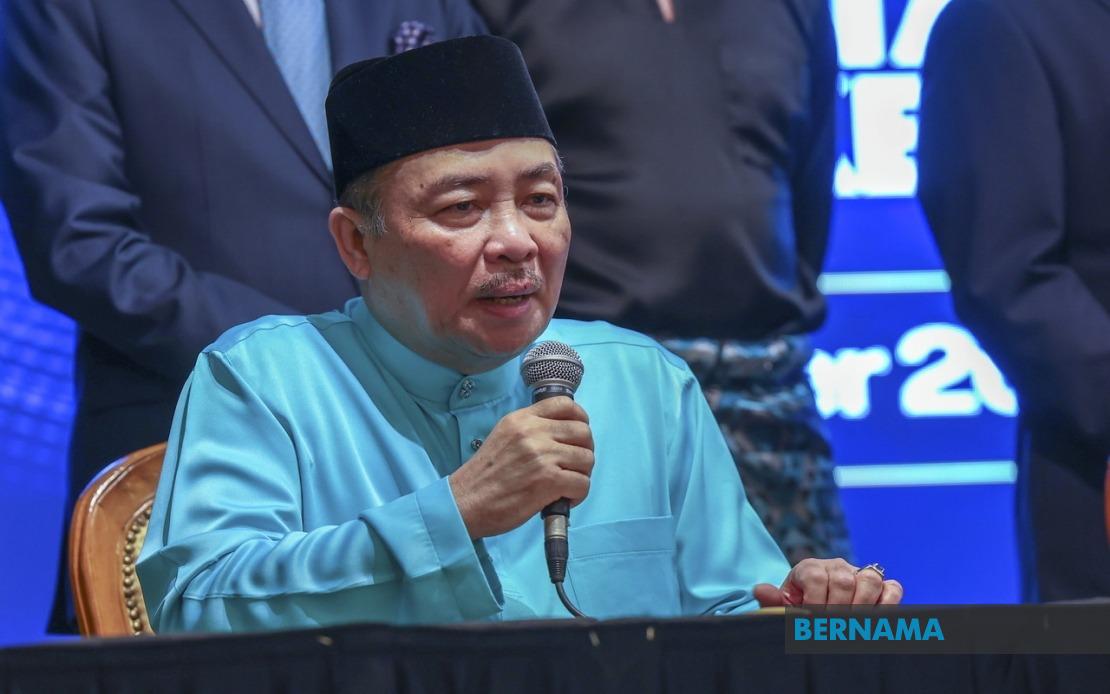
The Sabah state government has committed more than RM100 million towards its scholarship programme this year, significantly expanding access to higher education across the state. Chief Minister Datuk Seri Hajiji Noor unveiled the funding decision, which builds upon the existing cohort of 13,389 scholars while simultaneously welcoming 2,182 new recipients into the Sabah State Government Scholarship (BKNS) scheme. This substantial financial commitment represents the government's determination to equip its youth with the qualifications needed to compete in an increasingly knowledge-driven economy.
The scholarship initiative carries particular importance for students pursuing studies in Science, Technology, Engineering and Mathematics disciplines, reflecting global trends that emphasise these fields as essential drivers of economic growth and innovation. By concentrating resources on STEM education, Sabah's administration is responding to both domestic skills shortages and regional demand for graduates equipped with technical expertise. The geographical position of Sabah within Southeast Asia's emerging markets creates unique opportunities for young professionals trained in these crucial sectors, yet existing educational barriers often prevent talented students from disadvantaged backgrounds from accessing quality training.
Hajiji articulated that the state government views human capital development as foundational to Sabah's long-term prosperity. His statement reflects a broader understanding that sustained economic competitiveness depends on nurturing a workforce characterised by knowledge, technical proficiency, and creative problem-solving capabilities. The scholarship scheme thus functions not merely as a social welfare programme but as a strategic investment in the state's future productive capacity. This approach aligns with economic development frameworks increasingly adopted across Southeast Asia, where education spending is recognised as yielding multiplier effects throughout the broader economy.
The scale of the existing scholarship population—nearly 13,400 students—demonstrates the programme's maturity and established track record. Expanding by a further 2,182 places indicates consistent government commitment to scaling operations and reaching additional students who might otherwise lack opportunities for advancement. The sheer numbers involved suggest substantial administrative infrastructure must support the scheme, including application processing, fund disbursement systems, and academic monitoring mechanisms. For Malaysian observers, such expansions raise questions about the operational capacity of state governments to manage growing scholarship portfolios effectively.
Beyond the flagship BKNS programme, Sabah has implemented fourteen complementary assistance initiatives since 2021, collectively addressing multiple dimensions of student financial hardship. The one-off Higher Education Institution Registration Cash Assistance (BUDI) targets immediate enrolment barriers, while Special Examination Cash Assistance (BAKTI) provides support during crucial assessment periods. The Ihsan Computer Assistance (BAIK) scheme recognises that digital access has become essential to contemporary education, particularly relevant in post-pandemic learning environments. These satellite programmes indicate sophisticated policy thinking that acknowledges different students face distinct financial obstacles at different study stages.
The Sabah Student Flight Ticket Assistance (GRS-SUBFLY) deserves particular attention as addressing a constraint unique to geographically distributed regions. Students in Sabah frequently must travel considerable distances to access higher educational institutions, creating transport costs that disproportionately burden families in interior or remote locations. By subsidising airfares, this scheme removes a concrete barrier to education that more centralised states may not encounter as acutely. Similarly, the State Higher Education Student Contribution (SENTOSA) programme appears designed to reduce immediate out-of-pocket education expenses, helping families manage the cumulative burden of tuition, accommodation, and living costs.
Hajiji emphasised that these measures respond directly to the deteriorating household financial positions across the state, as rising living costs compress family budgets and force difficult trade-offs between education and other necessities. Malaysia's ongoing cost-of-living pressures affect Sabah particularly sharply, given the state's geographical isolation and the higher prices for imported goods that characterise the region. When families struggle to afford basic necessities, educational aspirations become secondary concerns, making targeted financial support vehicles like these scholarships critical levers for maintaining social mobility and reducing educational inequality.
The Chief Minister specifically highlighted strategic sectors requiring concentrated graduate supply: oil, gas, and energy industries; Technical and Vocational Education and Training pathways; and artificial intelligence. These priorities reveal sophisticated sectoral analysis of Sabah's economic future. The hydrocarbon sector remains central to the state's revenue base, necessitating a steady pipeline of qualified professionals capable of managing increasingly complex operations in a carbon-constrained global environment. Simultaneously, the emphasis on TVET reflects recognition that not all students pursue university-level credentials, yet skilled trades remain persistently in demand and often offer secure career pathways with competitive compensation.
The reference to artificial intelligence as a strategic priority indicates forward-thinking policy attention to transformative technologies reshaping labour markets globally. Sabah's inclusion of AI development among priority sectors suggests leadership awareness that technological capability will increasingly determine which regions attract investment and create high-value employment. For Malaysian policymakers more broadly, Sabah's integrated approach—combining traditional STEM scholarship support with targeted sector-specific priorities and complementary assistance mechanisms—offers a model of coherent educational investment strategy.
The scholarship scheme's expansion also carries implications for regional competition within Malaysia. As Sabah increases educational investment, it potentially strengthens its ability to retain talented graduates who might otherwise migrate to more developed states. Brain drain remains a persistent challenge for less-developed Malaysian states, as graduates educated at public expense often seek employment opportunities in Kuala Lumpur, Selangor, or Penang where job markets offer greater diversity and higher initial salaries. By expanding scholarship numbers while simultaneously targeting workforce development in sectors with significant local employment bases, Sabah attempts to create a virtuous cycle where education investments produce graduates who remain within the state economy.
The programme's success ultimately depends on complementary factors beyond scholarship provision. Graduate employment outcomes in targeted sectors, quality of educational institutions receiving scholarship students, and broader economic conditions affecting job creation will determine whether this investment yields intended returns. Nonetheless, the RM100 million commitment and the structured portfolio of assistance programmes represent substantive government effort to address educational access constraints. For Malaysian observers watching state-level educational initiatives, Sabah's scholarship expansion demonstrates both the feasibility of significant state-government education investment and the increasingly sophisticated approaches states are adopting to link education spending directly to economic development objectives.

