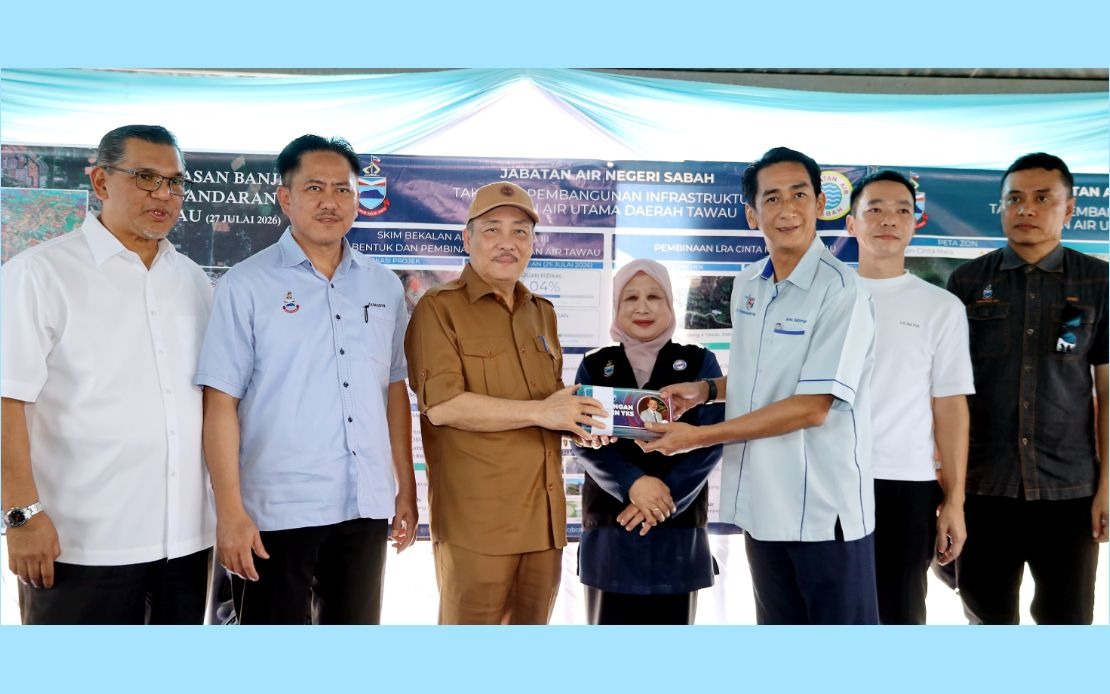
Sabah Chief Minister Datuk Seri Hajiji distributed RM30,600 in emergency assistance to families devastated by flooding in Tawau, marking a coordinated relief effort by Yayasan Kebajikan Sabah. The foundation's contribution was handed to Tawau Municipal Council president Mohd Shoffian Mohd Said, ensuring direct support reached the most vulnerable households in the affected district.
The relief initiative targeted 102 heads of household who experienced significant losses when floodwaters submerged residential areas, with each family receiving RM300 in immediate financial assistance. Hajiji emphasised that this targeted distribution mechanism aimed to alleviate pressing financial hardships confronting families struggling with recovery expenses, from replacing damaged household possessions to restoring basic utilities and shelter.
The disaster struck Tawau on July 25, forcing emergency evacuations of 362 residents to temporary refuge at Dewan Serbaguna Kompleks Sukan Tawau. The scale of displacement underscored the severity of flooding that ravaged the district, displacing entire communities and destroying livelihoods. For many evacuees, the sudden displacement created immediate challenges spanning accommodation, food security, and access to essential medical care during a critical period when normalcy seemed distant.
Beyond the financial assistance, Hajiji extended formal recognition to the multi-agency disaster response apparatus that mobilised resources during the flooding crisis. The Civil Defence Force coordinated evacuation operations and maintained security within relief centres, while Royal Malaysia Police personnel managed logistics and population movements. The Fire and Rescue Department played a critical role in search and rescue operations, extracting residents from submerged areas and preventing casualties during the most dangerous phases of flooding.
The Health Ministry deployed medical personnel to relief centres, establishing health screening protocols and distributing medicines to prevent disease outbreaks in crowded temporary shelters. The Tawau disaster management committee orchestrated inter-agency coordination, ensuring healthcare workers, food suppliers, water treatment specialists, and sanitation teams operated in synchronised fashion. This layered response framework reflected institutional lessons learned from previous flood disasters across Sabah and Peninsular Malaysia.
Hajiji's acknowledgment of these coordinated efforts carries particular significance for Malaysian disaster management governance. When flooding emergencies strike regions like Tawau, success depends not on heroic individual acts but on systematic protocols, pre-positioned resources, and inter-departmental communication networks functioning smoothly under pressure. The Sabah Chief Minister's public commendation signals administrative commitment to maintaining and strengthening these institutional relationships beyond the crisis window, recognising that disaster preparedness requires sustained institutional investment during calm periods.
The RM300 per household amount, while modest by absolute standards, represented rapid-deployment emergency assistance designed to address immediate survival needs rather than comprehensive recovery. Families faced decisions about prioritising urgent expenses: replacing spoiled food stocks, purchasing essential medicines, acquiring temporary shelter repairs, or restoring communication devices. The foundation's contribution created breathing room for families to stabilise circumstances before longer-term recovery and insurance claim processes commenced.
Tawau's vulnerability to flooding reflects broader climate and infrastructure challenges confronting East Malaysian districts. Located in Sabah's southeastern region with proximity to coastal areas and river systems, Tawau experiences seasonal rainfall patterns that periodically overwhelm drainage capacity, particularly when monsoon conditions intensify. Urban development patterns have sometimes accelerated runoff rather than absorbing excess water, creating flash flood scenarios that catch residents off-guard despite weather forecasting improvements.
This relief distribution demonstrates how civil society organisations, government agencies, and community leadership structures coordinate during disasters to mitigate suffering. Yayasan Kebajikan Sabah's decision to mobilise resources reflected both corporate social responsibility principles and recognition that private-sector contributions complement government relief budgets, particularly when flood seasons strain municipal emergency funds. The foundation's intervention supplemented rather than replaced government assistance schemes, creating layered support architecture.
For Malaysian readers beyond Sabah, the Tawau relief operation illustrates adaptation strategies emerging across Southeast Asia as climate variability increases flooding frequency. Regional governments increasingly recognise that reactive disaster response must couple with upstream investments in drainage systems, urban planning reform, and early warning infrastructure. The institutional coordination visible in Sabah's response offers transferable lessons for other Malaysian states facing recurring flood challenges.
The July 25 flooding marked one of several climate-related incidents affecting East Malaysia during recent monsoon seasons, a pattern reinforcing concerns among meteorologists and urban planners about long-term precipitation intensification. Each successive flooding event generates data about vulnerable populations, infrastructure weaknesses, and evacuation protocols, creating feedback loops that should inform planning decisions. Whether Malaysian authorities systematically incorporate these lessons into revised building codes, zoning regulations, and investment allocation remains an open question affecting future disaster resilience.

