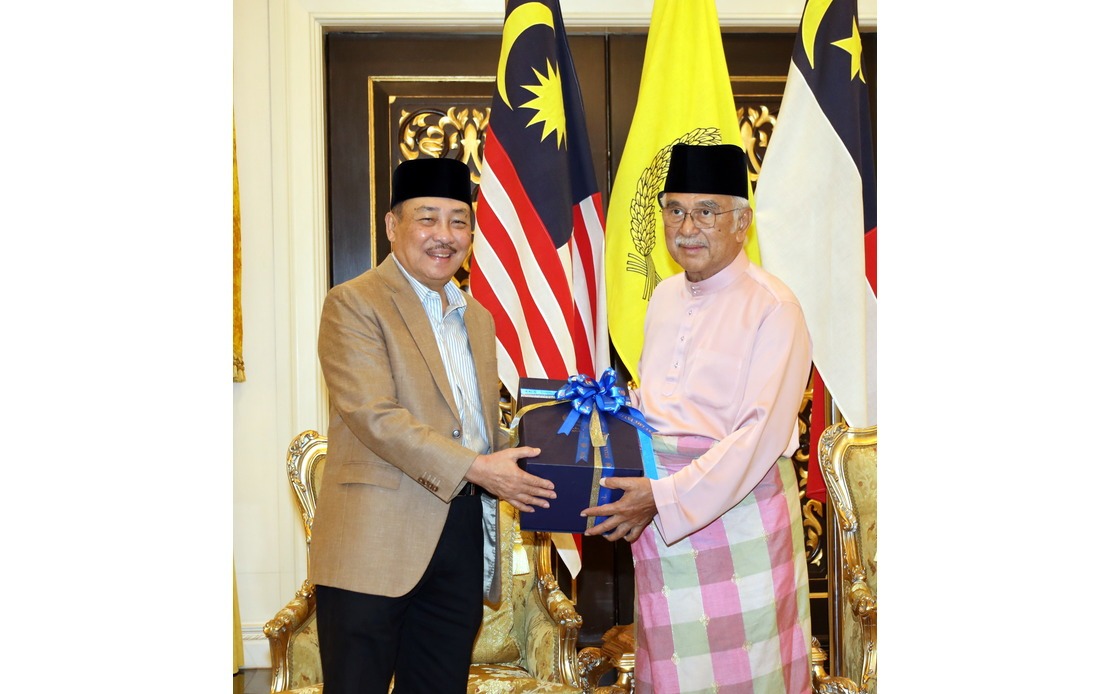
Sabah Chief Minister Datuk Seri Hajiji Noor visited Melaka's Yang Dipertua Negeri Tun Dr Mohd Ali Mohd Rustam on August 14, marking another step in deepening the relationship between Malaysia's two distinct regions. The meeting at Istana Melaka in Bukit Beruang provided both leaders with an opportunity to engage on shared concerns and explore avenues for enhanced collaboration in the coming months.
The delegation from Sabah arrived at approximately 3.35 pm and was formally received by Tun Mohd Ali, signalling the ceremonial importance accorded to the visit. Such courtesy calls between state leaders serve as crucial diplomatic channels, particularly given the geographical distance and distinct developmental contexts that characterize Sabah and Melaka. The formal nature of the reception underscores the respect both leaders hold for inter-governmental protocols and the significance of maintaining strong bonds across Malaysia's diverse states.
During their private discussions, Hajiji and Tun Mohd Ali exchanged views on issues of bilateral concern. While the statement from the Sabah Chief Minister's Office did not enumerate specific agenda items, such meetings typically encompass economic partnerships, infrastructure development, mutual investment opportunities, and coordination on national policies affecting both regions. The broad framing of "matters of mutual interest" suggests a comprehensive dialogue rather than a narrowly focused discussion.
Hajiji travelled with a substantial contingent that reflected various portfolios of the Sabah state government. Accompanying him were Sabah Rural Development Minister Datuk Rubin Balang, whose portfolio carries particular relevance to Sabah's ongoing development challenges in outlying areas; Agriculture, Fisheries and Food Industry Minister Datuk Jamawi Jaafar, whose sector touches upon food security and economic growth; and Nominated Member of the Sabah State Legislative Assembly Datuk Mohd Razali Mohd Razi. This composition suggests that the Sabah delegation sought to present multiple facets of the state's governance and development agenda.
For Malaysia's federal system, such inter-state engagements carry importance beyond ceremonial value. Sabah and Melaka represent contrasting development profiles—Sabah as an oil-rich but geographically dispersed state grappling with infrastructure challenges, and Melaka as a more compact, historically significant state with a focus on heritage tourism and manufacturing. Dialogue between their leaderships can facilitate knowledge exchange on governance solutions and potentially unlock collaborative opportunities in areas ranging from human resource development to agricultural innovation.
The visit also reflects a broader pattern of engagement between Malaysian state governments that transcends narrow partisan considerations. Effective federalism requires ongoing communication channels between state administrations, irrespective of their political compositions. Such meetings help ensure that state-level initiatives align with national objectives while allowing leaders to raise concerns about federal policies and their state-specific implications.
From a Southeast Asian perspective, Malaysia's internal cohesion and the strength of inter-state relationships carry broader regional significance. As ASEAN's most internally diverse member state in terms of regional autonomy and state-level governance, Malaysia's ability to maintain productive relationships between its thirteen state governments and federal authorities influences the country's overall stability and economic competitiveness. Visits such as Hajiji's to Melaka contribute to this crucial foundation of national unity.
The afternoon tea that concluded the meeting provided an informal setting for continued conversation, a common diplomatic practice that allows leaders to engage beyond formal discussion frameworks. Such moments often prove valuable for building personal rapport and understanding, factors that frequently determine the depth of subsequent cooperation between administrations.
Moving forward, the outcomes of this dialogue may manifest in practical collaboration on specific projects or policy initiatives. State governments increasingly seek to develop bilateral relationships that leverage their respective strengths—Sabah's natural resources and agricultural potential alongside Melaka's logistical positioning and industrial capabilities. While the initial announcement focused on relationship-building, the true measure of this visit's success will emerge through concrete initiatives that emerge in subsequent months.
The participation of multiple ministers in Hajiji's delegation signals serious intent to pursue substantive cooperation rather than maintain purely ceremonial ties. Each accompanying official carries influence within specific sectors, positioning the Sabah government to follow through on conversations initiated during the Melaka visit. This delegation structure suggests that the Chief Minister views inter-state engagement as a mechanism for advancing concrete governmental objectives rather than fulfilling protocol requirements.

