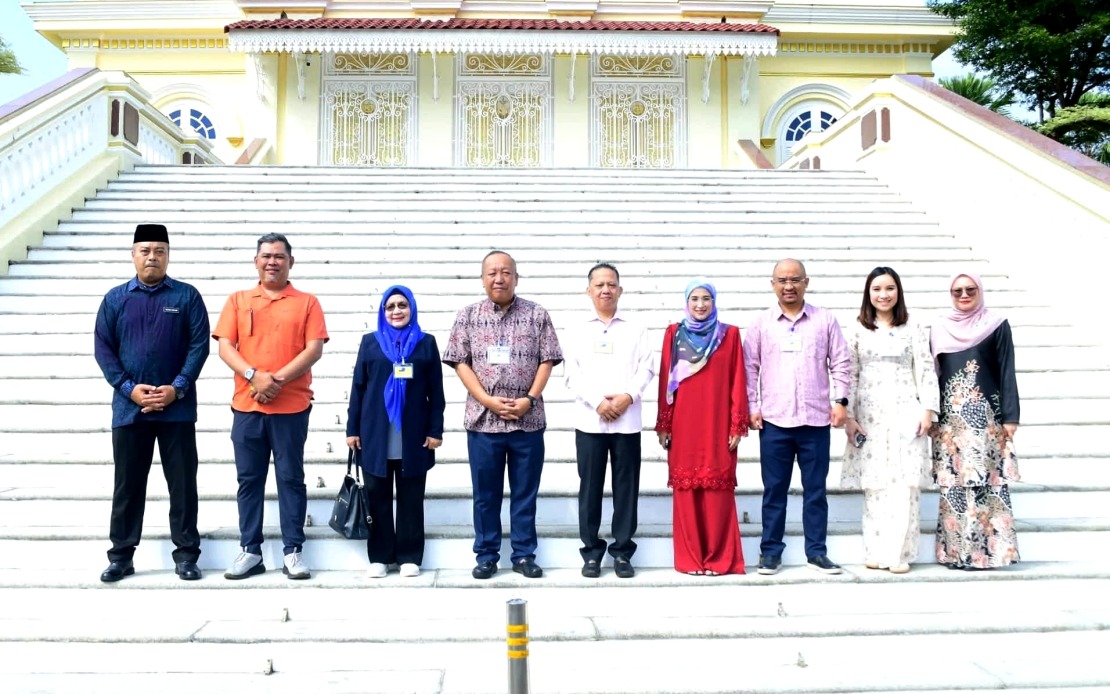
Sabah's Ministry of Tourism, Culture and Environment is moving to strengthen its standing in Malaysia's competitive tourism landscape by establishing closer working ties with Johor, signalling a shift toward interstate collaboration as a pathway to boosting visitor numbers and economic returns. The initiative, announced this month, reflects recognition among regional tourism authorities that coordinated marketing and shared expertise can amplify each state's appeal while positioning Malaysia as a unified tourism brand on the international stage.
Datak Jafry Ariffin, Sabah's Minister of Tourism, Culture and Environment, framed the partnership as essential preparation for Visit Sabah Year 2027, an upcoming flagship campaign intended to drive significant growth in domestic and international arrivals. By engaging directly with Johor's tourism infrastructure and management practices, Sabah aims to extract lessons applicable to its own destination development and marketing architecture. This forward-looking approach acknowledges that successful tourism strategies increasingly depend on learning from regional peers and adapting proven methodologies to local contexts.
The cooperation extends beyond conventional promotion to encompass product development and marketing strategy refinement. Both states plan to explore cross-promotional campaigns that leverage their distinct cultural and natural assets while highlighting Malaysia's overall tourism proposition. Such initiatives typically involve coordinated social media campaigns, joint trade show participation, and bundled travel packages that encourage visitors to experience multiple destinations in a single trip—a model that benefits both regions by extending average visitor spending and dwell time.
A particularly significant dimension of the partnership involves heritage conservation and museum management. During a recent delegation visit to Johor, Sabah officials toured the Muzium Diraja Abu Bakar at Istana Besar Johor to observe curatorial practices and institutional preservation methods. This focus on cultural heritage reflects growing recognition in Malaysia's tourism sector that authentic historical experiences increasingly differentiate destinations in global markets and command premium pricing from discerning travellers.
For Sabah specifically, cultural tourism represents an untapped economic pillar with substantial growth potential. The state's indigenous communities, colonial history, and architectural heritage offer rich narrative material for international marketing. However, effective heritage tourism requires institutional capacity—including proper conservation standards, interpretive frameworks, and visitor experience management—areas where Johor's established expertise provides valuable benchmarking. By studying how Johor balances public access with artifact preservation, Sabah can develop tourism products that generate revenue while maintaining cultural integrity.
The partnership carries implications beyond individual state interests. Malaysia's tourism sector has historically competed internally, with states pursuing isolated strategies that sometimes cannibalize each other's visitor flows. Strategic interstate cooperation models like the Sabah-Johor initiative suggest a maturing industry approach that recognizes complementary positioning and shared infrastructure development yield better aggregate outcomes. Such collaboration also strengthens Malaysia's negotiating position in global tourism markets where competing destinations increasingly market entire regions rather than isolated locations.
From a regional Southeast Asian perspective, the Sabah-Johor framework may serve as a template for deeper subregional tourism integration. As competition from Thailand, Vietnam, and Indonesia intensifies, Malaysia benefits from presenting a coherent, multi-destination narrative. Johor's geographic position as Malaysia's primary gateway to Singapore enhances its strategic value in tourism networks, while Sabah's unique ecological and cultural offerings attract distinct traveller segments. Linking these complementary strengths through coordinated promotion creates synergistic advantages.
The emphasis on best practice sharing and expertise exchange also addresses capacity constraints that have historically limited tourism development in Malaysian states. Rather than requiring each jurisdiction to independently develop expertise in heritage management, destination marketing, and visitor experience optimization, interstate partnerships enable efficient knowledge transfer and reduce duplicative investment. This efficiency gains particular importance for states with limited tourism budgets competing against well-resourced private-sector destinations.
Datuk Jafry's confidence in the partnership's economic impact reflects measurable benefits similar initiatives have generated elsewhere. Joint marketing campaigns typically reduce individual state promotion costs by 20-30 percent while expanding reach, while bundled tourism products increase average visitor expenditure by attracting longer stays and encouraging spending across multiple attractions and service sectors. For Sabah, which has historically underperformed relative to its natural and cultural assets, such efficiency gains translate directly to revenue growth and employment creation.
The timing of this initiative, occurring approximately two years before Visit Sabah Year 2027, allows sufficient runway for developing joint products, training staff, and establishing promotion channels. Both states can leverage the partnership to build awareness and anticipation during the intervening period, creating momentum that culminates in the 2027 campaign. Success during that year could establish a foundation for sustained, post-campaign cooperation that benefits both jurisdictions long-term.
Looking forward, the Sabah-Johor model suggests Malaysian tourism authorities are beginning to recognize that state-level competition requires tempering with suprastate coordination. As global tourism markets become increasingly sophisticated and visitor expectations rise, destinations must demonstrate operational excellence and offer compelling narratives that transcend provincial boundaries. Through sustained cooperation in marketing, product development, and institutional capacity-building, Sabah and Johor position themselves to attract premium-tier visitors seeking authentic, well-managed experiences while contributing meaningfully to Malaysia's tourism revenue objectives.

