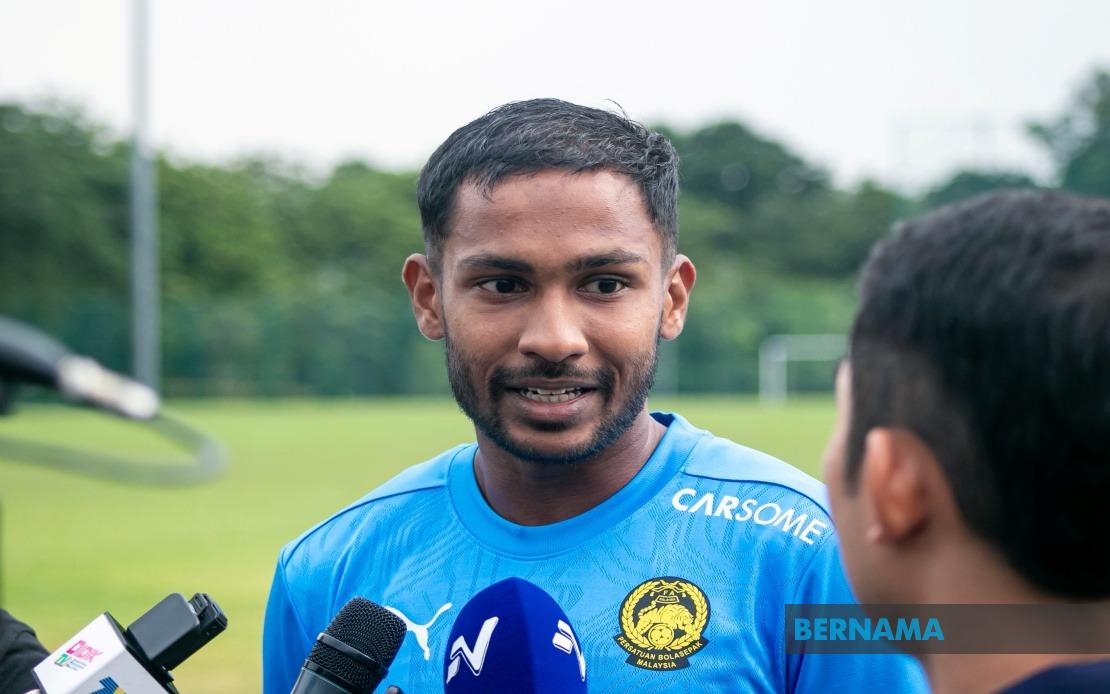
National team defender V. Ruventhiran has made an impassioned appeal to Malaysian football supporters to rally behind Harimau Malaya ahead of the 2026 Hyundai ASEAN Cup, framing the tournament as fundamentally about national honour rather than individual accolades or external distractions. Speaking during a centralised training camp in Shah Alam, Ruventhiran articulated a vision of unity where the entire nation stands together in pursuit of continental glory, positioning fan engagement as inseparable from the team's competitive ambitions.
The experienced defender acknowledged the logistical challenges facing supporters, particularly with Malaysia's opening Group B encounter scheduled as an away fixture against Myanmar at Thuwunna Stadium on July 25. Despite this initial hurdle, Ruventhiran expressed optimism about the return of the symbolic "12th man"—the collective energy of home crowds—during Malaysia's subsequent matches at the Kuala Lumpur Football Stadium and other venues. He emphasised that domestic support provides intangible momentum that professional athletes rely upon during high-pressure tournament play, distinguishing between the technical demands of the sport and the psychological boost generated by passionate attendance.
Ruventhiran's message reflects a broader imperative within Southeast Asian football, where the competition between regional nations carries significant cultural weight beyond the ninety minutes of play. The ASEAN Cup represents more than a trophy opportunity; it embodies national pride and provides a platform for Malaysian athletes to showcase their capabilities on a stage where neighbouring countries compete with similar ambitions. His appeal therefore carries particular resonance for a Malaysian footballing public that has experienced both triumphant moments and disappointing campaigns in recent continental tournaments.
Simultaneously, midfielder Aliff Haiqal Lokman Hakim Lau has embraced his selection as a transformative opportunity following an extended period marked by persistent injury complications. The Penang FC player described his call-up as a "fresh start" laden with emotional significance, representing not merely another tournament appearance but rather a chance to demonstrate complete recovery and renewed competitive sharpness. His comments during the training camp session conveyed both gratitude for the opportunity and determination to capitalise on this platform for personal rehabilitation.
Aliff's narrative carries particular poignancy given the precarious nature of athlete recoveries in professional football. Injuries truncate momentum, erode confidence, and can fundamentally alter career trajectories, especially for players operating within Malaysia's relatively smaller football ecosystem. His willingness to articulate the struggle candidly—acknowledging the challenging previous season while maintaining optimistic resolve—resonates with broader themes of perseverance that resonate across Malaysian sports discourse.
The midfielder framed the selection as enabling him to commence what he characterised as a new chapter both within the national team context and for his domestic club. This dual perspective reveals the interdependence between national team performance and club-based football development in Malaysia. Success at the ASEAN Cup could substantially enhance his profile at Penang FC and strengthen his position within the national squad framework for future competitions.
Harimau Malaya's Group B itinerary presents a carefully structured pathway through the tournament's initial phase. Following the Myanmar encounter, the squad faces Laos at home on July 28, capitalising on the crucial home advantage that Ruventhiran emphasised. The subsequent away fixture against Thailand at Rajamangala Stadium on August 1 represents perhaps the most formidable challenge, given Thailand's consistent strength in Southeast Asian football. The tournament concludes the group stage with a home match against the Philippines in Cheras on August 8, theoretically allowing Malaysia to build momentum toward the knockout rounds.
The semi-final format involving two-legged matchups beginning in mid-August introduces additional strategic complexity. Teams must manage fatigue across multiple consecutive weeks while maintaining tactical coherence and psychological focus. This demanding schedule particularly affects players recovering from injuries like Aliff, necessitating careful rotation and recovery protocols from coaching staff and medical teams.
Malaysia's success in the tournament depends upon the synthesis of multiple factors: technical proficiency, tactical discipline, psychological resilience, and—as Ruventhiran emphasised—external support mechanisms. The connection between home crowd advantage and player performance remains scientifically demonstrable in professional sports contexts, particularly within Asian football where cultural and emotional investment in national teams runs exceptionally deep. When supporters withdraw or attendance diminishes, teams lose this multiplicative benefit.
Ruventhiran's leadership in articulating the importance of collective national support reflects an understanding of football's role within Malaysian national identity. Sports provide legitimate channels for expressing patriotism and national solidarity, particularly within multicultural societies where shared sporting moments transcend other social divisions. A successful ASEAN Cup campaign would generate widespread celebration and renewed confidence in Malaysian football's regional standing.
Aliff's personal redemption arc parallels the team's larger ambitions. Individual player performances determine collective outcomes; conversely, tournament success provides individual players like Aliff opportunities to rebuild damaged confidence and establish reputations within both domestic and international contexts. His determination to "prove something" encapsulates the mutual reinvigoration process through which national tournament participation functions.
As Malaysia progresses through preparations for the Myanmar fixture, Ruventhiran's call for unified support gains urgency. The challenging opening away match demands exceptional collective commitment, and victory would substantially validate his rallying message while demonstrating that Harimau Malaya possesses the resilience necessary for the tournament's duration. Simultaneously, Aliff's performance against Myanmar will signal whether his recovery has progressed sufficiently for him to contribute meaningfully throughout the competition.

