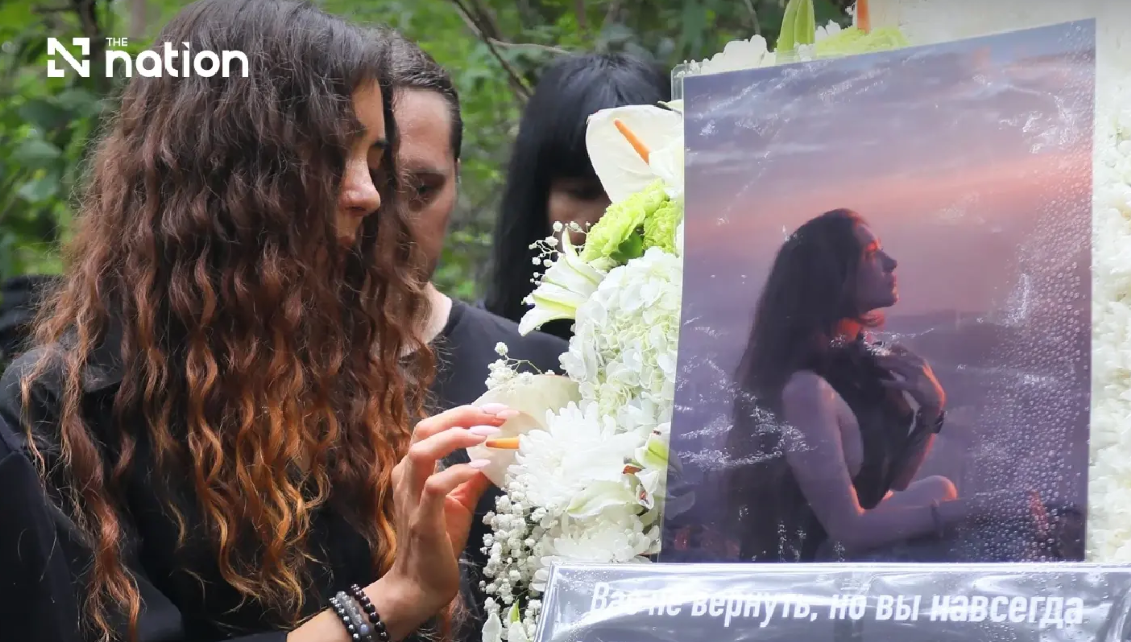
A grieving Russian mother stood at a memorial site in Thailand's Chon Buri province on Thursday, expressing heartfelt gratitude to the Thai people and authorities for their compassion following the deaths of her two children. Sharina Nazimova presided over a Buddhist ceremony held in Huai Yai subdistrict, Bang Lamung district, where Diana and Roman were discovered. The gathering brought together Thai and international mourners alongside provincial officials, police representatives, and civil servants to honour the Russian siblings and three members of a Thai family who became victims of what authorities describe as coordinated killings by the same individuals.
The ceremony itself reflected a profound blending of Russian grief and Thai spiritual traditions. Buddhist monks chanted prayers and performed sacred rites to dedicate merit to all five deceased, while attendees observed moments of silence and paid solemn respects. The selection of white flowers—carnations, lilies, and roses—carried symbolic weight, representing purity and peaceful passage beyond life. In a gesture that moved many present, the family placed Diana's favourite cup of coffee at the memorial, transforming the ritual into something deeply personal and intimate, a tangible reminder of shared moments and the ordinary details that define a life.
Nazimova's emotional address underscored the intersection of private tragedy and public solidarity that has characterised this case since the victims' disappearance. She spoke of the government agencies, police officers, and volunteers who had supported her family through what she described as an extraordinarily difficult period, emphasising how the kindness extended by ordinary Thai citizens had provided crucial emotional strength. The mother, who had raised both Diana and Roman alone, wept throughout portions of the ceremony, comforted by family members, friends, and strangers alike who had followed the case or simply understood the universal language of loss.
The investigation into the deaths has revealed troubling details about the alleged circumstances. Two men—Thana "Pong" Kerdthong, 43, and Thongchai "Thong" Srinil, 39—were apprehended on July 31 in Wang Sombun district of Sa Kaeo province following an intensive manhunt. According to police accounts, the suspects allegedly encountered Diana and Roman along a roadside, falsely identified themselves as law enforcement officers, and forcibly restrained the siblings before transporting them to a remote wooded area. Investigators suggested that theft of the siblings' motorcycle may have motivated the initial confrontation, though the sequence of events remains contested.
The men's own statements regarding what transpired have not been fully accepted by investigators, who continue cross-referencing their accounts against forensic evidence and other investigative materials. Following arrest, both suspects guided police to burial locations where the bodies were recovered. The investigation subsequently expanded when authorities discovered the remains of a Thai family of three interred in a nearby grave, suggesting a pattern of criminal violence that extended beyond the Russian victims. This discovery raised urgent questions about whether the suspects had perpetrated additional crimes and whether other victims might remain undiscovered.
The Buddhist ceremony held in Chon Buri represented more than a memorial service; it functioned as a communal statement of values and commitment. Attendees who had followed the case throughout the investigation gathered to reaffirm their conviction that justice must be pursued rigorously against those found culpable. The collective hope expressed at the gathering reflected broader concerns about safety for foreign nationals in Thailand and the importance of thorough, fair judicial processes that serve victims and their families.
For Russian nationals and expatriate communities throughout Southeast Asia, the case has carried particular resonance. The victims' nationality combined with the alleged deception employed by the suspects—impersonating police—has heightened awareness of specific vulnerabilities faced by foreigners in unfamiliar environments. The international attention surrounding the deaths and the subsequent investigation has also highlighted Thai law enforcement's capacity to conduct substantial investigations and pursue suspects across provincial boundaries.
The role of Buddhism in the memorial ceremony reflects the family's spiritual practices and their integration into Thai cultural contexts. Both Diana and Roman had reportedly embraced Buddhist traditions, making the choice of a Buddhist rite deeply meaningful for honouring their memories. This spiritual bridge between Russian and Thai traditions served to bind the community of mourners, transcending linguistic and cultural boundaries through shared acknowledgment of loss and commitment to remembrance.
As the criminal justice process advances, the case continues to raise broader questions about security, law enforcement integrity, and protection for vulnerable populations in Thailand. The alleged impersonation of officers by the suspects underscores specific vulnerabilities in how criminals exploit trust in authority figures. For Malaysian and broader Southeast Asian audiences, the incident serves as a cautionary reminder about safety precautions while travelling, particularly when encounters with individuals claiming official authority occur outside secure settings.
Nazimova's public expressions of gratitude to Thai authorities and citizens represent a significant moment in the case's narrative arc. Rather than withdrawing into private grief or voicing accusations against Thai systems, the mother chose to acknowledge support and maintain faith in the justice process. This posture may reflect her recognition that the Thai response—from the initial investigation through the apprehension of suspects—has been substantive and serious. It also demonstrates how, even in circumstances of profound tragedy, cross-cultural understanding and appreciation for collective support can emerge and be articulated meaningfully.

