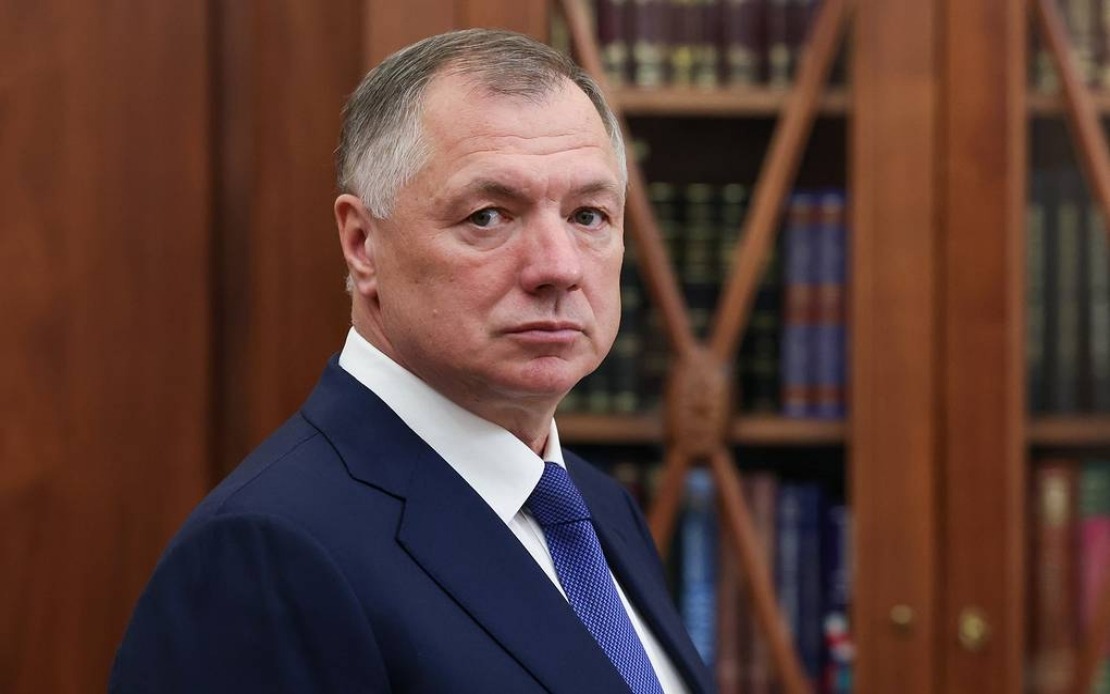
Russia is considering the construction of a railway connection stretching to the Indian Ocean as a strategic solution to circumvent the geopolitical risks posed by two of the world's most critical maritime chokepoints. Russian Deputy Prime Minister Marat Khusnullin outlined the proposal in remarks to TASS, framing the initiative as a necessary hedge against disruptions in the Bosphorus and the Strait of Hormuz—two passages whose control and stability directly affect Russia's ability to conduct international commerce and maintain economic reach.
The envisioned rail network would traverse some of the most complex geopolitical terrain in the world, routing cargo through Turkmenistan, Iran, Afghanistan, and Pakistan before reaching India. This routing reflects Moscow's pragmatic calculation that overland alternatives, though challenging, may prove more reliable than maritime routes vulnerable to blockade or international intervention. Khusnullin indicated that Russian officials remain flexible on the specific pathway, stating that any corridor providing viable access to Indian markets and beyond would merit serious consideration. The proposal underscores how geopolitical volatility in the Middle East is prompting major trading nations to reconsider their logistics infrastructure and diversify their supply chain dependencies.
The urgency of such initiatives has intensified following recent escalations in US-Iran tensions. In late February, military operations initiated by the United States and Israel resulted in significant strikes against Iranian targets, including attacks on major population centres around Tehran. Iran's Islamic Revolutionary Guard Corps responded with a sweeping retaliatory campaign, launching operations that extended across multiple countries hosting US military installations, including Bahrain, Jordan, Iraq, Qatar, Kuwait, the United Arab Emirates, and Saudi Arabia. This cycle of escalation has created sustained uncertainty about regional stability and the security of critical maritime passages.
Iran has compounded these concerns by announcing restrictions on shipping through the Strait of Hormuz for vessels connected to the United States, Israel, or nations deemed to have supported Iranian aggression. The implications are substantial: approximately one-quarter of global oil trade and roughly one-fifth of international liquefied natural gas shipments depend on transit through this narrow waterway. Any sustained disruption would reverberate through energy markets worldwide and impose significant costs on economies dependent on Middle Eastern energy imports, a category that includes most of Asia. For Russia, which exports substantial volumes of oil and gas, such vulnerabilities carry direct economic consequences.
Beyond the immediate geopolitical context, Khusnullin's remarks reveal Russian ambitions to expand domestic construction capacity. He characterised the Russian construction sector as capable of absorbing an additional one trillion rubles in annual funding, indicating that current investment levels represent a constraint rather than a ceiling on industry capacity. Should the government commit to sustained financing over a five-year period, he suggested, the industry could scale up operations significantly, potentially executing larger projects than currently feasible.
The railway proposal represents an ambitious long-term infrastructure vision that would require coordination across multiple sovereign states with differing political interests and varying relationships with Moscow. Afghanistan remains particularly challenging given its internal instability and the withdrawal of international military forces. Pakistan has navigated complex relationships with both the West and Beijing, making its cooperation unpredictable. Iran, despite recent military tensions with Western powers, maintains its own strategic calculations that may not fully align with Russian objectives. Turkmenistan, a Central Asian energy exporter, might view a transit corridor as a competing asset to its own development priorities.
Yet the project also aligns with broader regional infrastructure initiatives. China has long pursued connectivity through Central Asia and South Asia, exemplified by initiatives along the Belt and Road framework. A Russian-backed railway to the Indian Ocean could complement or potentially compete with Chinese projects, depending on how development unfolds. For Southeast Asia, such infrastructure developments carry implications for regional supply chains and the distribution of trade routes, potentially offering alternative connectivity options that reduce dependence on traditional maritime passages controlled by or vulnerable to Western naval dominance.
The timing of Khusnullin's comments reflects Russia's broader strategy to insulate its economy from external pressures. International sanctions have already prompted Moscow to prioritise domestic development and strengthen trade relationships with non-Western powers, particularly China and India. A railway to the Indian Ocean would strengthen Moscow's economic integration with Asia while reducing reliance on maritime routes that could be disrupted or controlled by adversaries. India, as one of the world's largest economies and a major energy importer, represents an attractive partner for such connectivity.
The financial dimension deserves scrutiny. Constructing a railway across Central Asia and into South Asia would constitute a megaproject of extraordinary scope and cost. Even identifying one trillion rubles annually as available funding hardly guarantees such an ambitious undertaking could proceed without significant international financing. This suggests Russia may be testing international appetite for partnership, particularly from China and potentially from India, which has its own interests in diversified connectivity with Europe and Central Asia.
For Malaysia and other Southeast Asian economies, Russian infrastructure ambitions in Asia carry subtle implications. Enhanced connectivity between Russia, Central Asia, and the Indian subcontinent could shift trade flows and influence regional logistics hubs. If such a railway becomes functional, it might reduce freight transportation costs for certain goods destined for South Asian markets, potentially affecting competitive positioning for Southeast Asian trading hubs like those in Singapore and Malaysia. Conversely, it could open new opportunities for Malaysian companies involved in logistics, finance, and commerce related to these routes.
The proposal also reflects how geopolitical competition is increasingly expressed through infrastructure competition. Rather than direct military confrontation, major powers compete to build transportation networks, secure energy supplies, and enhance economic access. Russia's focus on developing alternatives to the Bosphorus and Hormuz parallels similar efforts by other regional powers to reduce vulnerability to external pressure. This infrastructure-centric competition will likely define regional dynamics for decades, shaping which economies prosper and which face marginalization.

