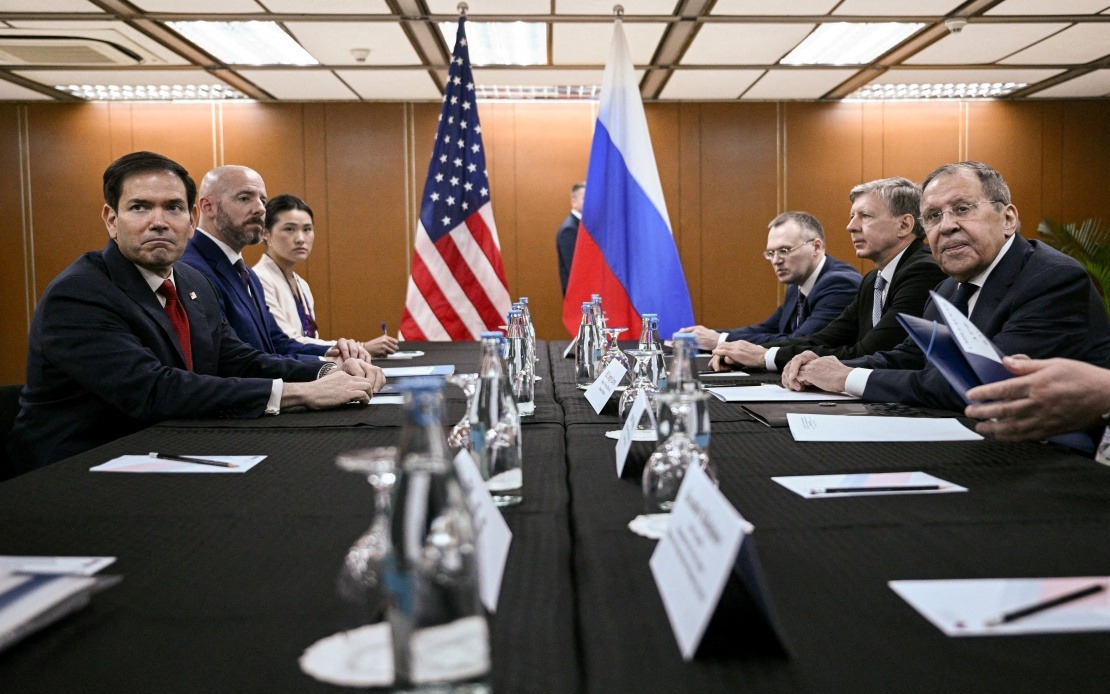
In a rare sign of diplomatic engagement amid broader geopolitical tensions, Russia's Foreign Minister Sergey Lavrov and United States Secretary of State Marco Rubio have committed to maintaining channels of communication between their foreign ministries. The agreement, announced by Moscow's Foreign Ministry on Thursday following their meeting in Manila, indicates a willingness by both nations to preserve official dialogue mechanisms even as their broader relationship remains strained.
The commitment to continue contacts represents a pragmatic acknowledgement that direct communication between major powers remains essential for managing crises and preventing miscalculation. By specifically mentioning their participation in international organisations, both countries are signalling that they will engage constructively within multilateral forums—a particularly significant development given recent years of escalating rhetoric and mutual accusations at bodies like the United Nations.
Beyond the primary commitment to maintain diplomatic channels, Lavrov and Rubio discussed the practical dimensions of their bilateral relationship, including efforts to normalise working conditions for their respective diplomatic missions. This discussion reflects accumulated frustrations on both sides regarding operational constraints faced by embassy staff, which have become a contentious issue in recent years as diplomatic tensions have intensified. Addressing these concerns could improve the daily functioning of diplomatic staff and potentially reduce friction points.
A notable development highlighted in Thursday's statement involves the restoration of full-scale cooperation between Russia's state space agency Roscosmos and the United States' National Aeronautics and Space Administration (NASA). The resumption of substantive contacts between these two institutions marks a partial thaw in technological cooperation, an area that had become severely compromised by geopolitical disputes. For Southeast Asian nations, this dimension carries particular significance, as space technology, satellite communications, and scientific collaboration have regional applications affecting everything from disaster management to climate monitoring.
The willingness of both foreign ministers to welcome expanded space cooperation suggests recognition that certain domains of collaboration serve universal interests transcending political disagreements. NASA and Roscosmos have decades of joint experience, from the International Space Station partnership to scientific missions. Resuming this cooperation could prevent the complete compartmentalisation of US-Russia relations and maintain channels for technical experts who might otherwise lose regular contact.
Beyond space exploration, Lavrov and Rubio also called for strengthening interparliamentary exchanges and cultural ties between their nations. These mechanisms represent softer forms of diplomacy that can survive even during periods of heightened political tension. By emphasising the importance of parliamentary contacts and cultural programmes, both sides appear to recognise that people-to-people connections and legislative dialogue can help preserve understanding during difficult political periods.
The Manila location for this meeting carries its own significance. The Philippines, as a Southeast Asian nation with strategic interests in the region and longstanding defence relationships with the United States, provides neutral ground for such discussions. For regional observers, the fact that such a high-level diplomatic engagement is occurring in Southeast Asia underscores the area's continuing importance to both Moscow and Washington despite their primary focus on European and other theatres.
These developments occur within a broader context of US-Russia relations that have been characterised by mutual sanctions, accusations of interference, and sharp disagreements over Ukraine, Syria, and arms control. The agreement to maintain diplomatic channels through international organisations does not signal a fundamental shift in this relationship, but rather demonstrates that even adversarial powers recognise the necessity of communication infrastructure.
For Malaysian policymakers and regional observers, this dialogue reflects an important principle in international relations: that bilateral tensions, however severe, need not eliminate all forms of official contact. As a country that maintains relations with both Russia and the United States while pursuing an independent foreign policy, Malaysia's experience underscores the value of maintaining diplomatic flexibility and avoiding forced alignment choices.
The restoration of NASA-Roscosmos cooperation particularly resonates for Southeast Asia, where space technology applications affect agricultural development, maritime domain awareness, and disaster response. Continued international scientific cooperation in this domain benefits the entire region through improved satellite capabilities and shared research outcomes that transcend geopolitical divisions.
Moving forward, observers should monitor whether this agreement on maintaining diplomatic channels translates into actual progress on specific bilateral issues, or whether it remains largely symbolic. The true measure of this understanding will emerge through the consistency of diplomatic engagement in the coming months and the degree to which both nations follow through on expanding interparliamentary and cultural exchanges. For a region concerned about great power competition, evidence of managed dialogue and cooperation in non-political domains offers modest reassurance that escalation pathways can be constrained.

