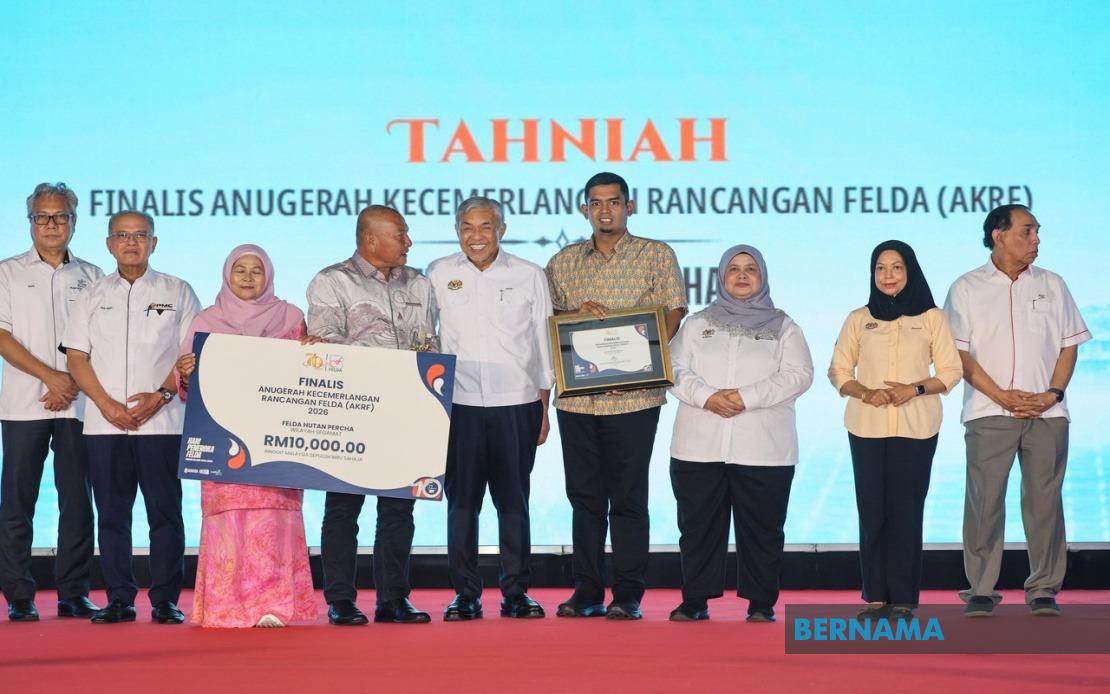
Deputy Prime Minister Datuk Seri Dr Ahmad Zahid Hamidi has called for a fundamental reimagining of how Malaysia approaches rural development, arguing that the sector can no longer be confined within national boundaries. Speaking at the World Rural Development Day 2026 celebration in Maran today, Ahmad Zahid, who also leads the Rural and Regional Development Ministry, stressed that rural entrepreneurs must embrace international opportunities with greater boldness, particularly within the ASEAN region and the expanding global halal sector. This vision signals a strategic pivot away from inward-looking policies towards one that positions Malaysian rural communities as participants in regional and international trade networks.
The Deputy Prime Minister's remarks underscore a recognition that rural economies in Malaysia face stagnation if they remain isolated from larger markets. He emphasised that Malaysian rural products and brands possess the quality and potential to compete internationally, provided entrepreneurs shed their hesitancy about crossing borders. This perspective aligns with broader economic trends in Southeast Asia, where regional integration through trade agreements like the ASEAN Trade in Goods Agreement has opened unprecedented market access for small and medium enterprises. For Malaysian rural producers, the implication is significant: the next phase of growth depends not merely on government infrastructure investment but on cultivating an entrepreneurial mindset oriented towards cross-border commerce.
To operationalise this vision, Ahmad Zahid outlined the government's introduction of a National Rural Economy Agenda, which he positioned as the comprehensive blueprint guiding Malaysia's rural development trajectory in coming years. This framework represents a departure from previous models that prioritised infrastructure construction as an end in itself. Instead, it embraces what officials characterise as a holistic approach, one that integrates infrastructure with skills development, market linkages, and institutional support for rural enterprises seeking to scale beyond their immediate localities.
Several concrete initiatives have been launched to facilitate this transition, most notably the RisSMart and IkonDesa programmes, which target wider product distribution and brand awareness for rural entrepreneurs. The results compiled over the past three years demonstrate measurable traction: more than 7,000 new rural entrepreneurs have been supported, generating approximately 15,000 employment opportunities. The cumulative sales generated by these ventures exceed RM1.77 billion, a figure that underscores the economic potential locked within rural communities when properly resourced and connected to markets. These numbers carry significance for policymakers across Southeast Asia, suggesting that targeted entrepreneurship support, rather than subsidy-dependent models, can deliver sustainable rural income growth.
Human capital development represents another pillar of the government's strategy. Ahmad Zahid highlighted that nearly 500 Orang Asli students achieved university admission in recent cycles, marking a historical high for indigenous representation in tertiary education. This statistic holds particular importance for Malaysia's rural development agenda, as educational advancement among indigenous populations traditionally concentrated in remote areas can unlock skills applicable to emerging rural industries, from agribusiness to eco-tourism and digital commerce. By connecting educational opportunity to economic participation, the government appears intent on breaking cycles of intergenerational poverty affecting these communities.
Infrastructure expansion remains foundational to rural development, and the government has invested substantially during the 12th Malaysia Plan period. Approximately 5,000 kilometres of rural roads underwent upgrade or rehabilitation, improving transport connectivity to markets and services. Simultaneously, electricity supply was extended to over 7,000 homes, and clean water reached more than 10,000 rural households. These figures, while incremental when viewed individually, collectively address fundamental deficiencies that constrain economic participation. Rural residents without reliable road access, electricity, or potable water face immediate barriers to any entrepreneurial endeavour; their removal therefore constitutes a necessary precondition for the market-oriented development Ahmad Zahid envisions.
Housing provision has similarly expanded, with nearly 10,000 homes constructed or renovated during the planning period, benefiting approximately 40,000 rural residents. This scale of housing intervention reflects recognition that stable shelter underpins human wellbeing and enables productive engagement. The concentration of benefits across multiple infrastructure categories suggests an integrated approach rather than piecemeal investment, though independent assessment of implementation quality and maintenance regimes would be essential to validate actual impact.
The observance of World Rural Development Day itself carries symbolic and practical dimensions. The United Nations General Assembly designated July 6 as the annual observance following a proclamation on September 6, 2024, commemorating the establishment of the Centre on Integrated Rural Development for Asia and the Pacific. Malaysia's formal adoption of this observance from 2026 onwards, following the inaugural global celebration on July 6, 2025, reflects the country's positioning within international development frameworks. For Malaysian policymakers and rural stakeholders, this institutional alignment creates potential avenues for knowledge exchange and best-practice learning with other nations navigating similar rural transformation challenges.
The event in Maran brought together key stakeholders including Pahang Menteri Besar Datuk Seri Wan Rosdy Wan Ismail and Rural and Regional Development Deputy Minister Datuk Rubiah Wang, underscoring the multi-level governance coordination required for rural development implementation. Such participation signals that translating Ahmad Zahid's strategic vision into ground-level outcomes demands sustained engagement from federal and state authorities, alongside private sector and community actors.
For Malaysia and the broader Southeast Asian region, Ahmad Zahid's intervention articulates an evolving development paradigm. Rather than treating rural areas as peripheral beneficiaries of trickle-down growth from urban-industrial centres, this framework positions rural communities and their entrepreneurs as active agents capable of generating export revenue and competing in regional markets. The challenge ahead lies in whether implementation mechanisms prove sufficiently robust and well-resourced to realise this ambition at scale, particularly for smaller producers and marginalised communities who may lack initial capital, market information, or networks to leverage international opportunities effectively.

