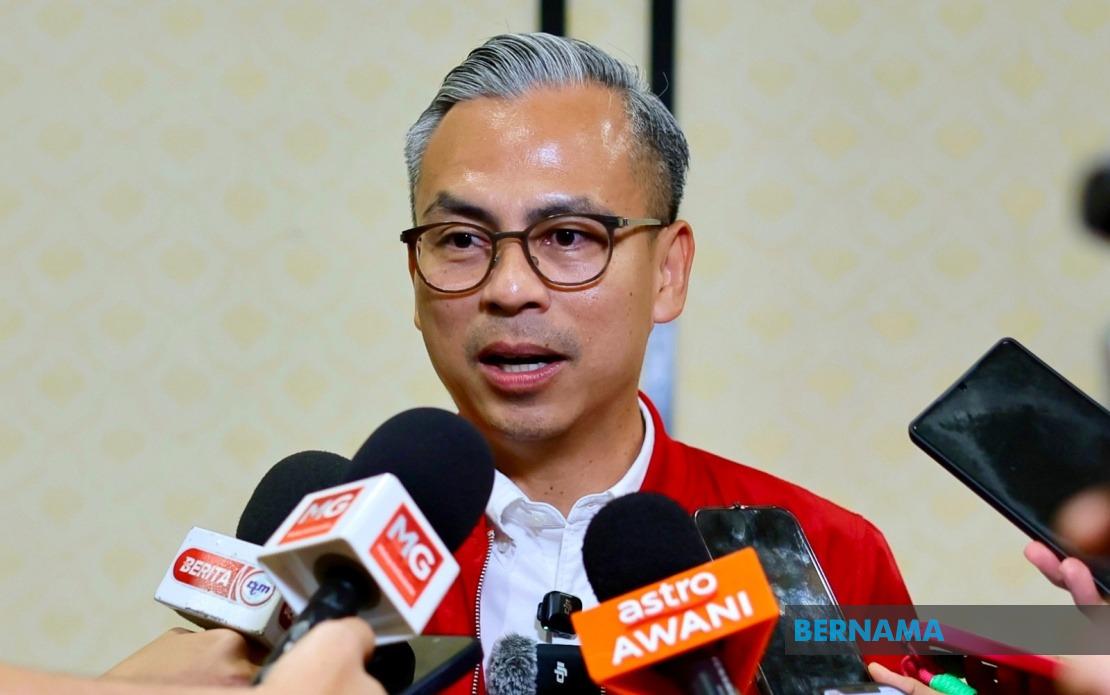
Communications Minister Datuk Fahmi Fadzil has signalled the government broadcaster's willingness to facilitate a televised discussion between Johor Menteri Besar Datuk Onn Hafiz Ghazi and Pakatan Harapan's Maszlee Malik, who is contesting the Puteri Wangsa state seat in the forthcoming Johor election. Speaking during a campaign visit to Muar, Fahmi indicated that RTM stands prepared to provide airtime on TV1 should both parties accept the proposal, with flexibility regarding timing and location to accommodate mutual convenience.
The initiative reflects a growing emphasis within PH's communications strategy on substance-driven engagement rather than traditional partisan rhetoric. Fahmi's framing of the proposed dialogue underscores an attempt to elevate discourse around policy implementation and long-term state development. By positioning the exchange as a platform for ideas rather than political confrontation, the communications minister is effectively challenging the Menteri Besar to demonstrate openness to scrutiny—a subtle appeal to voters concerned about inclusive governance. The offer carries implicit messaging: a leader confident in their record should willingly defend their vision publicly.
The proposal arrives against a backdrop of discussion surrounding Pakatan Harapan's election strategy, with some observers questioning whether PH should declare its Menteri Besar candidate before engaging in major public debates. Fahmi's response reframes this tension by emphasising that engagement with competing viewpoints constitutes a leadership attribute essential for state progress. This argument positions willingness to debate as a proxy for administrative competence and democratic maturity, messaging particularly relevant for Johor voters evaluating candidates across multiple contests.
Maszlee has already demonstrated receptiveness to such forums, having recently conducted an interactive session with 41 young people to canvas their aspirations for Johor's future direction. The PH candidate's proactive approach to youth engagement contrasts with traditional campaign methodologies and appeals to a demographic increasingly sceptical of conventional political communication. Fahmi's acknowledgement of this initiative signals party recognition that younger voters value candidates demonstrating genuine interest in understanding constituent concerns beyond election cycles.
The Puteri Wangsa contest represents a crowded field, with Maszlee facing competition from Barisan Nasional's Teow Chia Ling, Parti Bersama Malaysia's Nicholas Paul Vincent, MUDA's Rashifa Aljunied, and independent Wang Wee Seong. This multi-cornered fight reflects the fragmentation of Malaysia's political landscape, where traditional two-coalition dominance increasingly faces challenge from newer parties and independent candidates. A televised dialogue could serve multiple purposes: establishing Maszlee's profile across the constituency while allowing him to articulate PH's development vision against competing platforms.
Meanwhile, the Machap division presents a starker binary contest between incumbent Onn Hafiz of Barisan Nasional and PH's Nor Hafiz Roslan. As Menteri Besar, Onn Hafiz carries the responsibility of defending the incumbent government's record while projecting vision for the next term. The willingness or reluctance to participate in public dialogue carries electoral significance, as acceptance could demonstrate confidence while refusal might invite criticism regarding democratic engagement.
Fahmi's appeal to young voters assumes particular importance given the scheduled polling date of July 11, with early voting set for July 7. The minister's exhortation for voters to overcome logistical challenges and participate in the democratic process reflects concerns about youth turnout in state elections. This demographic's electoral participation directly influences seat outcomes, particularly in constituencies with younger populations. By framing voting as a responsibility determining Johor's developmental trajectory over five years, Fahmi attempts to elevate engagement beyond habitual political participation.
The timing of this public offer also merits consideration within Johor's electoral context. The state occupies significant weight within Malaysia's political calculus, serving as stronghold for both major coalitions historically. Recent patterns have witnessed shifting voter preferences and increased volatility in state-level contests. Any visible difference in how BN and PH candidates engage with public discourse and media platforms could influence undecided voters' perceptions regarding parties' commitment to democratic norms and transparent governance.
RTM's positioning as the platform provider carries implications beyond mere logistics. As a government broadcaster, RTM's involvement lends official legitimacy to the discourse while theoretically ensuring balanced coverage standards. However, the institutional association also raises questions about editorial independence and whether government machinery should facilitate opposition candidate visibility. These considerations reflect broader Southeast Asian discussions regarding public broadcaster impartiality during election periods.
The response from Onn Hafiz and the broader BN campaign apparatus remains crucial for determining whether this offer translates into actual programming. Acceptance would likely generate significant viewership and media commentary, potentially becoming a defining moment in the campaign narrative. Conversely, non-engagement might trigger opposition accusations regarding reluctance to defend the government's record, framing refusal as evasiveness rather than strategic choice.
For Maszlee personally, acceptance of such a platform provides opportunity to establish credentials as serious contender rather than protest candidate. Public debate performance influences media narratives and voter perceptions, potentially compensating for organisational disadvantages smaller parties might face. Strong articulation of policy positions on Johor-specific issues could transcend the Puteri Wangsa contest, building his profile for potential larger roles within PH's state and national structures.
The broader implication involves Malaysian democracy's evolving expectations regarding political communication. This proposal reflects recognition that voters—particularly younger demographics—increasingly demand substantive policy discussions rather than formulaic campaign messaging. Whether mainstream political figures embrace this expectation shapes whether Malaysian electoral campaigns gradually shift toward more issue-focused discourse or maintain existing patterns of personality-driven and coalition-based competition.

