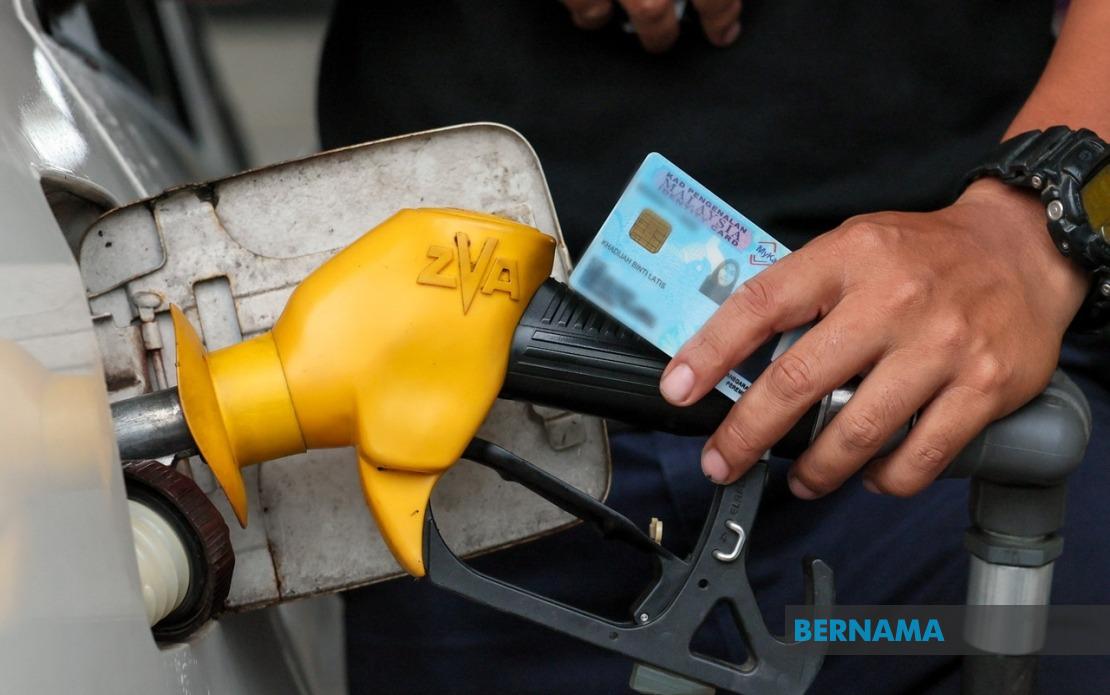
Prime Minister Datuk Seri Anwar Ibrahim announced on National Day that the government has decided to increase the basic BUDI95 subsidy quota back to 300 litres per month, reversing an earlier reduction that had capped allocations at 200 litres. The restoration, which takes effect from September 1, will directly benefit more than 16 million Malaysians who depend on subsidised RON95 fuel. Alongside this, the government will extend up to 400 litres of BUDI Diesel monthly to more than half a million qualifying owners of diesel-powered pickup trucks and jeeps, acknowledging the distinct transportation needs of commercial and rural vehicle operators.
The policy shift reflects a significant reassessment of fuel subsidy strategy as economic conditions and geopolitical circumstances have evolved. Herniza Roxanne Marcus, an economics lecturer at Universiti Teknologi MARA (UiTM) Sabah branch, emphasises that the measure represents an attempt to balance the government's fiscal constraints against the imperative to safeguard household purchasing power and welfare. She notes that the earlier quota reduction occurred during a period of heightened global energy market volatility and geopolitical uncertainty, factors that have since shifted in ways allowing policymakers to recalibrate subsidy levels based on current consumption patterns and household impact assessments.
For lower and middle-income households classified as B40 and M40, the quota increase carries particular significance because fuel expenses consume a disproportionately large share of their monthly discretionary spending. Marcus observes that this group typically faces the sharpest squeeze when fuel allowances contract, given their reliance on private vehicles for work and daily activities. The 50-per-cent increase in the monthly quota—from 200 to 300 litres—potentially translates into meaningful breathing room in household budgets, though she cautions that the benefit remains moderate and should not be misconstrued as evidence that government finances have suddenly become comfortable.
The geography of Malaysia amplifies the relevance of fuel subsidy policy, particularly in states like Sabah where sprawling distances and inadequate public transport infrastructure force residents to depend almost exclusively on private vehicles. Unlike urban centres where bus networks and ride-sharing services offer alternatives, rural and semi-urban communities have few options to reduce fuel consumption without severely limiting mobility. Marcus highlights how regions with limited public transport options stand to gain most from the expanded quota, as households cannot simply shift to cheaper mass transit when fuel allocations run dry.
Beyond direct fuel cost relief, economists argue that the policy carries indirect deflationary benefits. When households allocate less of their income to fuel purchases, they free up resources for other essential spending—groceries, education, healthcare, and utilities. This reallocation can help stabilise prices across the broader economy by preventing compressed demand in other sectors. Though Marcus cautions that the quota restoration will not single-handedly reduce inflation or dramatically alter the inflation trajectory, it does act as a circuit-breaker against spillover price pressures that might otherwise cascade through the goods and services economy.
The announcement carries implicit messaging about government priorities and fiscal management. By choosing to restore subsidies rather than allow them to remain restricted, policymakers signal a commitment to protecting household welfare during a period when cost-of-living pressures remain acute across Malaysia. However, Marcus emphasises that this decision should not be interpreted as confirmation that the fiscal position has radically improved or that spending constraints have loosened. Instead, it reflects a nuanced recalibration—acknowledging that market conditions, geopolitical risks, and actual fuel consumption patterns have changed sufficiently to warrant a reassessment of subsidy levels.
Real-world impact stories underscore how the previous 200-litre quota created genuine hardship for workers with high mobility requirements. Rozainah Abdul Rahim, a 36-year-old journalist, regularly travelled between Port Dickson, Negeri Sembilan and Kuala Lumpur for both professional assignments and family commitments. Under the reduced quota, she consistently exhausted her monthly allocation before the period ended, forcing her to absorb unsubsidised fuel costs at market rates. For professionals in similar situations—sales representatives, delivery drivers, fieldworkers, and those commuting between multiple locations—the quota ceiling functioned as an effective income cut despite nominally remaining within the subsidy framework.
The expansion to 300 litres addresses this structural problem by providing a buffer that more closely aligns with actual consumption needs for heavy-use vehicle operators. However, the restoration does not eliminate the fundamental subsidy mechanism's limitations. Households that genuinely require more than 300 litres monthly—such as those with multiple vehicles or extended commute distances—will continue to bear costs beyond the subsidised tier. Similarly, the policy offers minimal benefit to those who use less fuel, creating an inherent distributional imbalance that policymakers must continually manage.
The diesel component targeting pickup truck and jeep owners acknowledges the divergent transportation requirements across Malaysian society. Pickup trucks and jeeps serve dual purposes in many rural and semi-rural contexts: they function as personal transport while also supporting livelihood activities such as farming, small-scale haulage, and commercial operations. By offering up to 400 litres of BUDI Diesel monthly, the government implicitly recognises that these vehicle categories face higher fuel demands than standard passenger cars and merit proportionally larger allocations.
Looking forward, the quota restoration raises questions about the sustainability and future trajectory of Malaysia's fuel subsidy framework. Global energy prices, currency movements, and geopolitical developments will continue to shape the fiscal cost of maintaining subsidies at this level. Officials must balance competing imperatives: protecting household budgets against managing government expenditure, ensuring equitable distribution of subsidy benefits across income groups and regions, and maintaining the long-term viability of the subsidy programme. Herniza's analysis suggests that policymakers now have more flexibility than during the previous period of acute market turbulence, but this flexibility remains constrained by broader fiscal realities and competing budgetary priorities.
The decision also carries political dimensions that extend beyond economics. By restoring the quota before the next election cycle, the government demonstrates responsiveness to household concerns while avoiding the perception that subsidies remain permanently reduced. For voters—particularly in B40 and M40 segments who are most sensitive to fuel cost fluctuations—the announcement provides tangible relief and signals that elected leaders remain attentive to everyday cost-of-living pressures. However, sustainability questions linger, and households may reasonably wonder whether further reductions might again occur as market or fiscal conditions shift.

