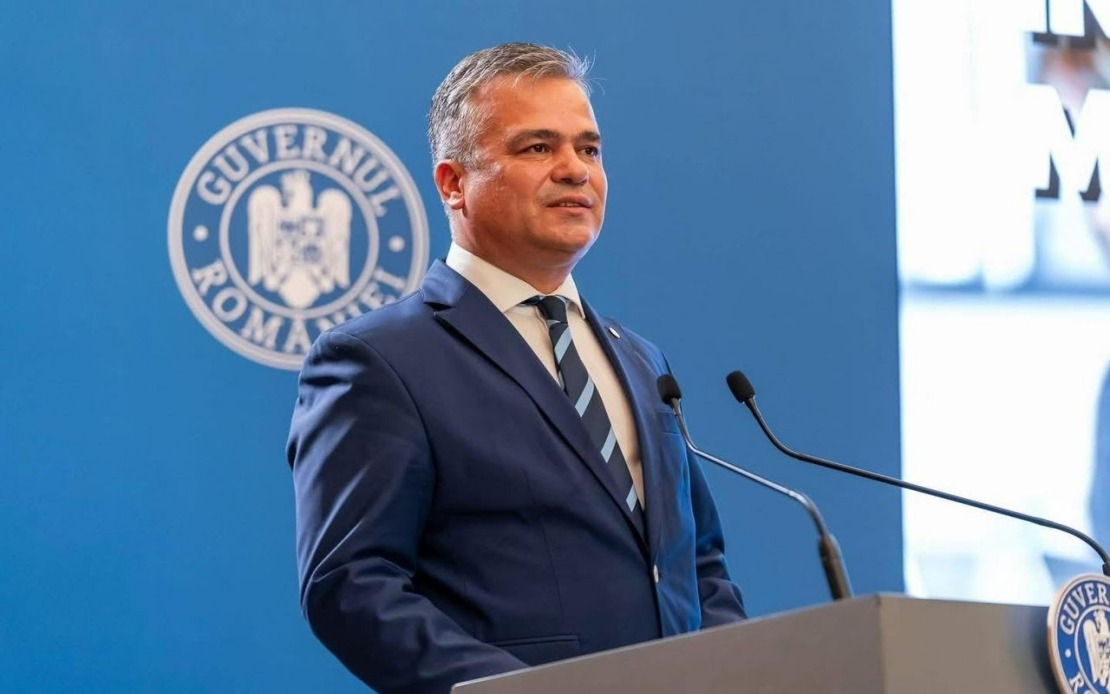
Romania's designated prime minister Adrian Vestea moved to consolidate his political position by formally submitting his cabinet composition and governing agenda to parliament on Monday, signalling the country's intention to emerge from a prolonged period of governmental uncertainty. The submission marks a critical juncture in Romanian politics, as Vestea seeks to gain parliamentary approval for an administration that will tackle pressing economic and institutional challenges facing the southeastern European nation.
Vestea, who holds the position of first vice-chair within the National Liberal Party (NLP), framed his cabinet proposal as a decisive intervention to restore normal operations across Romania's institutional framework. In a statement released through social media channels, he emphasised that the formal presentation represented far more than administrative protocol—it constituted a necessary gesture to move beyond the stagnation that has characterised recent Romanian governance and to re-establish the institutional predictability upon which both domestic and international confidence depends.
The Social Democratic Party (SDP) granted its backing to Vestea at a closed-door meeting held on Sunday, providing the critical parliamentary coalition support required to advance his candidacy. This endorsement proved significant given that the SDP represents a substantial bloc within Romania's legislative chamber, and its alignment with Vestea's administration signalled that cross-party negotiations had yielded a workable political settlement despite persistent ideological tensions.
Vestea's policy framework rests upon five foundational pillars designed to address Romania's most pressing governance challenges. Foremost among these is the consolidation of political stability—a priority that underscores how deeply fragmentation has undermined confidence in Romanian institutions. Equally critical is the acceleration of European Union fund absorption, an objective that carries direct implications for Romania's development trajectory, as delayed or inefficient deployment of EU resources represents foregone investment in infrastructure, education, and economic modernisation. Economic stability constitutes the third priority, reflecting recognition that macroeconomic vulnerabilities threaten household prosperity and investor sentiment alike. Infrastructure investment emerges as the fourth pillar, while the fifth—advancing strategic initiatives in national security—reflects mounting regional security considerations in Eastern Europe, particularly given geopolitical tensions affecting neighbouring territories.
The cabinet composition itself reflects a calculated political compromise that deviates from the NLP's stated institutional positions. Although the NLP leadership publicly reaffirmed its historical unwillingness to construct governing coalitions with left-wing political forces, Vestea's proposed executive nevertheless incorporates both Social Democratic representatives and NLP members aligned with his political faction. This apparent contradiction suggests that pragmatic necessity has superseded ideological rigidity, with Vestea's faction within the NLP willing to absorb the political costs of partnership with the SDP in exchange for governmental control.
This coalition arrangement carries implications extending beyond Romanian borders. Regional observers, particularly in Central and Eastern Europe, scrutinise such political realignments as indicators of broader trends affecting governance stability across the EU's eastern periphery. For Southeast Asian states monitoring European institutional resilience and political forecasting, the Romanian case demonstrates how economic pressures and security concerns can force traditional political adversaries into governing partnerships, potentially destabilising established coalition frameworks.
The parliamentary approval phase, however, remains unresolved. Romanian media organisations reported continuing uncertainty regarding whether sufficient votes existed to ratify the cabinet composition and government programme. This legislative ambiguity suggests that either sufficient backbench defections exist within supporting parties to jeopardise approval, or that parliamentary procedures remain contested. The weeks immediately preceding cabinet ratification typically witness intense lobbying efforts, as individual deputies negotiate concessions, ministerial appointments, or policy commitments in exchange for their support.
For Malaysian observers, the Romanian situation illustrates how coalitional governance functions within mature democratic systems during periods of institutional stress. While Malaysia's political environment differs substantially from Romania's, the underlying dynamics of coalition management—balancing partner interests, managing ideological contradictions, and securing parliamentary majorities—resonate across diverse national contexts. The mechanisms through which competing factions negotiate cabinet composition and policy priorities offer comparative insights applicable to multiparty governing arrangements throughout Southeast Asia.
The cabinet's eventual composition will reveal crucial details about which faction within the NLP has consolidated ascendancy and what substantive policy concessions the SDP extracted in exchange for parliamentary support. Should parliamentary approval proceed smoothly, Vestea's administration would inherit the substantial challenge of implementing its five-point programme whilst maintaining the delicate coalition equilibrium necessary for legislative majority. Conversely, approval defeat would necessitate renewed negotiations and potentially fundamentally alter Romania's political configuration, with unpredictable consequences for institutional stability and international confidence.