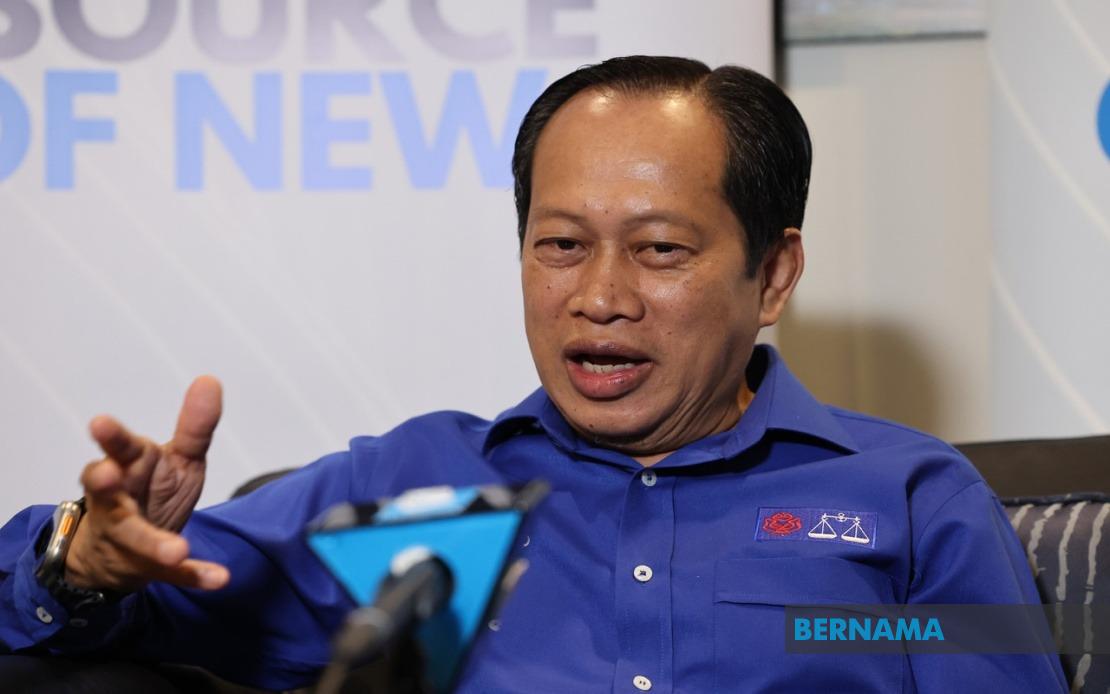
Effective road maintenance across Malaysia demands a comprehensive collaborative approach involving elected officials at all levels and government agencies working in concert, according to Deputy Works Minister Datuk Seri Dr Ahmad Maslan. Speaking in Johor Bahru on July 2, Ahmad emphasized that no single entity can successfully tackle the persistent challenges of deteriorating pavement and infrastructure without wholehearted commitment from stakeholders across the administrative spectrum. He has directed the Public Works Department (JKR) to prioritize accelerated repair work on roads showing signs of damage while appealing to all responsible parties to fulfill their designated responsibilities.
The minister's call for collaborative action comes against a backdrop of growing public concern regarding road conditions, most recently exemplified by the highly publicized inspection conducted by Pakatan Harapan's Puteri Wangsa state seat candidate Dr Maszlee Malik. On June 29, the former Education Minister undertook a symbolic drive along Jalan Tebrau in a Perodua Myvi, traveling from Kampung Melayu Majidi through to Ulu Tiram after social media users had lodged multiple complaints about the deteriorating state of the roadway and associated traffic bottlenecks. During his journey, Maszlee documented experiencing significant jolting and vehicle discomfort caused by uneven road surfaces and encountered congested traffic conditions during peak commuting hours, subsequently sharing his findings publicly.
Ahmad's response to this incident reflects broader frustrations within government circles about the fragmented nature of road maintenance responsibilities. He articulated that responsibility for addressing road defects extends beyond the JKR's technical capabilities and must engage local representatives, assemblymen, and Members of Parliament who possess direct community oversight and accountability. When a road deteriorates, Ahmad argued, the elected representatives serving those constituencies bear a shared responsibility for triggering official channels and monitoring remedial action. His framing suggests that deteriorating road conditions should serve as a performance indicator for local elected officials, creating political incentive for swift intervention.
To strengthen JKR's operational capacity, Ahmad has conducted extensive site visits across Johor's ten district JKR offices, during which he received comprehensive development briefings and assessed current maintenance capabilities. These visits enabled him to directly communicate expectations for expedited response times to road damage reports and to understand localized infrastructure challenges. The willingness of the deputy minister to undertake field-level supervision indicates recognition that bureaucratic sluggishness has historically contributed to the slow pace of road repairs, and that top-down pressure from the ministry level may be necessary to accelerate responsiveness.
The financing structure for road maintenance in Malaysia involves a layered approval process that Ahmad explained requires careful navigation. Federal road allocations, together with funding for highways and bridges, flow through the State Economic Planning Unit (UPEN) and state executive councils. This institutional architecture means that before repair work can commence, applications for maintenance funds must undergo assessment and prioritization procedures at the state level before receiving final approval. While this safeguard theoretically ensures efficient resource allocation and prevents wasteful spending, in practice the procedural requirements often create bottlenecks that delay repairs for months.
For Malaysian motorists and regional observers, Ahmad's emphasis on collaborative responsibility carries practical implications. The road network's condition directly affects productivity, safety, and quality of life across urban and peri-urban areas. Poor road surfaces contribute to vehicle damage, increased travel times, and heightened accident risks, imposing hidden costs on the economy and households. In Johor particularly, where manufacturing and logistical operations depend heavily on efficient transportation corridors, road degradation creates cascading economic consequences that extend beyond immediate repair costs.
The political dimension of this issue merits consideration as well. Ahmad's public statements positioning road maintenance as a shared responsibility appear designed to distribute accountability and deflect criticism from the federal government and JKR specifically. By explicitly naming local assemblymen and Members of Parliament as stakeholders who must act, Ahmad effectively creates political pressure on opposition-controlled areas to demonstrate responsiveness to community concerns. This framing also implicitly criticizes elected representatives who may have neglected to formally report road damage to authorities, suggesting that public campaigns like Maszlee's inspection represent failures of normal administrative channels.
The Jalan Tebrau case specifically illustrates why such coordination mechanisms frequently break down. A major arterial route serving the growing Ulu Tiram area would normally fall under clear maintenance jurisdiction, yet the accumulation of multiple complaints on social media before official action materialized indicates that established reporting systems had failed or moved too slowly. The fact that a political candidate felt compelled to conduct a personal inspection and publicize the results suggests a credibility gap between official assurances about road conditions and the lived experience of commuters. Ahmad's acknowledgment of this situation through his ministry-level intervention signals recognition that normal channels require strengthening.
Moving forward, Ahmad's emphasis on JKR expediting repairs and elected representatives assuming greater oversight responsibility suggests a two-pronged approach to improving maintenance outcomes. The operational improvements within JKR would address capacity and responsiveness constraints, while enhanced political oversight would theoretically create accountability mechanisms that force swifter action on reported problems. However, without corresponding budget increases and without resolving structural delays in the UPEN and state council approval processes, Ahmad's exhortations may accomplish limited real-world improvements in road conditions across Malaysia.
For Johor residents and travelers throughout Southeast Asia passing through Malaysian territory, the practical question remains whether these pronouncements translate into actual acceleration of repair work. Ahmad's field visits to all ten Johor JKR district offices demonstrate serious ministerial engagement, yet engagement alone cannot overcome systemic inefficiencies. The success of this collaborative framework will ultimately depend on whether elected officials embrace greater accountability for road conditions in their constituencies, whether JKR receives sufficient resources and autonomy to execute repairs rapidly, and whether state-level approval processes can be streamlined without sacrificing prudent fiscal oversight. Until those conditions are met, road maintenance will continue plagued by the coordination failures that Ahmad has now publicly acknowledged.

