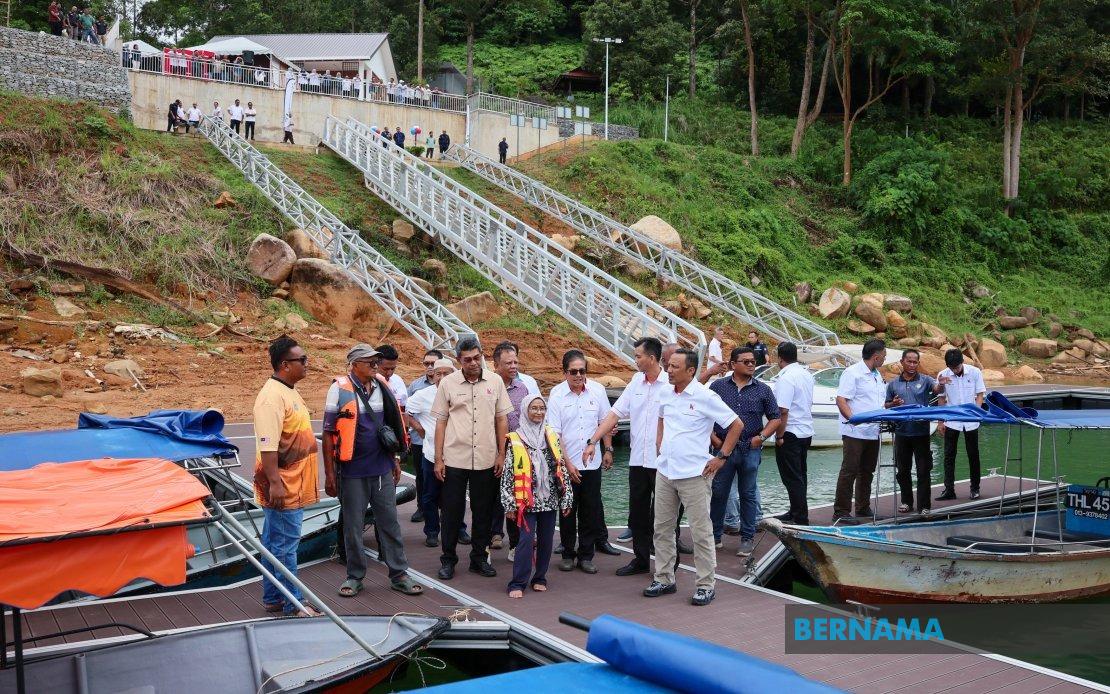
Tasik Kenyir's tourism infrastructure has received a significant upgrade with the completion of a RM8.7 million jetty development project on July 6, marking a pivotal investment in Terengganu's ecotourism sector. The initiative, approved under the Third Rolling Plan of the 11th Malaysia Plan (RMK-11), represents a deliberate effort by the Terengganu Tengah Development Authority (KETENGAH) to professionalize boat operations around Malaysia's largest man-made lake and position it as a world-class destination for international visitors.
KETENGAH chairman Datuk Rozi Mamat unveiled the completed facility at a handover ceremony, emphasizing that the project addresses longstanding operational challenges that had plagued the lake's tourism ecosystem. The primary objective was to transform the informal, scattered boat-berthing arrangements that previously characterized Pengkalan Gawi into a coordinated, regulated facility capable of serving the growing demands of both operators and tourists. This transition from ad hoc to organized maritime operations represents a shift toward professional standards that developing tourism destinations increasingly require to compete regionally and globally.
The jetty infrastructure now accommodates more than 80 houseboats and speedboats simultaneously, a capacity designed to match current demand while allowing for future expansion. This provision eliminates the previous bottleneck where vessels clustered haphazardly around the lake's shoreline, creating safety hazards, operational inefficiencies, and a diminished visitor experience. By consolidating mooring points into a single, planned facility, KETENGAH has essentially created the foundational infrastructure necessary for scaling tourism operations without compromising environmental integrity or public safety.
Beyond the berthing capability, the comprehensive facility design reflects a holistic approach to tourism development. The project incorporates approximately 600 metres of pedestrian walkway infrastructure, enabling visitors to navigate the lakeside environment safely and comfortably. Eighty-six parking bays address the critical challenge of vehicle congestion that often hampers tourist destinations in developing regions. Public toilet facilities maintain hygiene standards essential for international visitors, while guard posts and security measures provide both operational oversight and visitor assurance.
The supporting infrastructure—including electrical substations, pump houses supplying potable water and sanitation, and dedicated waste disposal systems—reflects recognition that modern tourism demands environmental stewardship alongside economic development. By incorporating utilities into the design rather than retrofitting them later, KETENGAH has created a facility capable of managing the ecological footprint of increased tourism activity. This forward-thinking approach contrasts with many Southeast Asian tourism developments that prioritize visitor numbers over environmental sustainability.
Rozi articulated a broader strategic vision for Tasik Kenyir within Malaysia's tourism hierarchy, characterizing it as a unique ecotourism destination possessing "immense potential" relative to other nature-based attractions in Southeast Asia. The lake's distinctive qualities—its scale as a man-made ecosystem, diverse flora and fauna, and cultural significance—require presentation through modern, secure facilities that convey professional standards to discerning international tourists. Without such infrastructure, regional competitors with superior facilities would naturally capture market share, particularly from high-value tourist segments prioritizing comfort and safety.
The jetty project occurs within a broader revitalization program spanning six initiatives at Tasik Kenyir during 2024. Complementary projects include upgrades to the Sungai Petang Kelah Sanctuary Complex, slope repairs addressing erosion at tourist attractions, redevelopment of tourism amenities at Pulau Petang, construction of a public mini park at Gawi Point, and facility improvements at the Herbal Park. This coordinated portfolio approach ensures that infrastructure enhancements reinforce one another, creating an integrated destination experience rather than isolated attractions.
KETENGAH's total development allocation of RM48.36 million for 2024 across 28 programs spanning Dungun, Hulu Terengganu, and Kemaman districts underscores Terengganu's commitment to systematic regional development beyond tourism alone. However, the concentration of multiple tourism-focused projects at Tasik Kenyir reveals state government prioritization of this particular asset as a flagship destination within the broader economic development framework. Such targeted investment suggests confidence in tourism's contribution to generating employment, attracting external capital, and raising incomes across surrounding communities.
For Malaysian readers, the completed jetty represents tangible evidence of how development allocations translate into infrastructure improvements affecting daily life and economic opportunity. Tourism-dependent communities around Tasik Kenyir—boat operators, hospitality workers, guide services, and retail merchants—depend on sustained visitor flows to maintain livelihoods. The jetty's modern facilities and organizational structure provide the foundation necessary for expanding operations sustainably, potentially creating employment across seasonally variable tourism businesses.
The project also carries implications for Malaysia's positioning within Southeast Asia's competitive tourism landscape. Regional competitors including Thailand, Vietnam, and Indonesia have invested heavily in ecotourism infrastructure, capturing market share from potential Malaysian destinations. By modernizing Tasik Kenyir's facilities, Malaysia signals commitment to maintaining competitiveness in nature-based tourism, particularly appealing to middle-class regional and international tourists seeking organized, safe experiences in natural settings.
Operators previously contending with unorganized berthing conditions will benefit from standardized moorings, utility access, and coordinated scheduling systems that reduce daily operational friction. This professionalization should enable higher vessel utilization rates, improved customer satisfaction, and potentially higher pricing power as service quality increases. Over time, such operational improvements often translate into business expansion, staff retention, and community prosperity in tourism-dependent areas.
Rozi's confidence that unorganized boat berthing issues around Pengkalan Gawi would be "resolved gradually" reflects realistic expectations rather than utopian projections. Infrastructure alone cannot transform deeply entrenched practices overnight; successful implementation requires sustained management, operator buy-in, and enforcement of usage protocols. The coming months will reveal whether the transition from informal to formal maritime operations proceeds smoothly or faces resistance from entrenched interests accustomed to autonomous arrangements.
Moving forward, the Tasik Kenyir jetty project exemplifies how targeted infrastructure investment can simultaneously address safety concerns, enhance operational efficiency, elevate visitor experiences, and strengthen Malaysia's competitiveness as an ecotourism destination. Success will depend on effective management, continuous maintenance, and integration with broader marketing strategies that communicate Tasik Kenyir's enhanced capabilities to potential visitors across Malaysia, Asia, and beyond.

