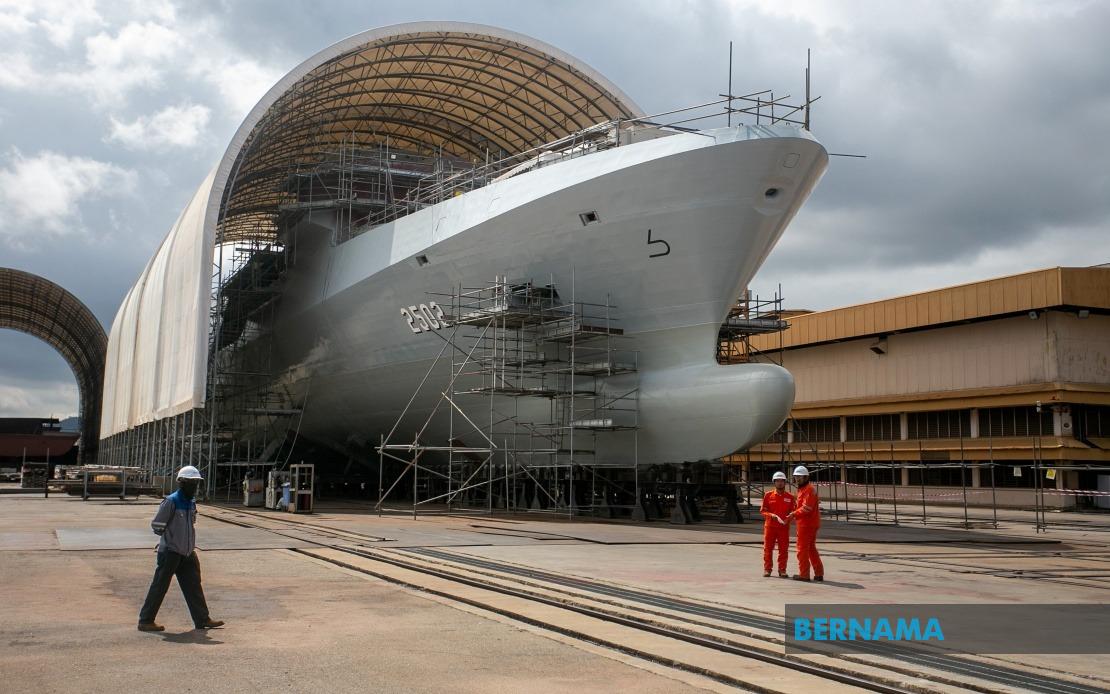
The Ministry of Defence has pushed back against parliamentary criticism regarding the RM571.9 million payment to Norway's supplier for the Naval Strike Missile system destined for Malaysia's Littoral Combat Ships, insisting the transaction adhered strictly to contractual milestones rather than representing an advance disbursement without corresponding deliverables.
In a written response tabled on the Parliament portal, MINDEF clarified that the Norwegian supplier had completed full manufacturing of all NSM systems and successfully passed rigorous testing protocols administered by the Royal Malaysian Navy before any payment was transferred. This sequencing of events fundamentally distinguishes the transaction from an advance payment, according to the ministry's position. The clarification addresses concerns raised by Hassan Abdul Karim, the Pasir Gudang representative from Pakatan Harapan, who had questioned both the timing of the payment and the adequacy of contractual safeguards for the Malaysian government.
The defence establishment's position represents a technical rebuttal to suggestions that Malaysia had handed over funds prematurely or without sufficient oversight mechanisms. MINDEF contended that the procurement contract contains robust protective clauses, including provisions that permit the government to initiate legal action in cases of non-performance or breach of contractual obligations. The ministry further asserted that allegations regarding the absence of government-protective mechanisms in the agreement are factually inaccurate, though it did not elaborate on the specific nature or scope of these contractual protections in its parliamentary statement.
The backdrop to this dispute involves Norway's revocation of the export licence for the NSM system, a decision that MINDEF characterised as entirely beyond the control of both the Malaysian government and the Norwegian defence contractor. This licence withdrawal, announced by the Norwegian authorities, effectively halted the delivery of the missile systems to Malaysia and sparked domestic political scrutiny over how government funds had been deployed. The development has forced Malaysia to navigate international procurement complexities while managing taxpayer concerns about expenditure on defence acquisitions that encounter obstacles during implementation.
In response to questioning from Kinabatangan MP Mohd Kurniawan Naim Moktar, MINDEF sought to reassure parliament that the NSM situation has not compromised the Royal Malaysian Navy's current operational capabilities. The ministry maintained that the RMN retains sufficient existing assets and weapons systems to discharge its maritime defence responsibilities and protect the nation's territorial waters and exclusive economic zone. This assurance carries significance given Malaysia's critical dependence on naval capabilities to maintain security in the crowded waters of the Straits of Malacca and the South China Sea.
Beyond immediate operational concerns, MINDEF indicated that the licence revocation does not disrupt the delivery schedule for the Littoral Combat Ships themselves, separating the wider LCS project from the specific NSM acquisition challenge. The ministry disclosed that the Royal Malaysian Navy is actively engaged in evaluating and assessing alternative missile systems that could functionally replace the NSM platform. This forward-looking posture suggests that defence planners are preparing contingency options rather than allowing the Norwegian complication to paralyse procurement planning.
The tension underlying this parliamentary exchange reflects broader vulnerabilities in defence procurement that Southeast Asian nations commonly encounter. When acquiring sophisticated weapons systems from overseas suppliers, particularly from Western sources subject to export control regimes, purchaser nations face inherent risks stemming from geopolitical shifts or supplier-nation policy changes. Norway's decision to revoke the export licence appears connected to broader Western foreign policy adjustments, though MINDEF did not elaborate on the Norwegian government's stated rationale.
For Malaysia specifically, the NSM situation illustrates the constraints imposed by dependence on foreign defence technology during periods of international tension. The Littoral Combat Ships represent a significant modernisation investment for the RMN, and the complications surrounding their missile armament underscore the strategic importance of diversifying suppliers and maintaining indigenous defence capabilities where feasible. The incident may prompt Malaysian defence strategists to recalibrate approaches to international weapons procurement, potentially favouring suppliers from nations with less volatile foreign policy environments or exploring alternative technological pathways.
MIndef's invocation of contractual provisions to pursue recovery claims and damages represents the government's legal recourse in this predicament. However, the practical prospects for recovering the full RM571.9 million payment remain uncertain, particularly if Norwegian government policy is firm regarding export restrictions. International dispute resolution mechanisms may eventually prove necessary, though such processes typically extend over years and deliver partial rather than complete financial recompense.
The parliamentary exchange also reveals political dimensions to the NSM controversy. Opposition lawmakers have seized on the issue to question government decision-making regarding defence spending, while MINDEF has attempted to demonstrate that procurement procedures were sound and that current problems stem from external factors beyond official control. This dynamic reflects how defence acquisitions remain politically sensitive territories in Malaysian governance, particularly when involving substantial sums of public funds.
Looking forward, the resolution of the NSM situation will require Malaysia to pursue negotiations with either Norway or the Norwegian supplier, explore viable missile alternatives from other manufacturers, or potentially accept modified capabilities for the LCS platform. Each pathway carries distinct financial and operational implications. The incident also highlights the importance of robust contractual architecture in defence procurement, even as MINDEF claims such protections were present in the NSM agreement.
Ultimately, while MINDEF's clarification addresses the technical question of payment timing and contractual compliance, it does not fully resolve the underlying challenge: Malaysia has committed substantial resources to acquiring weapons systems that international politics has rendered inaccessible. How defence officials navigate this constraint while maintaining maritime security will influence Malaysian naval capabilities for years to come.

