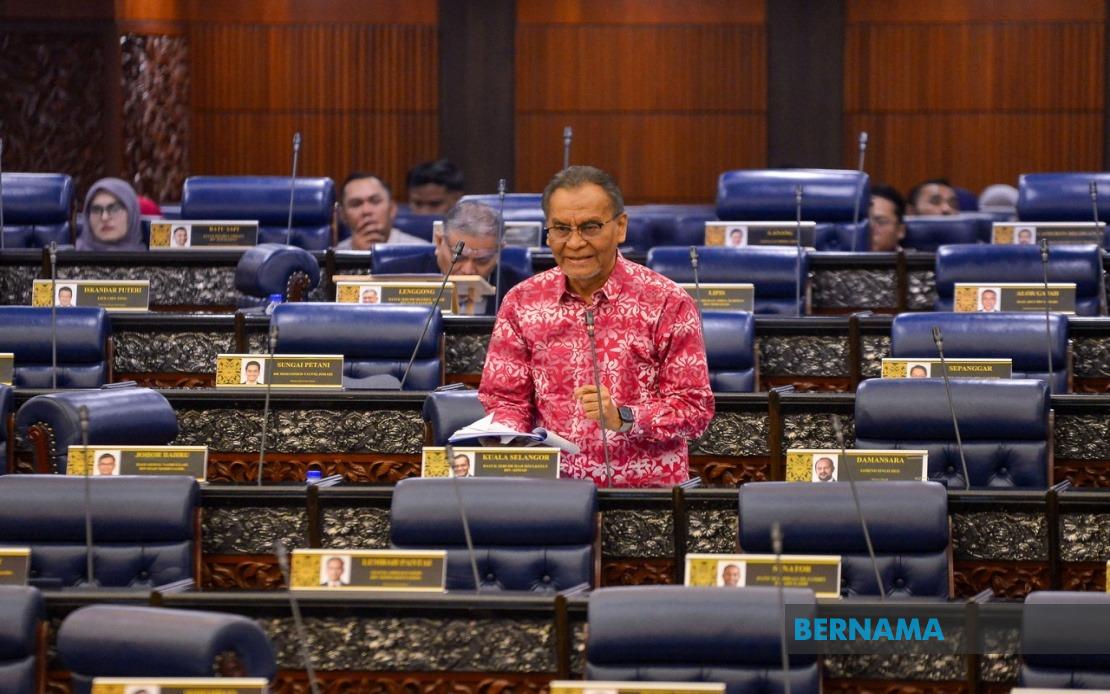
Health Minister Datuk Seri Dr Dzulkefly Ahmad has moved to reassure the public that a RM500 million expenditure restriction imposed on the Ministry of Health represents nothing more than a prudent financial realignment and carries no implications for the quality or reach of healthcare services delivered to Malaysians. Speaking during parliamentary question time in Kuala Lumpur on July 2, the minister sought to defuse mounting anxiety about the impact of the spending curb, which had raised concerns among lawmakers about potential disruptions to hospital operations and rural health facility development.
The core of Dzulkefly's explanation centres on a critical distinction: the restricted funds represent surplus allocation earmarked for positions that the ministry cannot fill despite having approval from the Public Service Department. The MOH has approval to employ 18,641 new positions this financial year, yet recruiting sufficient qualified personnel to occupy all these vacancies has proven impossible. Rather than allowing these unallocated resources to remain unused, the government has opted to return them to the national coffers, thereby achieving RM500 million in savings without any operational consequence.
This reframing is significant because it positions the adjustment not as an austerity measure imposed by Finance Ministry bean-counters, but rather as an administrative correction reflecting labour market realities. In a sector chronically short of skilled professionals—including doctors, nurses, and allied health workers—the inability to fill positions is not a failure of planning but a structural constraint that has plagued Malaysian healthcare for years. By formalising this reality through an expenditure restriction warrant issued on June 5, the government acknowledges the gap between authorised establishment and actual workforce capacity.
The RM500 million reduction, while substantial in absolute terms, amounts to approximately 1.07 per cent of the MOH's total allocation of nearly RM46.52 billion for the current financial year. This proportionally modest cut underscores the minister's contention that it represents a marginal adjustment rather than a consequential reduction. The remaining budget remains sufficient to sustain existing operations and development initiatives across the ministry's sprawling infrastructure, which spans everything from primary health clinics in remote peninsular communities to major tertiary hospitals in urban centres.
Crucially, Dzulkefly emphasised that the restriction warrant explicitly excludes funds allocated for routine operations, infrastructure development, staff remuneration, professional development programmes, and acquisitions of medical equipment and supplies. These constitute the foundation upon which healthcare service delivery rests. The adjustment targets only the notional surplus created by structural vacancies, leaving the true operating budget entirely intact. This delineation addresses a key anxiety raised by lawmakers representing rural constituencies, who feared that budget cuts would disproportionately affect health facilities in their regions, many already struggling with resource constraints.
The minister's parliamentary response came in reaction to questions from Datuk Shahelmey Yahya representing Putatan and Abdul Latiff Abdul Rahman representing Kuala Krai, both of whom had raised the prospect that fiscal adjustments would undermine healthcare delivery capacity and stall public health infrastructure projects. These concerns reflect broader parliamentary anxieties about the stability of social services amid periods of fiscal consolidation. However, the minister's technical explanation—that unrecruited positions rather than operational capacity are being adjusted—provides a framework for distinguishing between genuine austerity and administrative reallocation.
Beyond addressing immediate concerns about the budget adjustment, Dzulkefly outlined several concurrent initiatives designed to enhance healthcare accessibility and affordability. The MOH plans to launch a new Base Medical and Health Insurance/Takaful product through the Joint Committee on Private Healthcare Costs, beginning with pilot implementations at selected hospitals this month before expanding nationwide in January 2027. This initiative responds to growing public frustration with escalating private sector treatment costs and insurance premiums, which have outpaced wage growth and created barriers to care for middle-income households.
The insurance product targets affordability through simplified underwriting and streamlined coverage terms, offering basic protection against catastrophic medical expenses without the complexity or cost of comprehensive policies. For a healthcare system increasingly reliant on private provision to manage public sector capacity constraints, this product represents an attempt to create a middle ground between expensive private insurance and limited public coverage. The approach acknowledges that Malaysia's health system functions as a mixed ecosystem, with roughly one-third of the population relying primarily on private providers.
Simultaneously, the ministry is implementing a Diagnosis Related Groups payment system designed to standardise hospital charges and payment methodologies across public, private, university, and military institutions nationwide. The DRG framework establishes clinical benchmarks and associated payment levels, theoretically enabling price transparency and preventing cost variation driven by factors other than genuine differences in complexity or treatment intensity. By applying this system across all hospital categories, the government aims to create a more level competitive landscape and reduce opportunities for price discrimination.
These concurrent initiatives collectively address multiple healthcare sector challenges: first, the immediate fiscal adjustment affecting only unfilled positions; second, the affordability crisis in private healthcare; and third, the systemic issue of price standardisation across fragmented hospital networks. Together, they suggest that the MOH's strategic posture involves not retrenchment but restructuring—maintaining and even enhancing service capacity while improving system efficiency and consumer protection. The framing matters significantly in a nation where healthcare access remains a persistent public policy concern and budget cycles generate considerable political sensitivity.

