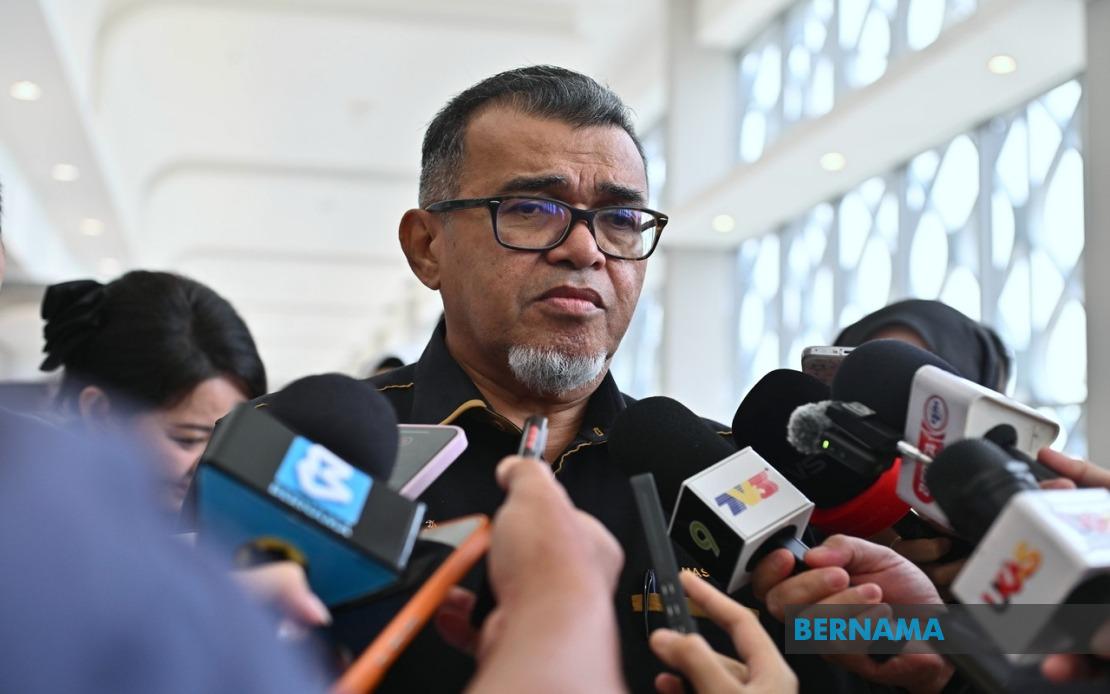
The Federal Government has committed RM30 million to substantially upgrade the Short Take-Off and Landing (STOL) airports serving the remote communities of Long Banga and Ba'kelalan in Sarawak. Deputy Transport Minister Datuk Hasbi Habibollah announced the initiative on Wednesday, framing the investment as part of a broader effort to bring infrastructure standards in Malaysia's interior regions in line with those in more developed areas. Each of the two airstrips will receive RM15 million in dedicated funding, with work designed to expand current operational capacity and modernise existing facilities that have served these communities for years.
The investment reflects a growing recognition within federal transport circles that rural connectivity in East Malaysia cannot be overlooked in national infrastructure planning. These STOL airports have historically functioned as critical lifelines for isolated communities, enabling residents to access healthcare, education, and commercial opportunities in larger towns and cities. However, the existing infrastructure has increasingly strained under demand, with operational constraints limiting the volume and frequency of services that operators can provide to these areas.
Currently, Twin Otter aircraft operating on these routes represent the backbone of air transport to Long Banga and Ba'kelalan. These nimble turboprop planes are well-suited to unprepared or minimalist runways, making them ideal for remote deployments across the region. Yet their payload capacity remains modest, typically accommodating between 15 and 20 passengers per flight depending on load configurations. This limitation means that communities dependent on these services often face long waits for seats, driving up travel costs and constraining economic activity in regions already facing geographical disadvantages.
The runway extension component of the upgrade programme holds particular significance for the region's future development prospects. Lengthening existing strips would allow operators to deploy larger, more efficient aircraft types, potentially opening the door to regular turboprop services such as those operated by Dornier or De Havilland Dash aircraft. These planes, while still purpose-built for short-field operations, offer substantially greater passenger capacity and improved operational economics compared to current Twin Otter services. The knock-on effect could be transformative for communities relying on air transport as their primary gateway to external markets and services.
The upgrade initiative came to light during Datuk Hasbi's visit to Kuching for the National MADANI Taxi Renewal Programme for Sarawak. The timing suggests that transport infrastructure improvements form part of a coordinated approach to raising living standards across Malaysia's interior regions. The MADANI framework, a government development philosophy emphasising inclusive prosperity and equitable access to services, appears to be extending beyond urban mobility into the realm of regional air transport. This represents a subtle but important shift in federal priority towards ensuring that geographic isolation does not translate into systematic disadvantage.
Rural air transport across Southeast Asia faces persistent challenges of sustainability and operational viability. Most STOL services in remote areas operate with significant government subsidies because passenger revenues alone cannot justify commercial operations. Malaysia's commitment to upgrading Long Banga and Ba'kelalan fits a regional pattern of governments attempting to sustain remote air services while simultaneously improving their underlying infrastructure base. Better facilities and longer runways can help reduce per-passenger operating costs, potentially making services more economically sustainable over time.
For Sarawak specifically, these improvements carry economic and social dimensions extending beyond mere transport convenience. Interior regions of the state possess timber resources, agricultural potential, and emerging eco-tourism opportunities that remain difficult to exploit without reliable transport links. Improved air connectivity can facilitate the movement of goods to market, enable entrepreneurs to access financing and technical assistance from urban centres, and allow healthcare workers and teachers to serve these communities more effectively. The cumulative effect of better transport infrastructure often catalyses broader economic development in isolated regions.
The allocation of RM15 million per airstrip suggests a design approach focused on essential upgrades rather than wholesale reconstruction. Typical projects of this scope involve runway resurfacing, extension of existing strips by several hundred metres, installation of improved ground lighting systems, and enhancement of terminal facilities. These modifications represent the most cost-effective means of substantially improving operational capability while respecting budget constraints.
Government investment in STOL infrastructure also carries implicit recognition that commercial operators, acting alone, will not spontaneously upgrade remote airstrips without public funding support. The private sector rightly views remote routes as risky and unprofitable without subsidies. Federal involvement ensures that geographic remoteness does not become a barrier to basic service availability. This principle underpins transport policy across many Southeast Asian nations, where government ownership or support for regional air services remains standard practice.
The Ba'kelalan and Long Banga upgrades should be understood within the context of Malaysia's broader drive to narrow development disparities between peninsular and East Malaysian regions. Transport infrastructure forms the foundation upon which all other development depends; without reliable connectivity, remote areas struggle to attract investment, talent, and commercial activity. Federal allocations of this nature, while modest in national budgetary terms, can generate disproportionate benefits for small communities where transport costs currently represent significant frictions on economic activity.
Looking forward, successful completion of these upgrade projects may establish a template for similar investments elsewhere in Sarawak and Sabah. Numerous other STOL airports across Malaysian Borneo serve communities facing comparable challenges. If the Long Banga and Ba'kelalan improvements deliver tangible benefits in the form of increased passenger capacity, improved service frequency, and reduced operating costs, bureaucratic and political momentum may build for extending such programmes to other remote airstrips. This incremental approach to rural infrastructure development, while unglamorous compared to headline-grabbing megaprojects, often proves more transformative for peripheral communities in terms of genuine lived improvement.

